
Download
3D Flyover
Add to list
More
20.6 km
~4 hrs 7 min
0 m
Point to Point
“A mostly flat city-to-city wander—pale “white hills” of sand and heath amid busy streets and bikes.”
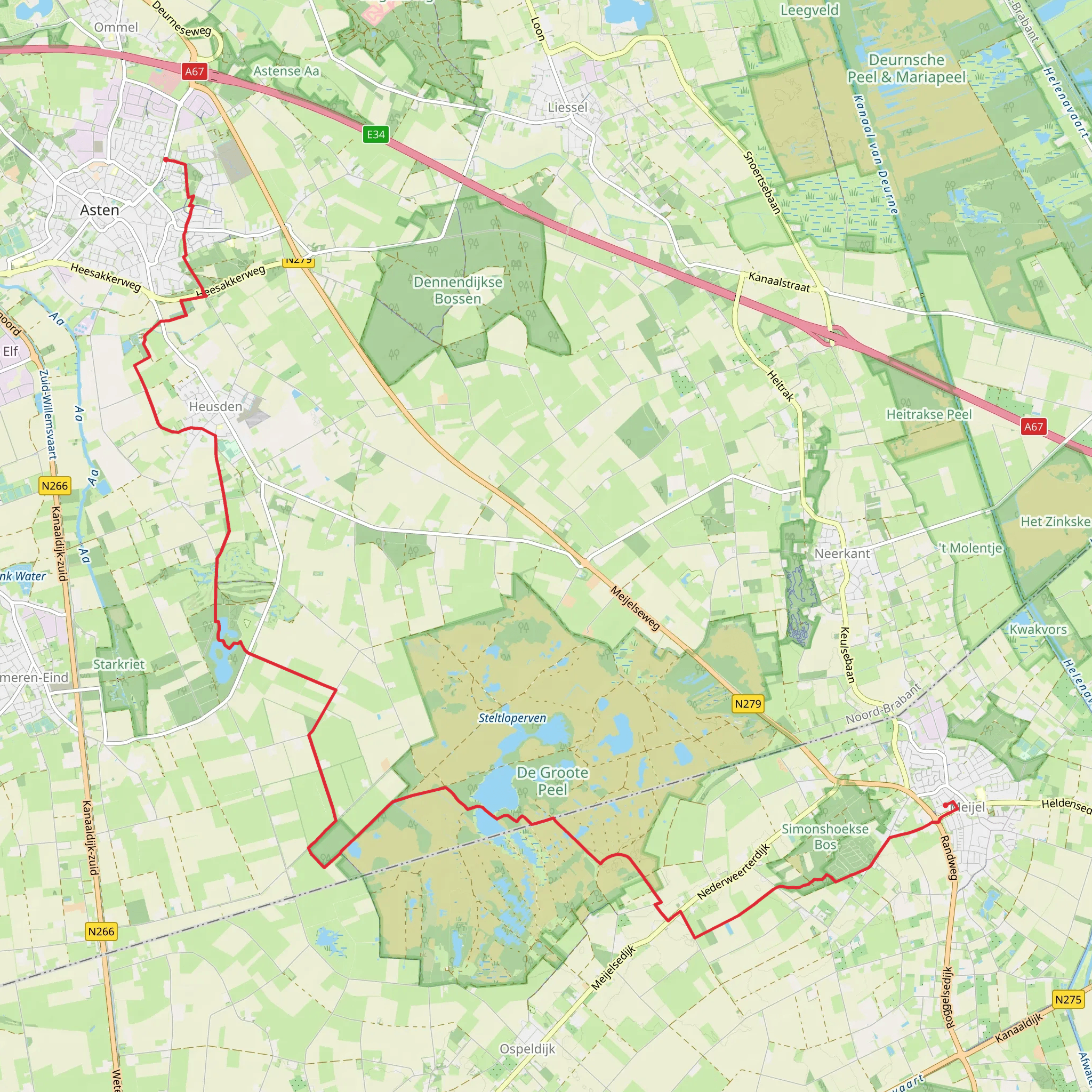
This is a low-stress, mostly flat ~21 km (13.0 mi) point-to-point walk with ~0 m (0 ft) of climbing, linking city streets and green corridors between Willemsplantsoen (Utrecht) and Plutostraat (The Hague), with the route name suggesting you’ll thread through segments locally known as Aan ’t Elfde and Witte Bergen. Expect an “easy legs, busy-brain” day: physically gentle, but you’ll want to stay switched on for crossings, bikes, and wayfinding through built-up areas.
Start location (nearest known address / landmark): Willemsplantsoen 3, 3511 LA Utrecht, Netherlands (near the city’s eastern side, a short hop from Utrecht Centraal by bus/bike/taxi). (mapquest.com)
Finish location (nearest known landmark): Plutostraat, The Hague (’s‑Gravenhage), Netherlands—a residential street served by nearby tram/bus stops (Moovit lists stops and lines in the immediate area). (moovitapp.com)
Getting to the start (Willemsplantsoen, Utrecht)
- By train + local transit: Arrive at Utrecht Centraal, then use local bus/tram/bike-share to reach Willemsplantsoen (it’s a short urban transfer; plan extra time for morning traffic and bike lanes).
- By car: Street parking rules in Utrecht can be strict and paid; if you’re driving, consider a garage/park-and-ride and then a short transit hop to Willemsplantsoen to avoid time lost hunting for a spot.
What the walk feels like underfoot
Because the elevation gain is essentially nil, the “difficulty” comes from surfaces and interruptions rather than hills: - Urban paving and sidewalks dominate early and late: smooth but repetitive, with frequent curb cuts and junctions. - Greenway/park connectors (where the route aligns with “Witte Bergen” segments) can introduce packed sand, gravel, and short sandy patches—still easy, but they can feel slower than pavement, especially if damp. - Crossings and cycle traffic are the main hazard: Dutch cycle lanes are fast and quiet; treat every bike crossing like a mini-intersection.
Navigation and pacing (using HiiKER)
For a 21 km (13 mi) point-to-point, plan 4.5–6 hours moving time depending on how urban the middle section is and how often you stop. Load the route in HiiKER and: - Keep an eye on micro-turns through neighborhoods (easy to miss when streets look similar). - Use HiiKER’s map view to anticipate major road crossings and choose safer crossing points if the route line threads near busy junctions.
Landmarks, landscape, and “Witte Bergen” character
Where the route name references Witte Bergen, you’re likely passing through or near landscapes associated with light-colored sand drifts (“white mountains”), heath, and open woodland—terrain that’s visually distinctive even though it’s not mountainous. In Dutch nature areas with this name, the “white” typically refers to pale sand rather than elevation, and you may see: - Heathland edges and open sandy clearings that feel surprisingly spacious compared with the surrounding towns. - Birdlife in open areas (listen for calls over the wind), plus small mammals in scrubby margins—most active early/late in the day. - If your “Witte Bergen” segment corresponds to the well-known Zuiderheide/Witte Bergen area near Hilversum/Laren, it’s described as a mix of shifting sands, heath, and forest, with viewpoints and a teahouse on some loops in that landscape. (alltrails.com)
Historical context you’ll notice as you walk
Even on a flat route, the Netherlands’ landscape is layered with human planning:
- Planned parks and 19th‑century urban expansion are a recurring theme in Dutch cities. For example, Utrecht’s major historic park development (like Wilhelminapark) was designed in the late 1800s as a public walking park in an English landscape style—part of the broader movement to create green space as cities grew. (utrecht.nl)
- In The Hague, neighborhoods around your finish area reflect the city’s growth patterns tied to rail corridors and residential districts; for instance, Spoorwijk (a rail
AI Planner
Days planned around your pace, with somewhere to stay each night.
Surfaces
Unknown
Unpaved
Asphalt
Dirt
Concrete
Comments and Reviews
User comments, reviews and discussions about the Willemsplantson to Plutostraat via Aan t Elfde and Witte Bergen, Netherlands.
average rating out of 5
0 rating(s)
