
Download
3D Flyover
Add to list
More
17.3 km
~3 hrs 28 min
0 m
Loop
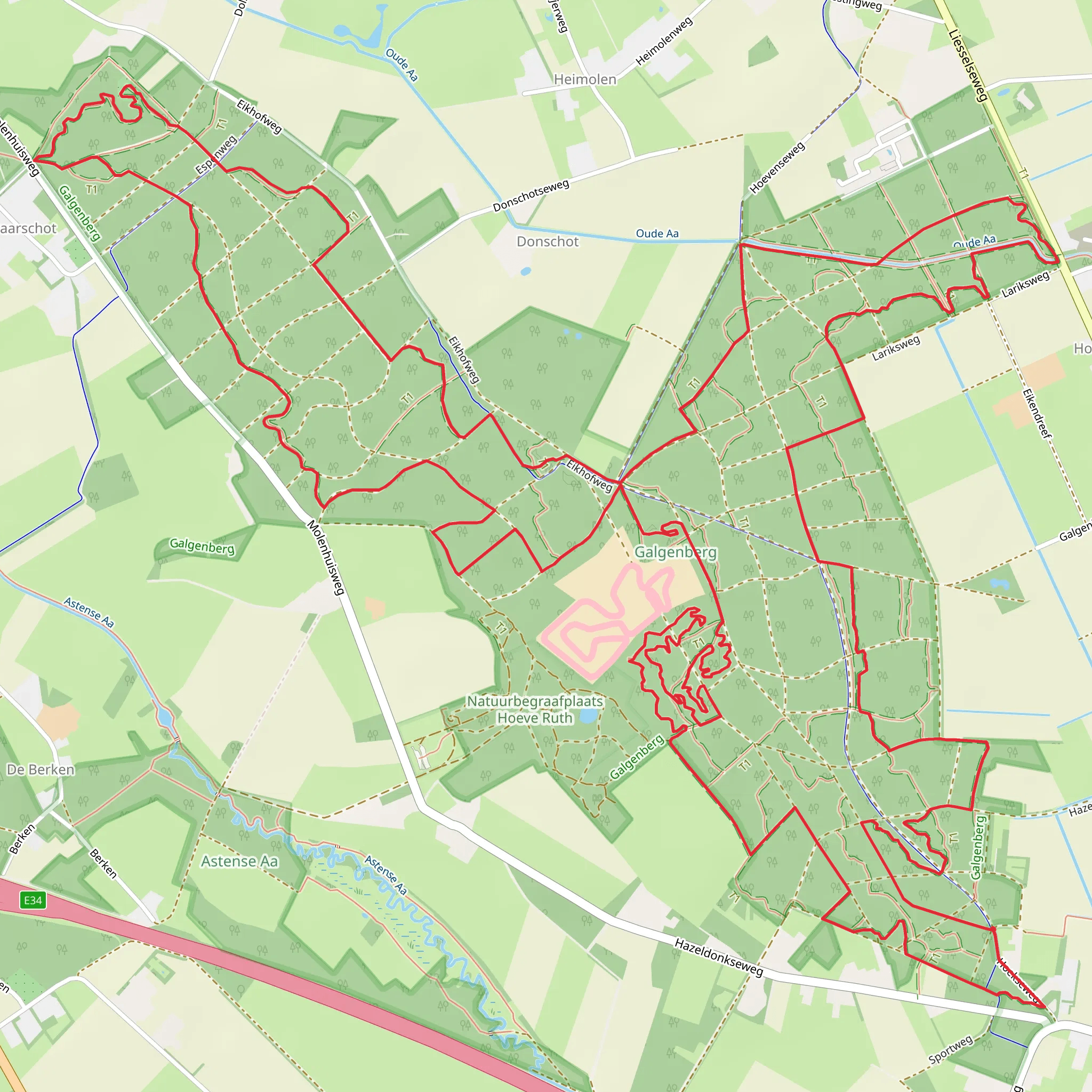
“A windswept, mostly level farm-and-woodland loop where history whispers from names like Galgenberg.”
I’m missing a few key pieces needed to write this accurately (especially the start point). Please send either a map screenshot or the trail’s start coordinates (lat, lon) (or a HiiKER link), and I’ll convert that to the nearest known address/landmark and tailor the directions.
In the meantime, here’s a planning-grade description for a ~17 km / ~10.6 mi loop with ~0 m / ~0 ft gain, written in a way that will still fit once you confirm the trailhead.
You’ll be on a mostly flat loop that typically follows a mix of farm tracks, compact gravel paths, and short paved connectors between fields and small wooded patches. With essentially no climbing, the main “effort” comes from steady time on feet and any wind exposure across open country. Expect 3.5–5 hours depending on pace and how often you stop.
Early on, the route usually eases you out from the trailhead via wide, easy-to-follow lanes—good for warming up and settling into a rhythm. Because the terrain is flat, it’s common for the loop to feel deceptively long; plan snacks and water as you would for a moderate outing even though the elevation is easy.
Route flow and what to expect underfoot
0–3 km (0–1.9 mi): Gentle start on broad track or quiet lane. Surfaces are often firm, but after rain you can get slick mud in shaded sections and puddling where farm vehicles have rutted the path. If the loop begins near a village edge, you’ll likely pass hedgerows and drainage ditches—watch footing along narrow verges.
3–9 km (1.9–5.6 mi): The middle portion is commonly the most “open,” with long straight segments between fields. Wind can be the biggest factor here; even in mild temperatures it can feel colder than expected. This is also where you’re most likely to encounter working farmland—yield to tractors, keep to the edge, and expect occasional short diversions if seasonal field operations affect a track.
9–14 km (5.6–8.7 mi): A change in texture: small woodland blocks, shelterbelts, or slightly more enclosed paths. These sections can be leaf-littered and slippery in wet months. If there are any boardwalks or small bridges over drainage channels, they can be slick—step carefully.
14–17 km (8.7–10.6 mi): The loop typically returns via easier lanes back toward the start. Fatigue shows up here because the route is so level—keep an eye on posture and foot comfort, and consider a brief stop before the final stretch.
Landmarks, landscape, and local character
With names like Galgenberg (“gallows hill” in Germanic place-name tradition), the area often carries echoes of older civic or judicial history—many “Galgenberg” sites across Central and Western Europe were historically associated with execution grounds placed on visible rises outside settlements. Even if this particular loop is flat overall, the name can indicate a historically notable spot or a modest prominence that stood out in otherwise low terrain. If the loop passes a marked hill, memorial stone, or interpretive sign, it’s worth a pause—these are often the most historically significant points on routes like this.
“Crossbaan” can suggest an old crossing route, trackway, or a lane associated with a cross marker or wayside feature. In many regions, wayside crosses and boundary markers were used for navigation, parish boundaries, or memorials. Keep an eye out for: - roadside crosses or small chapels - boundary stones - older straight track alignments that hint at historic land division
Nature and wildlife to look out for
Flat agricultural and mixed-edge landscapes tend to be rich in “everyday” wildlife: - Birdlife: skylarks and other songbirds over open fields; corvids along hedgerows; waterfowl if the loop skirts canals, ponds, or drainage basins. - Mammals: rabbits and hares in field margins; foxes at dawn/dusk; deer if there are connected woodland strips. - Seasonal notes: spring can bring muddy gateways and active nesting birds; summer can mean tall vegetation narrowing paths; autumn leaf-fall increases slip risk; winter can bring icy patches on shaded hardpack.
If the route includes any wet ditches or canal edges, keep children and dogs close—banks can be undercut and slippery.
Navigation and timing
Even on easy terrain, flat loops can have lots of similar-looking junctions. Use HiiKER to: - confirm you’re on the correct farm track at each intersection - download the route for offline use if coverage is patchy - check for any temporary closures or reroutes noted by recent hikers
Practical prep (easy doesn’t mean “no planning”)
- Footwear: light hiking shoes are usually enough; choose something with grip for muddy farm sections.
- Water: plan at least 1–1.5 L per person (more in warm weather); flat routes often have fewer natural refill options.
- Food: bring a snack you can eat while walking—steady pacing suits grazing.
- Clothing: wind layer is often more useful than you’d expect on exposed farmland.
- Road crossings: if there are short road links, wear something visible and walk facing traffic where appropriate.
Getting to the start (car + public transport)
Because the trailhead location is currently listed only as “near,” I can’t yet give the nearest address/landmark. Once you send coordinates or a map, I’ll convert them to the closest known place and give precise directions. For now,
AI Planner
Days planned around your pace, with somewhere to stay each night.
Surfaces
Unknown
Unpaved
Ground
Gravel
Paved
Comments and Reviews
User comments, reviews and discussions about the Crossbaan and Galgenberg Loop, Netherlands.
average rating out of 5
0 rating(s)

