
Download
3D Flyover
Add to list
More
6.3 km
~1 hrs 15 min
0 m
Loop
“Wander through whispering forests, shimmering ponds, and wildflower-studded dunes for a vibrant island adventure.”
Starting Point and Access
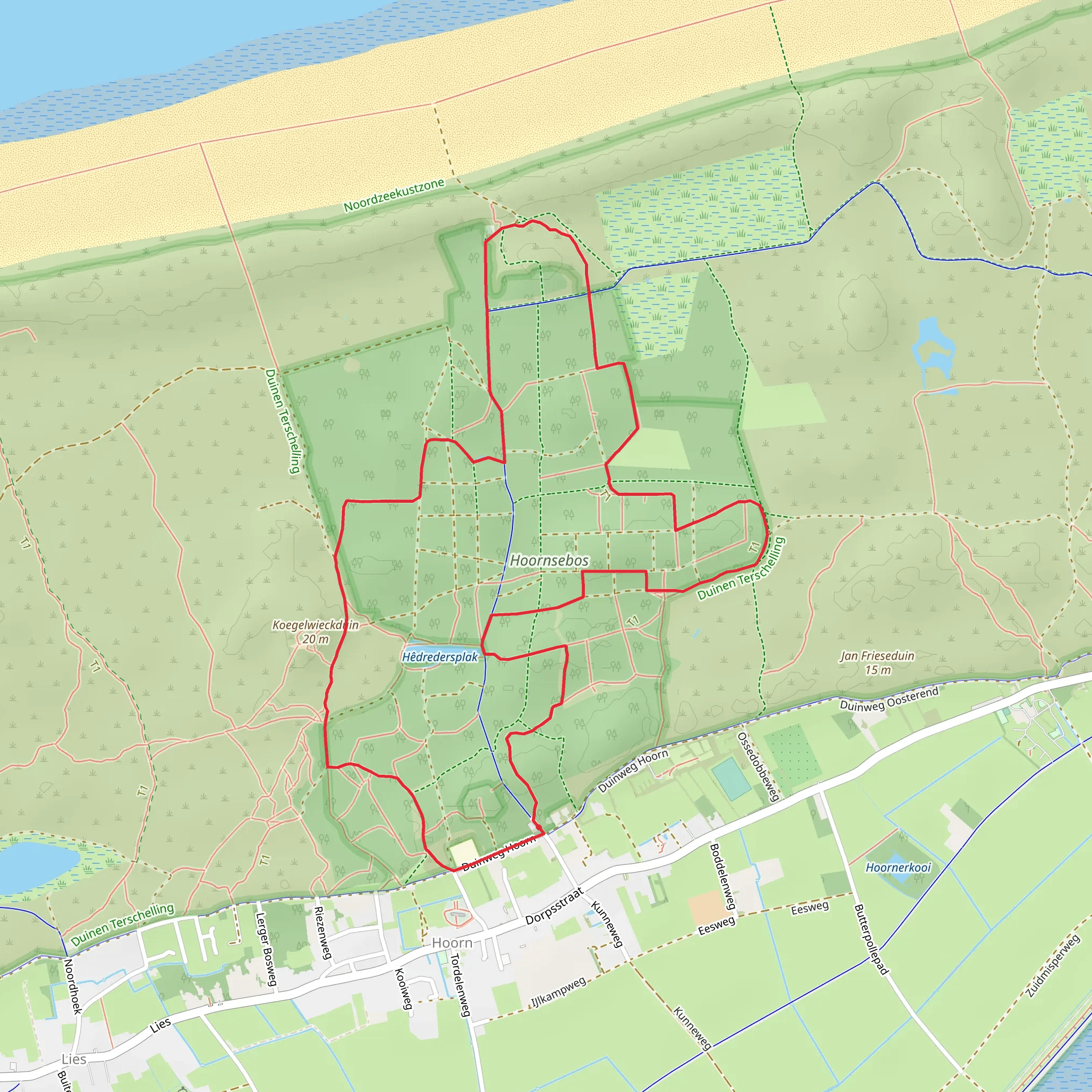
The trail begins near the village of Hoorn on the island of Terschelling in the Netherlands. Hoorn is accessible by ferry from the mainland town of Harlingen. Upon arrival at West-Terschelling, the island's main port, you can reach Hoorn by bus or bicycle. Buses depart regularly from the ferry terminal, and bicycles are available for rent at various shops nearby.
Trail Overview
This approximately 6-kilometer (3.7-mile) loop trail offers a gentle walk with no significant elevation gain, making it suitable for hikers of all levels. The route traverses diverse landscapes, including forests, dunes, and wetlands, providing a comprehensive experience of Terschelling's natural beauty.
Key Sections of the Trail
Hoornerbos Forest: Starting in the Hoornerbos, a forest planted between 1920 and 1930, you'll encounter a mix of coniferous and deciduous trees. This area is home to rare plant species such as the pine orchid and the lesser butterfly orchid. Keep an eye out for the "turfdôbe," rectangular pits about one meter deep, historically used to soak peat blocks for tree planting in the dry dunes. (wegvanwandelen.nl)
Hêdredersplak Pond: Continuing through the forest, you'll come across Hêdredersplak, a large pond surrounded by dunes and pines. In winter, the pond often freezes, becoming a popular local spot for ice skating. (wegvanwandelen.nl)
Koegelwieck Dunes: The trail then leads to the Koegelwieck, the largest secondary dune valley on Terschelling, formed during a significant sand drift period in the 19th century. This area is protected due to its rich plant diversity, including cranberry, club-rush, and various wild orchids. In winter, the valley retains water, making some paths less accessible. (wegvanwandelen.nl)
Easte Plak Marshland: A section of the route passes by Easte Plak, a marshy area accessible via a broad mowed grass path. Depending on the season, this area can be quite wet, so waterproof footwear is recommended. (wegvanwandelen.nl)
Formerumerbos Forest: The trail also meanders through the Formerumerbos, where you can find the island's thickest tree, with a circumference of 2.5 meters. This forest features a mix of young and mature trees, creating a unique landscape. (wegvanwandelen.nl)
Wildlife and Flora
Throughout the hike, you may encounter various wildlife species. In the dunes, look for Exmoor ponies grazing; these animals help maintain the area's biodiversity by preventing overgrowth. Birdwatchers can enjoy spotting species like the Eurasian curlew and the common redshank in the wetlands. The diverse plant life includes dune grasses, heather, and rare orchids, especially in the Koegelwieck area. (wegvanwandelen.nl)
Historical Significance
The turfdôbe found along the trail are historical remnants of Terschelling's forestry practices. In the early 20th century, peat blocks from Drenthe and Groningen were soaked in these pits for several weeks before being used to support young trees planted in the dry dune environment. This method was crucial for successful afforestation efforts on the island. (wegvanwandelen.nl)
Navigation and Preparation
For detailed maps and navigation assistance, consider using the HiiKER app, which provides comprehensive trail information and offline maps. Given the potential for wet conditions, especially in marshy areas, waterproof footwear is advisable. Always check local weather forecasts before setting out, as conditions can change rapidly.
Getting There
To reach Terschelling, take a ferry from Harlingen to West-Terschelling. From the ferry terminal, buses and bicycle rentals are available to transport you to Hoorn, where the trail begins. Bus schedules are aligned with ferry arrivals, ensuring convenient transfers.
Additional Tips
Seasonal Considerations: Some parts of the trail, particularly the Koegelwieck dunes and Easte Plak marshland, can be waterlogged in winter and early spring. Plan your hike during drier months for easier access.
Facilities: While the trail offers a natural experience, amenities are limited.
Surfaces
Unknown
Grass
Asphalt
Unpaved
Sand
Dirt
Comments and Reviews
User comments, reviews and discussions about the Turfdobe and Hedredersplak via Bad Weg Hoorn, Netherlands.
average rating out of 5
0 rating(s)


