Download
3D Flyover
Add to list
More
41.6 km
2 days
0 m
Multi Day
“A big-sky polder loop of lanes and dikes—steady, wind-shaped, quietly demanding for some.”
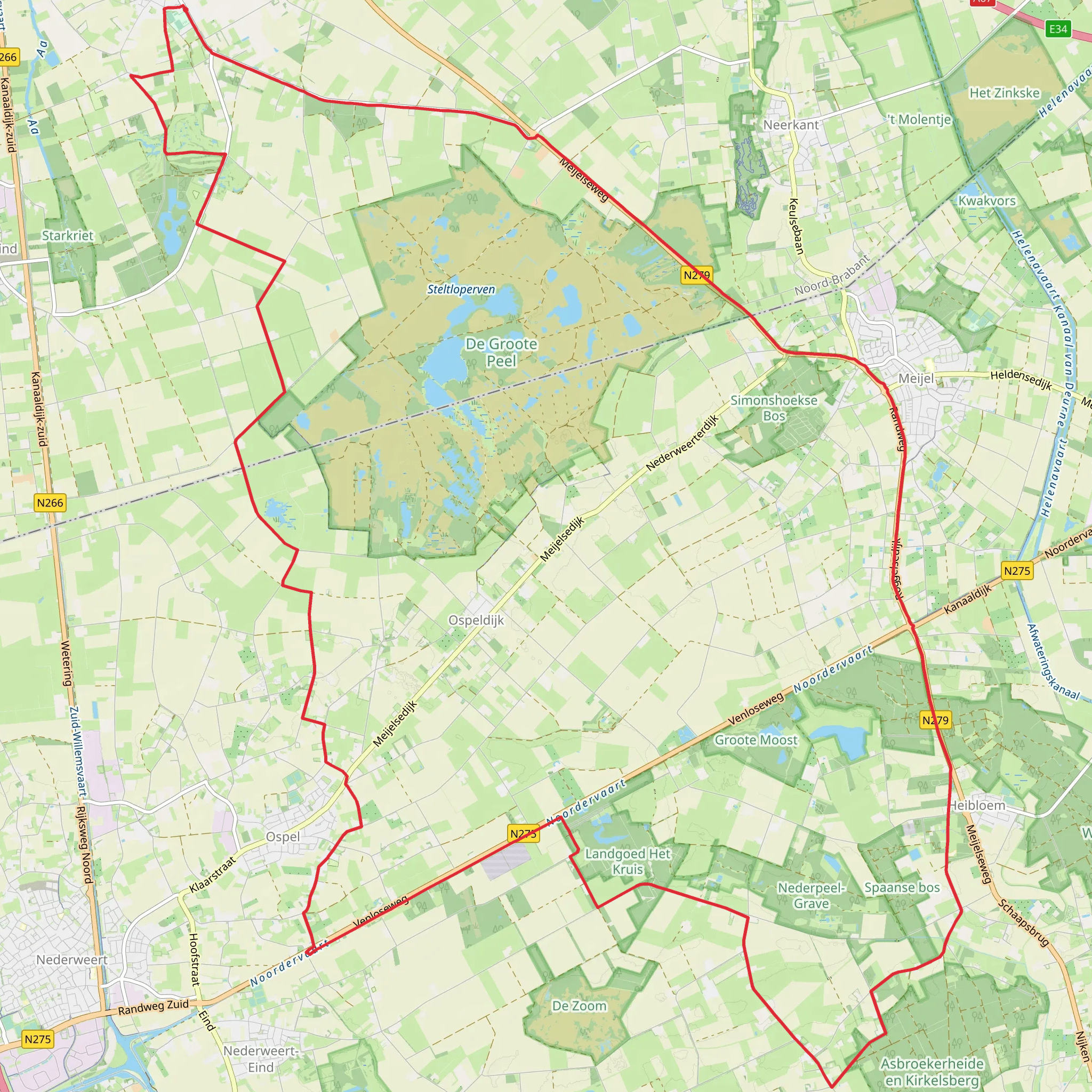
A long, flat loop like this (about 42 km / 26.1 mi with roughly 0 m / 0 ft of climbing) is all about steady pacing, wind management, and staying oriented through a patchwork of farm lanes, dikes, drainage canals, and small villages. Expect mostly level footing and big skies—easy on the joints, but deceptively demanding if you underestimate distance, exposure, or how repetitive flat terrain can feel over a full day.
Before I can convert the start (“Hike head: near …”) into the nearest known address/landmark and give you accurate “how to get there” directions, I need one of the following:
- the starting coordinates (lon/lat), or
- the nearest town/village, parking area, or a recognizable point (church, bridge, trailhead lot), or
- a HiiKER link to the route.
If you send that, I’ll pin it to the closest practical start point (e.g., a village center, a road junction, or a notable dike crossing) and tailor the transport/parking guidance precisely.
What the terrain feels like (and why “easy” still needs planning)
With near-zero elevation change, the difficulty comes from: - Distance: 42 km is marathon-plus. Even on perfect surfaces, it’s an all-day outing for most hikers. - Exposure: Dike-top and open polder landscapes can be windy and sun-exposed with little shelter. - Surface variety: You’ll likely rotate between paved farm roads, hard-packed gravel, and dike/canal-side tracks. Pavement can be efficient but can also fatigue feet faster than softer paths—consider cushioned footwear and socks you trust for long mileage. - Navigation complexity: Flat country often has many similar-looking junctions. Plan to follow the route on HiiKER and watch for frequent turns at field edges, canal bridges, and T-junctions.
Route character and likely waypoints
Given the road names in the loop—Meijetseweg, Randweg, and Roggelsedijk—this reads like a classic lowland circuit linking rural lanes and a dike road (“dijk”). You can generally expect:
- Early kilometers (0–10 km / 0–6.2 mi): Settling into rhythm on quiet lanes. These sections are often the most straightforward for navigation, but also where people start too fast. Keep your pace conversational and let your legs warm up.
- Middle stretch (10–30 km / 6.2–18.6 mi): The “engine room” of the day—long, flat lines along canals, field boundaries, and dikes. This is where wind direction matters most; a headwind can slow you dramatically. If the route runs atop a dike, you may have slightly more exposure and fewer shade breaks.
- Final kilometers (30–42 km / 18.6–26.1 mi): Mentally the hardest on flat loops. Foot care becomes important—hot spots, blisters, and tight calves are more common than “hill fatigue.” Plan a short stop around 30–32 km (18.6–19.9 mi) to reset: eat, drink, check feet, and reapply sunscreen if needed.
Nature, landscapes, and wildlife to look for
This kind of loop typically passes through polder farmland and wetland edges, shaped by centuries of water management. Even when it looks “just agricultural,” there’s often a lot to notice:
- Canals, drainage ditches, and dikes: These are the backbone of the landscape. Watch for steep canal banks—a slip can mean a wet (and potentially dangerous) fall, especially on muddy edges or algae-slick concrete.
- Birdlife: Open fields and waterways are excellent for waterfowl and waders (ducks, geese, herons, egrets), and you may see raptors hunting over fields. Dawn and late afternoon are often busiest.
- Seasonal conditions:
- Spring: wetter verges, active nesting birds (give them space).
- Summer: strong sun, heat reflecting off pavement and water.
- Autumn/winter: wind chill and slick surfaces on dike tops and bridges.
- Spring: wetter verges, active nesting birds (give them space).
If you tell me the exact region/towns, I can be more specific about protected areas, named reserves, and the most likely species.
Historical context you’ll feel underfoot
Routes built around “dijk” roads and straight farm lanes usually reflect a long history of land reclamation and flood control. The geometry—straight canals, raised embankments, and carefully managed water levels—often comes from centuries of engineering to make low-lying land productive and safe. Even without dramatic ruins, the landscape itself is the historical artifact: a working system of water management, agriculture, and settlement patterns.
If you provide the start location (or nearby towns), I can tie this to the specific local history—named polders, notable flood events, historic dike lines, and any nearby heritage sites you’ll pass.
Practical planning for a 42 km / 26.1 mi flat loop
- Time estimate: Many hikers will take 8–11 hours moving time depending on pace and stops. Flat doesn’t automatically mean fast if surfaces are hard or wind is strong.
- Water & food: Plan for multiple refills or carry enough for long exposed stretches. If the loop passes villages, you may be able to top up at shops/cafés—tell me the start area and I’ll suggest a sensible resupply strategy.
- **
AI Planner
Days planned around your pace, with somewhere to stay each night.
Surfaces
Unknown
Asphalt
Concrete
Gravel
Comments and Reviews
User comments, reviews and discussions about the Meijetseweg, Randweg and Roggelsedijk Loop, Netherlands.
average rating out of 5
0 rating(s)