Download
3D Flyover
Add to list
More
19.1 km
~3 hrs 49 min
0 m
Loop
“Drift through flat Dutch floodplains—ditch-lined lanes, reed-fringed woods, and wind-kissed fields.”
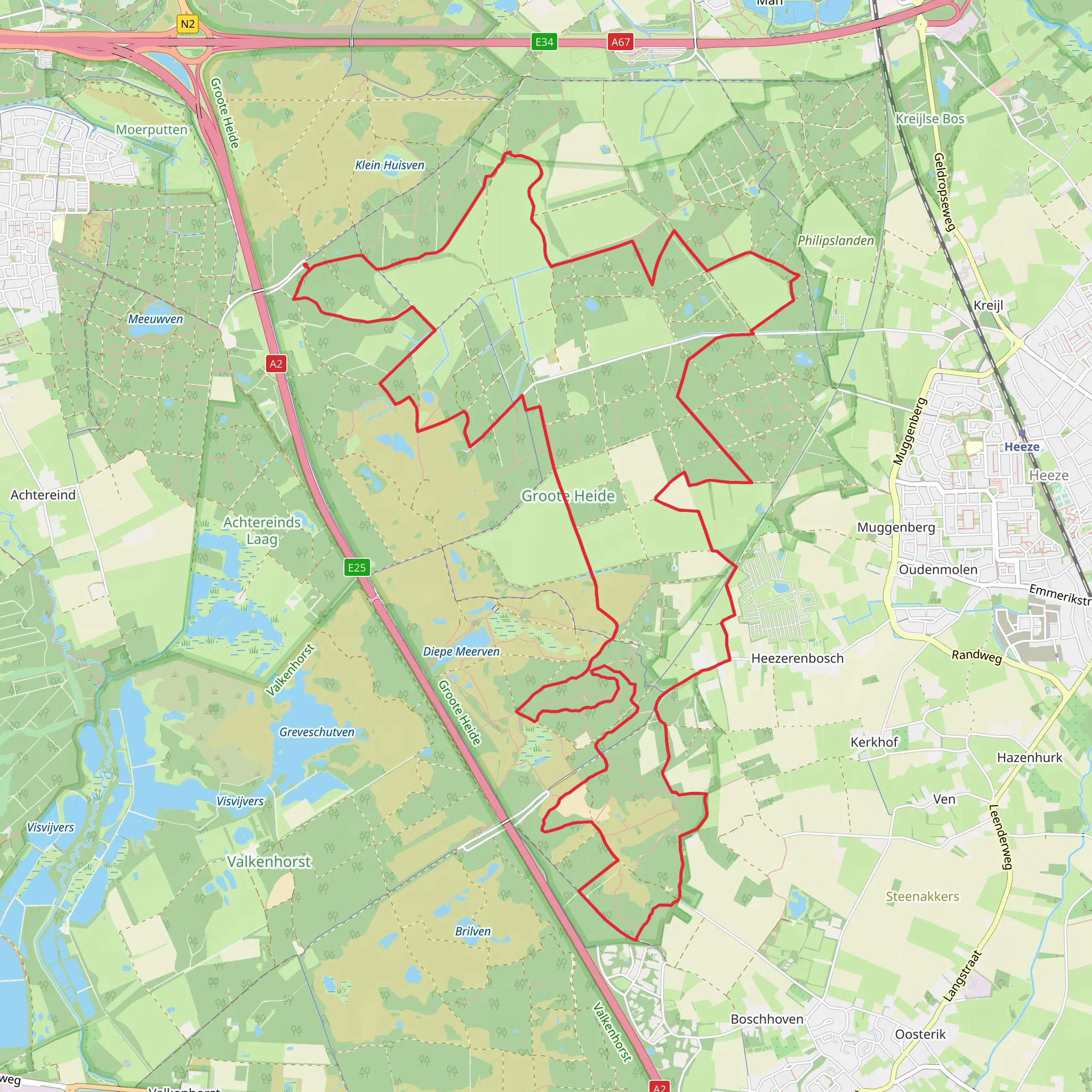
This is a gentle, low-lying loop of roughly 19 km (11.8 mi) with essentially 0 m (0 ft) of sustained climbing, ideal for a relaxed day on mixed surfaces—typically a blend of quiet lanes, farm tracks, and easy woodland/edge-of-field paths. Expect a landscape shaped by Dutch river and floodplain processes: flat horizons, drainage ditches, reed-fringed edges, and pockets of woodland that feel surprisingly secluded despite the easy terrain.
Getting to the start (car + public transport)
Because the start point is only given as “near” (no town name or coordinates), the most reliable way to pinpoint the exact trailhead is to open the route in HiiKER and use the “Navigate to start” option—then you can match the start to the nearest village street name, parking pull-in, or trail access gate.
By car - In this part of the Netherlands, loop walks like this commonly begin near a small village edge, a forest car park, or a recreation area pull-off. Once you load the route in HiiKER, look for: - a marked parking area (P) near the woods (“bos”/“bosch” in local place names), - a trail information board at a forest entrance, - or a café/restaurant with public parking near the route line. - If the start is near a village, be mindful of narrow residential streets and farm access lanes—park only where signage allows and avoid blocking gates.
By public transport - The most common pattern is: train to the nearest regional station, then a local bus to a village stop, followed by a 1–3 km (0.6–1.9 mi) walk to the start. - Once you’ve opened the route in HiiKER, identify the nearest village center or bus stop to the start point and plan the final approach on foot along quiet lanes.
What the route feels like underfoot
With the elevation essentially flat, the “difficulty” comes less from climbing and more from surface conditions and exposure: - Farm tracks and field edges can be firm in dry spells but turn slick after rain, especially where tractors have left ruts. - Woodland sections are usually the most comfortable underfoot, though leaf litter can hide roots and soft patches. - Dike-top or open polder stretches (if included on your line) can feel surprisingly windy—bring a light shell even on mild days.
Plan on a steady walking pace of 4–5 km/h (2.5–3.1 mph) plus stops; most hikers will take 4–5.5 hours depending on breaks and how soft the ground is.
Landmarks, scenery, and the character of the area
The names point to two distinct “flavors” you’ll likely experience:
Achter ’t Heezerenbosch - “Bosch/bos” indicates woodland, often managed forest or mixed stands. Expect straight forestry lines in places, with occasional more natural-feeling edges where undergrowth thickens. - Look for drainage channels and small footbridges—these are common in lowland woods and can be slippery with algae in damp weather.
De Oeffels - This name is associated with a rural hamlet/area feel—think scattered farms, hedgerows, and open agricultural views. - You’ll likely pass traditional farmsteads, long straight lanes, and field margins where birds concentrate.
If the loop skirts waterways or floodplain ground, you may also see: - Willow and alder along wetter edges, - Reed beds and sedge patches, - and occasional small pumping structures or culverts—quiet reminders of how engineered water management is central to the region.
Wildlife and what to watch for
Even on an easy, flat route, the nature can be a highlight—especially in the early morning or near dusk.
Birdlife - Open fields and wet margins often host geese, ducks, coots, and herons; in wooded edges you may hear woodpeckers and songbirds. - If you pass any marshy corners, scan for raptors (buzzards/kestrels) hunting over the fields.
Mammals - In quieter woodland and field-edge corridors, it’s common to spot signs of roe deer (tracks, droppings) and small mammals. - If the route crosses more natural wet ground, you may notice burrows and well-used animal paths along ditch lines.
Insects - In warmer months, expect mosquitoes and midges near still water and shaded woodland—pack repellent if you’re sensitive.
Historical context you’ll feel on the walk
This landscape is strongly tied to the Netherlands’ long history of land reclamation, drainage, and flood control. Even without dramatic ruins, the “history” shows up in: - the geometry of fields and straight drainage lines, - dikes/raised tracks that double as walking routes, - and the placement of settlements on slightly higher, safer ground.
If your loop includes older lanes between farms, you’re often walking along routes that have connected hamlets and working land for generations—practical corridors shaped by water, soil, and agriculture rather than by steep terrain.
Practical planning: timing, food/water, and facilities
- Water: Don’t assume reliable refill points in rural stretches. Carry enough for the full loop—especially if it’s breezy and sunny, as flat open terrain can dehydrate you faster than expected.
- Food: Bring snacks/lunch
AI Planner
Days planned around your pace, with somewhere to stay each night.
Surfaces
Dirt
Sand
Asphalt
Unknown
Gravel
Comments and Reviews
User comments, reviews and discussions about the Achter t Heezerenbosch and De Oeffels Loop, Netherlands.
average rating out of 5
0 rating(s)