Download
3D Flyover
Add to list
More
8.7 km
~1 hrs 43 min
0 m
Loop
“Wander through a tapestry of tranquil ponds, lush forests, and reclaimed clay pits alive with wildlife.”
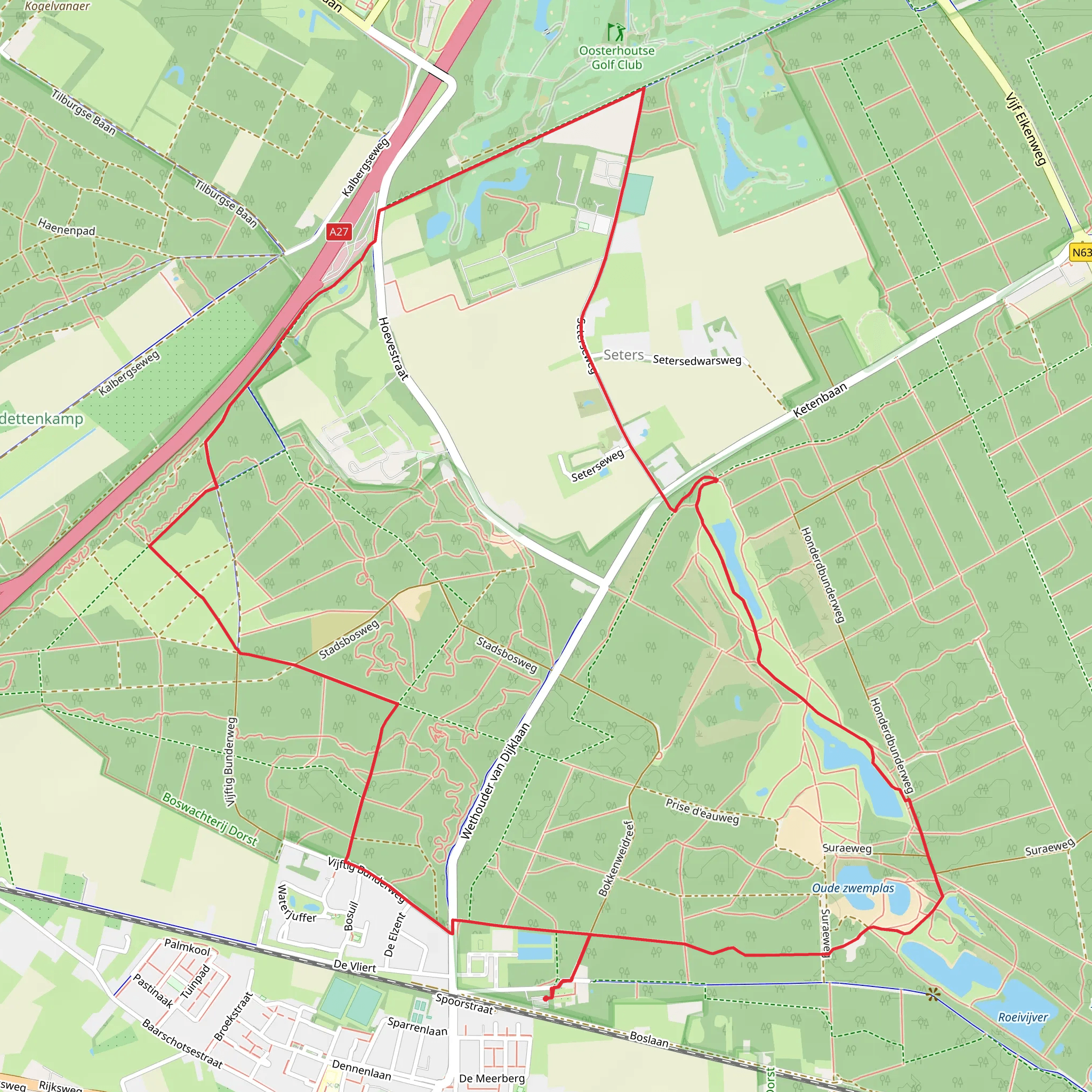
Starting from the edge of Dorst, a small village in North Brabant, the trailhead is conveniently located near the Boswachterij Dorst parking area, just off the N282 road. For those arriving by public transport, buses from Breda or Oosterhout stop at Dorst, from where it’s a short walk to the forest entrance. Drivers can use the Boswachterij Dorst car park as a reliable starting point.
Trail Overview and Navigation
Covering approximately 9 km (about 5.6 miles) with virtually no elevation gain, this loop is ideal for hikers seeking a gentle, scenic walk. The route is well-marked, but for added confidence and real-time navigation, HiiKER provides detailed maps and trail guidance.
Oude Leemputten and Nieuwe Leemputten
The first section leads you through the Oude Leemputten, a landscape shaped by historical clay extraction. These old clay pits, now tranquil ponds, are surrounded by lush vegetation and are a haven for waterfowl and amphibians. The area’s industrial past is still visible in the terrain, with remnants of old dikes and water channels. After about 2 km (1.2 miles), the trail transitions into the Nieuwe Leemputten, where newer clay pits have similarly been reclaimed by nature. Here, look for herons, kingfishers, and the occasional roe deer grazing at the water’s edge.
Boswachterij Dorst Forest
Midway through the hike, the path enters the heart of Boswachterij Dorst, a sprawling pine and deciduous forest managed for both recreation and conservation. The forest floor is carpeted with moss and heather, especially vibrant in late summer. Listen for woodpeckers and spot squirrels darting among the trees. The sandy soil and flat terrain make for easy walking, and the wide forest tracks are suitable for families and casual hikers.
Landmarks and Points of Interest
At around the 6 km (3.7 miles) mark, you’ll pass close to the Galderse Heide, a heathland area known for its open vistas and rare plant species. The trail also skirts several small lakes and picnic spots, perfect for a rest or a quiet lunch. Informational signs along the route provide insight into the area’s natural history and the transformation from industrial clay pits to thriving wetlands.
Historical Significance
The region’s clay pits date back to the late 19th and early 20th centuries, when clay was extracted for brickmaking—a key industry in North Brabant. Over time, as the pits were abandoned, nature reclaimed the land, creating a unique mosaic of wetland and woodland habitats. The Boswachterij Dorst itself was established in the early 20th century as part of a national effort to reforest and restore degraded land.
Practical Tips
The entire loop is flat, with an elevation gain of less than 5 metres (16 feet), making it accessible for most fitness levels. Paths can be sandy or muddy after rain, so sturdy footwear is recommended. There are no significant climbs or technical sections. Dogs are welcome but should be kept on a leash in sensitive wildlife areas. Toilets and refreshments are available at the main parking area and in the village of Dorst.
For navigation, download the route on HiiKER to ensure you stay on track and make the most of the interpretive points along the way.
Surfaces
Unknown
Asphalt
Dirt
Sand
Concrete
Paved
Comments and Reviews
User comments, reviews and discussions about the Oude Leemputten, Nieuwe Leemputten and Boswachterij Dorst Loop, Netherlands.
average rating out of 5
0 rating(s)