
Download
3D Flyover
Add to list
More
21.8 km
~4 hrs 21 min
0 m
Point to Point
“From salty breezes to shady pines, Texel’s southwest unfolds in a symphony of landscape and wildlife.”
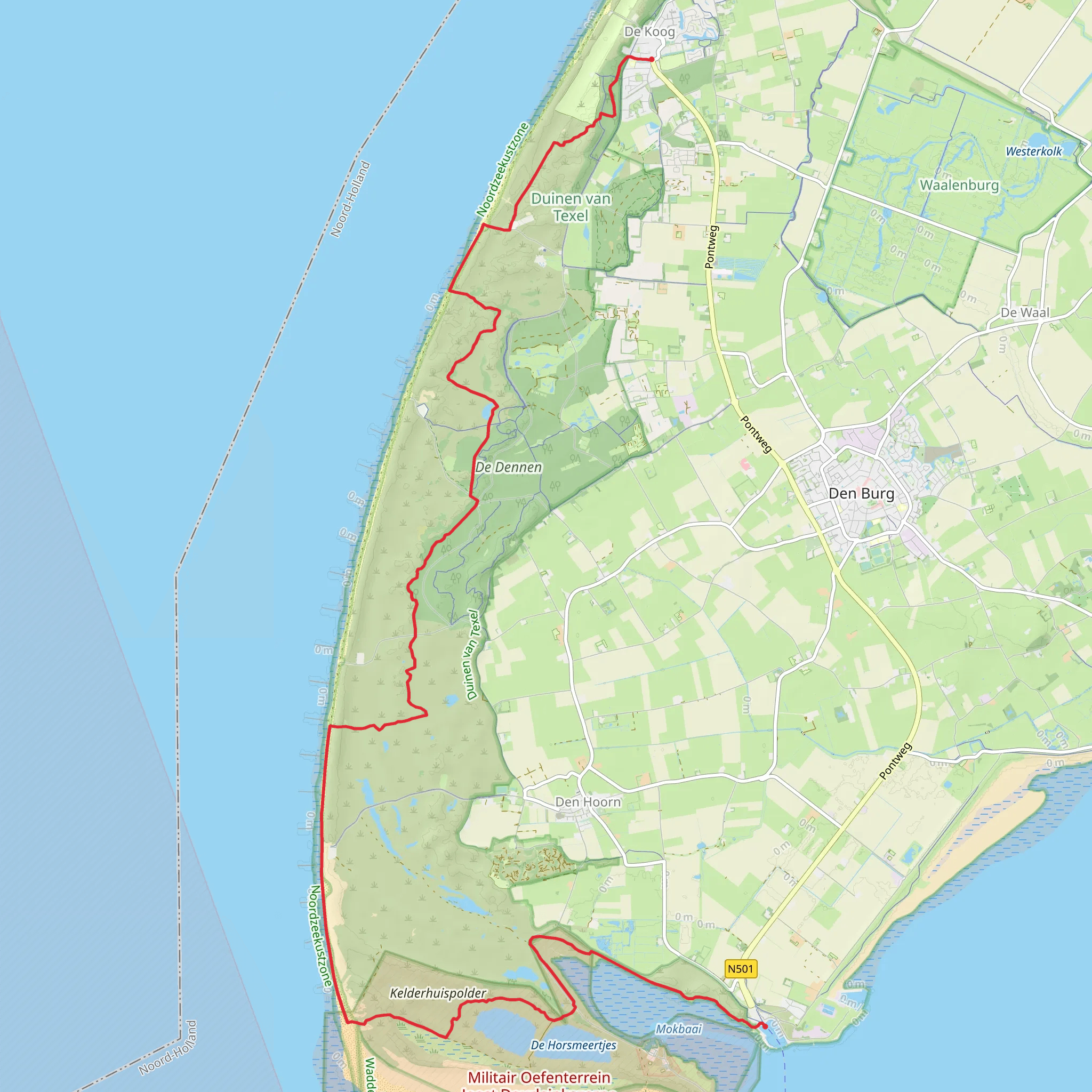
Starting from the southern tip of Texel, the journey begins near the ferry terminal at ’t Horntje, a bustling gateway where visitors arrive from Den Helder. This is the main entry point to the island, easily accessible by regular ferry services. For those arriving by public transport, buses connect the ferry terminal to various points across Texel, including the starting point of this hike. If driving, parking is available near the terminal, making it convenient for both day-trippers and those staying longer.
Coastal Beginnings and Open Landscapes
The first stretch of the hike follows the southwestern coastline of Texel, with the North Sea often in view. The terrain is flat, with virtually no elevation gain—expect a total ascent of around 0 meters (0 feet) over the entire 22 km (13.7 miles). Early on, the route passes through open grasslands and salt marshes, where you may spot grazing sheep and a variety of coastal birds, including oystercatchers and avocets. The salty air and expansive skies set the tone for a classic Dutch island experience.
De Dennen Forest and Dune Systems
After approximately 7 km (4.3 miles), the path enters the De Dennen forest, a significant natural area managed as part of the Dunes of Texel National Park. This forest was planted in the early 20th century to stabilize the shifting sands and now provides a cool, shaded contrast to the open coast. The sandy trails wind through dense pine and deciduous trees, with occasional clearings offering glimpses of the surrounding dunes. Look out for red squirrels, woodpeckers, and, in spring, carpets of wildflowers. The forest is also dotted with historical bunkers from World War II, remnants of the island’s strategic importance during the conflict.
Wildlife and Nature Reserves
Beyond De Dennen, the route skirts several nature reserves, including the Waalenburg polder, a haven for migratory birds. Depending on the season, you might see spoonbills, geese, or even rare marsh harriers. The flat, open landscape is ideal for birdwatching, so bringing binoculars is recommended.
Approaching De Koog
The final stretch leads north toward De Koog, Texel’s lively beach village. The path alternates between dune ridges and sandy tracks, with the sound of the sea never far away. De Koog is known for its wide beaches, bustling cafés, and access to the Ecomare seal sanctuary, a popular spot for learning about the island’s marine life.
Navigation and Planning
The entire route is well-marked, but for detailed navigation and up-to-date trail conditions, HiiKER is the recommended tool. The app provides offline maps and waypoints, ensuring you stay on track even in the more remote sections of the forest and dunes.
Getting There and Away
To reach the starting point at ’t Horntje, take the ferry from Den Helder, which runs frequently throughout the day. Buses meet most ferry arrivals and can drop you at the trailhead. At the end of the hike in De Koog, local buses connect back to the ferry terminal or other parts of Texel, making it easy to plan a one-way hike without needing to return to your starting point.
This route offers a gentle introduction to Texel’s diverse landscapes, with a mix of coastal views, forest trails, and opportunities to experience the island’s unique wildlife and history.
AI Planner
Days planned around your pace, with somewhere to stay each night.
Surfaces
Unknown
Sand
Grass
Gravel
Dirt
Asphalt
Ground
Unpaved
Concrete
Comments and Reviews
User comments, reviews and discussions about the t Horntje to De Koog via De Dennen, Netherlands.
average rating out of 5
0 rating(s)

