Download
3D Flyover
Add to list
More
9.0 km
~1 hrs 47 min
0 m
Loop
“Wander through wild dunes, vibrant wetlands, and sweeping beaches, where Texel’s nature and history shine.”
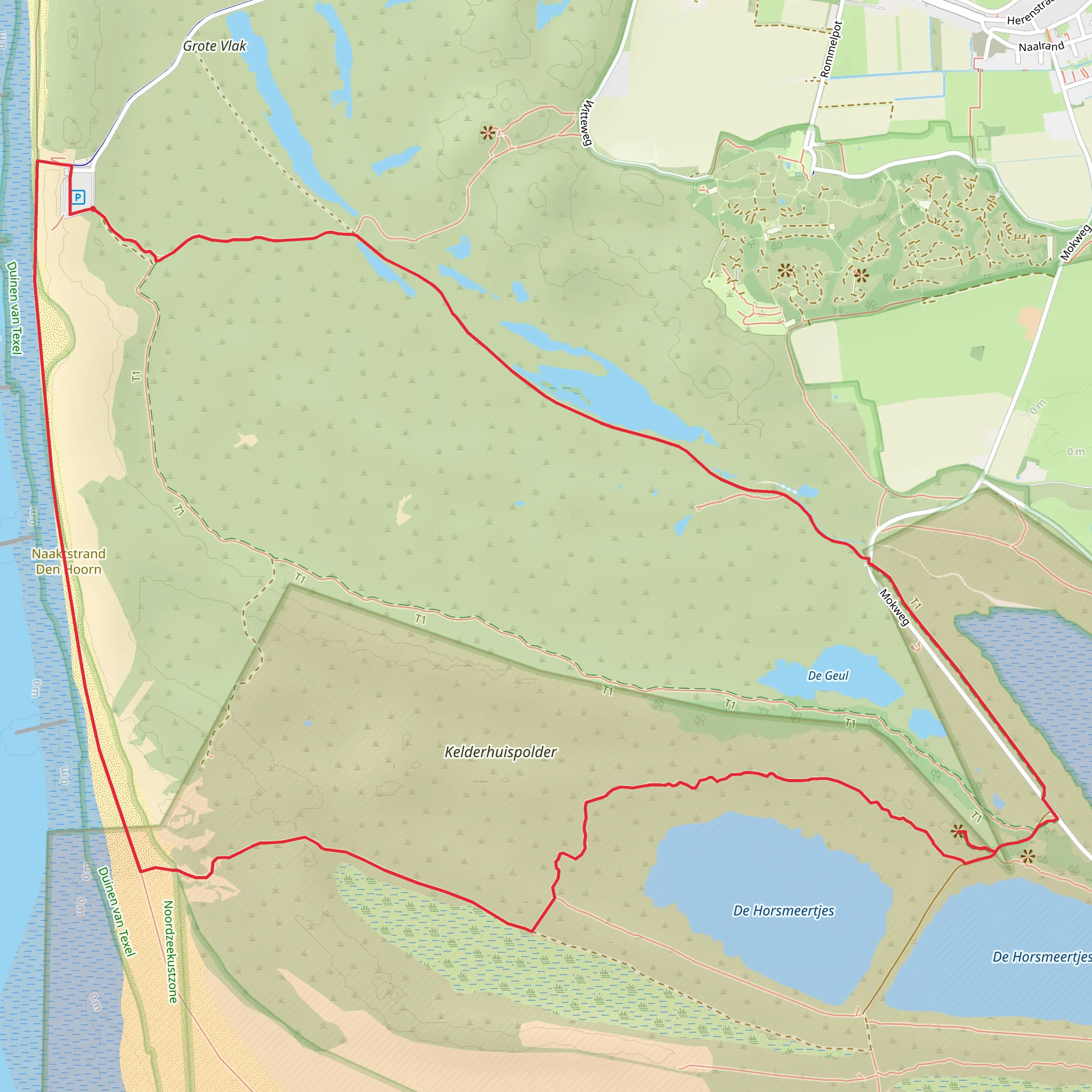
Starting from the southern edge of Texel near Den Hoorn, this 9 km (about 5.6 miles) loop offers a flat and leisurely walk with virtually no elevation gain, making it accessible for most hikers. The trailhead is conveniently located near the parking area at Jan Ayeslag, just outside Den Hoorn village, which is easily reached by local bus from Den Burg or by car with ample parking available.
Getting There Public transport users can take a bus from Den Burg to Den Hoorn, alighting at the village center. From there, it’s a short walk west along Jan Ayeslag to the trailhead. Drivers will find parking at the end of Jan Ayeslag, close to the dunes and the start of the loop.
Dune Landscapes and Coastal Views The route quickly immerses you in the unique dune landscape of southern Texel. The first section winds through the Pompevlak dunes, a protected area known for its shifting sands and rare coastal flora. Expect to see sea holly, marram grass, and in spring and summer, a colorful display of wildflowers. The open dunes provide sweeping views toward the North Sea and the Wadden Sea, with the salty breeze ever-present.
De Horsmeertjes Wetlands After about 2.5 km (1.5 miles), the trail skirts the edge of De Horsmeertjes, a series of shallow, brackish lakes formed by the interplay of sea and sand. This wetland is a haven for birdlife—look for spoonbills, avocets, and sometimes even rare terns. Birdwatchers should bring binoculars for the best experience. The path here is sandy but well-trodden, and wooden boardwalks help protect the most sensitive areas.
Naaktstrand Den Hoorn and the Southern Beach Continuing south, the loop reaches the wide, windswept beach known as Naaktstrand Den Hoorn, a designated naturist area. Even if you’re not planning to swim, the beach is a highlight for its sense of wildness and solitude. The sand stretches for kilometers, and on clear days, you can see all the way to the southern tip of Texel where the North Sea meets the Wadden Sea. Keep an eye out for seals basking on the sandbanks offshore.
Historical Context This southern tip of Texel has a rich maritime history. The shifting sands and treacherous currents were notorious among sailors, and remnants of old shipwrecks occasionally surface after storms. The area was also used for military exercises during World War II, and you may notice remnants of bunkers hidden in the dunes.
Navigation and Safety The entire loop is well-marked, but the open landscape can be disorienting in fog or heavy weather. Use HiiKER for reliable navigation and to track your progress. There are no significant elevation changes, but the sandy paths can be tiring, so sturdy footwear is recommended. Bring water and snacks, as there are no facilities along the route.
Wildlife and Seasonal Highlights Spring and autumn are particularly rewarding for birdwatchers, with migratory species stopping over in the wetlands. Rabbits and foxes are common in the dunes, and the flora changes dramatically with the seasons. In summer, the area can be busy near the beach, but the dunes and wetlands remain peaceful.
This loop offers a quintessential Texel experience: wild dunes, tranquil wetlands, and expansive beaches, all within easy reach of Den Hoorn.
Surfaces
Sand
Grass
Unknown
Ground
Asphalt
Concrete
Comments and Reviews
User comments, reviews and discussions about the Pompevlak, De horsmeertjes and Naakstrand Den Hoorn Loop, Netherlands.
average rating out of 5
0 rating(s)