
Download
3D Flyover
Add to list
More
7.7 km
~1 hrs 33 min
6 m
Loop
“A gentle bridge-to-bridge loop through canals and big skies, where wind and muddy verges add spice.”
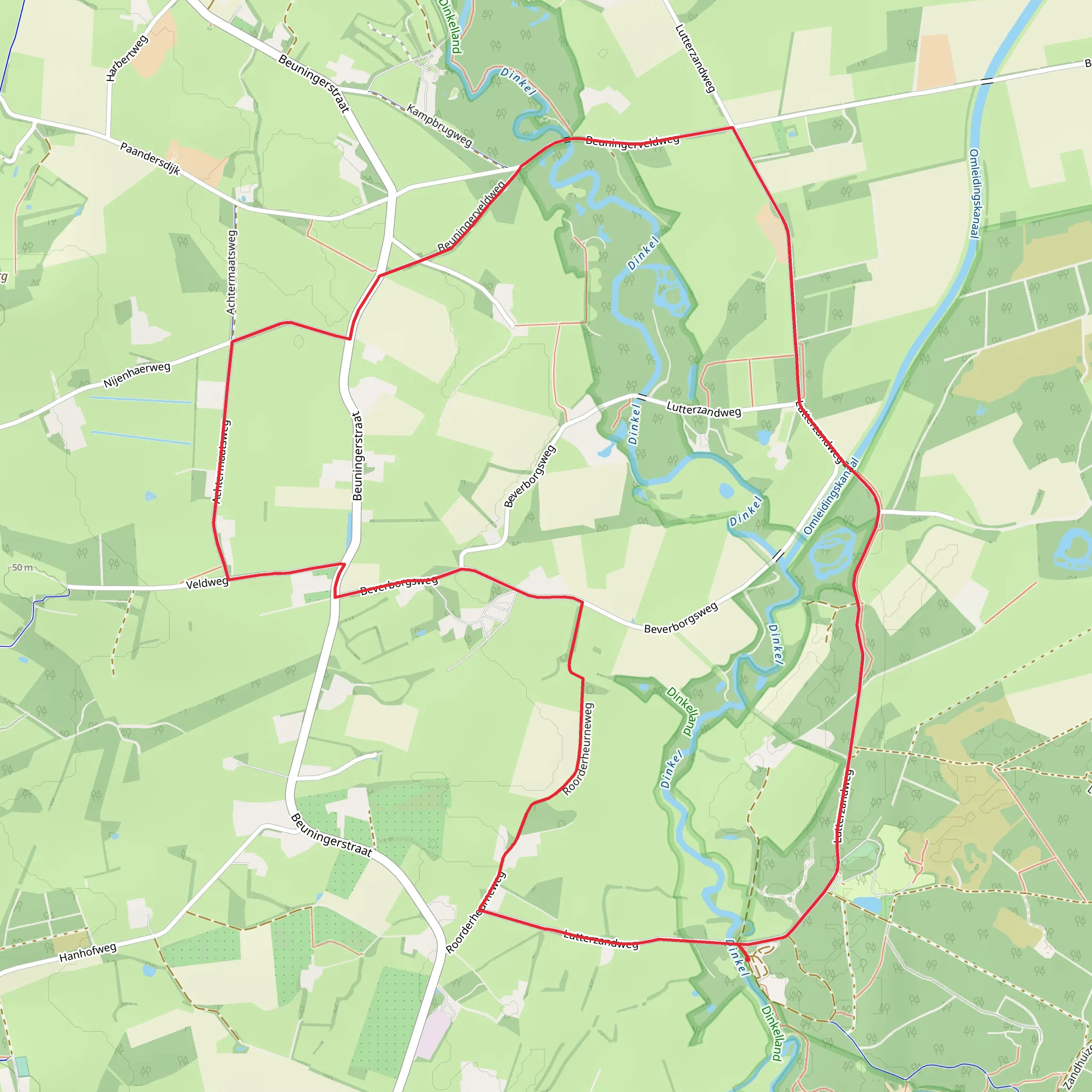
This is a gentle, mostly level loop of about 8 km (5.0 mi) with roughly 0 m (0 ft) of climbing—ideal for a relaxed half-day walk on firm paths and quiet lanes. Expect a landscape shaped by lowland water management: canals, small bridges, drainage ditches, and open fields, with long sightlines and big skies. Because the route is flat, the main “difficulty” factors are usually wind exposure, muddy edges after rain, and narrow bridge approaches rather than steepness.
Getting to the start (car + public transport)
I’m missing the exact start coordinates (“Hike head: near …” is incomplete), so I can’t reliably convert the lon/lat to a nearest address or landmark yet. If you share the start lon/lat (or a HiiKER link/GPX), I’ll pin it to the nearest known bridge, road name, or parking pull-in and tailor the directions precisely.
In the meantime, for loops named Kampbrug and Kribbenbrug, the start is typically closest to one of those bridges (Dutch: brug = bridge), often with a small roadside verge or farm-track entrance nearby: - By car: plan for informal roadside parking near the bridge approach or a nearby village street. In these areas, parking is often limited—avoid blocking farm gates, field access, and narrow bridge ramps. - By public transport: the most common pattern is train to the nearest larger town, then a regional bus to a village stop, followed by a 1–3 km (0.6–1.9 mi) walk to the bridge area. Once you tell me the nearest town/municipality (or coordinates), I’ll identify the most practical station + bus stop pairing.
What the route is like underfoot
Most of this kind of loop is on paved cycle paths, compacted gravel farm tracks, and short stretches of quiet road. You’ll likely cross or parallel canals and drainage ditches for much of the walk. Even when the surface is firm, the verges can be soft—especially near water—so keep an eye on footing if you step aside to let bikes pass.
Because elevation gain is essentially nil, pacing is straightforward: - Typical time: ~1.5–2.5 hours for most hikers, depending on stops and wind. - Best footwear: light hikers or trail shoes are fine in dry weather; after rain, consider something with better mud grip.
Key waypoints and landmarks (approximate distances)
Without the exact track line, these are the most likely “beats” of an 8 km bridge-to-bridge loop in a polder/canal setting. Once you provide the route file, I can replace these with accurate segment distances and turn-by-turn cues using HiiKER.
0.0–1.5 km (0.0–0.9 mi): Leaving the bridge area You’ll start near a bridge approach—often a small rise over the water, then immediately back to flat. This is where you’ll get your first views along the canal: straight water lines, reed edges, and open pasture.
1.5–4.0 km (0.9–2.5 mi): Long straight polder walking Expect the “classic” lowland feel: wide fields, drainage channels, and farm access tracks. In windy conditions, this middle section can feel more demanding than the distance suggests because there’s little shelter.
4.0–6.5 km (2.5–4.0 mi): Second bridge area + return leg The loop typically swings toward the second named bridge (Kribbenbrug or Kampbrug), then returns on a parallel line—often on the opposite side of a canal or along a different farm road. Bridges can be narrow; approach slowly if cyclists are present.
6.5–8.0 km (4.0–5.0 mi): Final approach The last stretch is usually easy cruising back toward the start bridge, with the best chance of spotting birds along reedbeds and ditch margins.
Navigation and “easy-to-miss” moments
Even on flat terrain, these routes can be deceptively tricky because everything looks similar—straight tracks, repeating field boundaries, and multiple small crossings. - Use HiiKER to confirm you’re taking the correct bridge or track at junctions. - Watch for private farm road signs; some tracks look public but are not. - At bridgeheads, there can be multiple ramps (road, cycle path, farm access). Confirm the correct one before committing.
Nature, wildlife, and what to look out for
Lowland canal-and-field routes can be surprisingly rich in wildlife, especially at dawn and dusk: - Birdlife: you may see herons, egrets, swans, geese, ducks, and seasonal waders in wet fields. Raptors (like kestrels) often hover over verges hunting small mammals. - Reedbed edges: listen for small songbirds; reeds also hide sudden movement—don’t be startled if something flushes close to the path. - Mammals: in rural Dutch lowlands, hares and rabbits are common; you may also spot roe deer at field edges. - Insects: in warmer months, expect mosquitoes/gnats near still water—pack repellent if you’re sensitive.
Hazards and practical prep (flat doesn’t mean risk-free)
- Wind exposure: with little tree cover, wind can be the biggest factor. Bring a light shell even on mild days.
- **Slipper
Surfaces
Asphalt
Ground
Sand
Gravel
Comments and Reviews
User comments, reviews and discussions about the Kampbrug and Kribbenbrug Loop, Netherlands.
average rating out of 5
0 rating(s)

