Download
3D Flyover
Add to list
More
6.6 km
~1 hrs 22 min
25 m
Loop
“Beneath big Twente skies, this gentle loop drifts past ditches and kolks—breezy, water-shaped calm.”
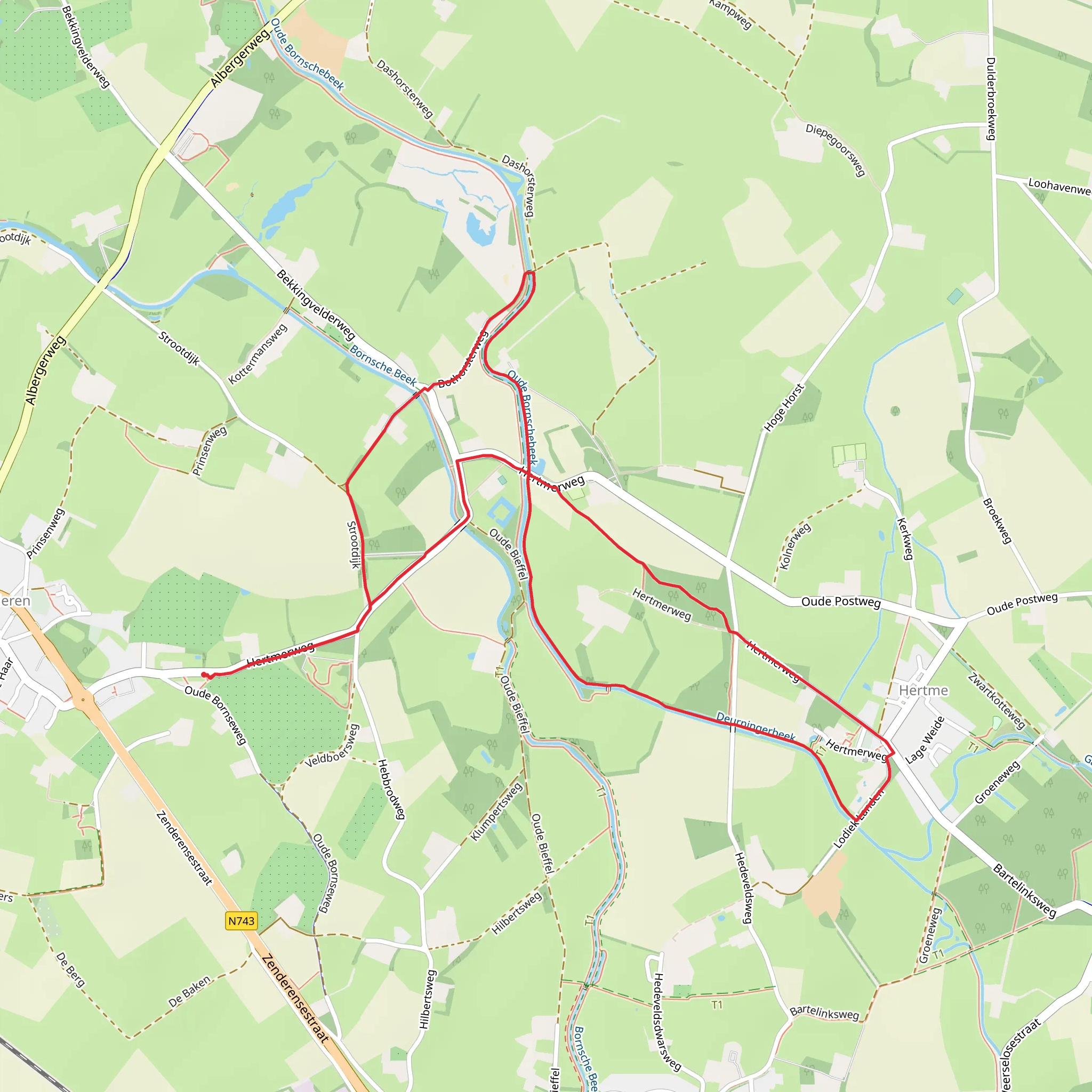
A gentle, lowland loop of about 7 km (4.3 mi) with essentially 0 m (0 ft) of climbing, this walk is all about wide skies, water, and open Dutch countryside. Expect easy footing, minimal elevation change, and frequent views across fields and wetland edges—ideal for a relaxed half-day outing or a quick nature fix.
Getting to the start (car + public transport)
Because the start is listed only as “near,” the most reliable way to plan is to anchor your arrival around the Hertmerbrug (Hertme Bridge) area near Hertme, Overijssel, which is the key named landmark for this loop. If you open the route in HiiKER, use the trailhead pin to confirm the exact bridge access point and the closest legal parking.
- By car: Aim for Hertme (near Borne, Overijssel) and follow local signs toward the bridge crossing (Hertmerbrug). Parking in this region is often along small village streets or designated pull-ins near bridges and trail access points—check for local restrictions and keep farm gates and narrow lanes clear.
- By public transport: The nearest larger rail/bus hubs are typically around Borne / Hengelo / Almelo (Twente region). From there, local buses and a short walk can usually get you close to Hertme village. Use HiiKER’s trailhead location to choose the best stop and walking approach, since rural bus frequencies can be limited.
What the route feels like underfoot
With negligible elevation gain, the effort level stays low, but conditions can change with weather: - Surface: A mix of compacted paths, quiet lanes, and potentially grassy or earthen sections near wetter ground. - Seasonal mud & water: After rain, expect soft verges, puddling, and slick patches near ditches and wetland margins. Waterproof shoes are helpful in autumn/winter; in summer, lighter footwear is usually fine. - Wind exposure: Open farmland and wetland edges can feel breezy; a light shell is useful even on mild days.
Landmarks, landscape, and the “Kolklanden” character
The name “Haar Kolklanden” points to a landscape shaped by water dynamics. In Dutch lowlands, kolk often refers to scour pools or water-filled depressions associated with flooding, dike breaches, or strong currents—features that can leave behind small lakes/ponds and wetter meadows. Even when the route is flat, the scenery tends to be varied: - Bridges, ditches, and canals: Expect frequent small crossings and straight drainage lines typical of managed polder/farmland systems. - Wet meadows and reedier edges: These areas can look quiet but are often the most wildlife-rich parts of the loop. - Field boundaries and hedgerows: Subtle transitions—grass to reeds to shrubs—are where you’ll spot the most movement.
Wildlife and what to look out for
This is classic Twente lowland habitat: farmland interwoven with wet features. Wildlife sightings depend on season and time of day, but common possibilities include: - Birdlife: Waterfowl and waders around wetter sections (ducks, geese, heron-like silhouettes), plus songbirds along hedges. Early morning and late afternoon are best. - Small mammals: You may notice signs more than animals—tracks in soft ground, movement in field margins. - Insects: In warmer months, expect mosquitoes/gnats near still water; bring repellent if you’re sensitive.
Practical cautions: - Livestock: Some paths may run beside grazing areas. Keep distance, don’t feed animals, and keep dogs controlled where required. - Ticks: In grassy margins and brushy edges, ticks can be present spring through autumn—long socks and a quick post-walk check help.
Navigation and timing
At 7 km (4.3 mi) on flat terrain, most hikers will take roughly 1.5–2.5 hours, depending on stops and path conditions. The area can have many similar-looking farm tracks and junctions, so it’s worth following the route line closely: - Use HiiKER to stay on the intended loop, especially where multiple parallel tracks run along ditches or field edges. - If you encounter a temporarily closed segment (farm operations, maintenance), backtrack to the last clear junction and use HiiKER to rejoin the loop without cutting across fields.
Local history and sense of place
This part of Overijssel reflects a long relationship between people and water: drainage, land division, and flood management have shaped the terrain for centuries. Bridges like Hertmerbrug are small but meaningful connectors in a landscape where waterways and drainage channels define movement. The “kolk” features referenced in the area name hint at historic high-water events and the ongoing Dutch tradition of engineering and adapting to wet ground—one reason the walk feels so level yet so water-influenced.
What to pack for an easy, flat loop: - Light rain layer (wind and showers can arrive quickly) - Water-resistant footwear in wet seasons - Binoculars if you enjoy birds - A fully charged phone with the route downloaded in HiiKER
Surfaces
Unknown
Asphalt
Ground
Grass
Sand
Concrete
Comments and Reviews
User comments, reviews and discussions about the Hertmerbrug and Haar Kolklanden Loop, Netherlands.
average rating out of 5
0 rating(s)