Download
3D Flyover
Add to list
More
34.8 km
2 days
813 m
Multi Day
“Hike through Yellowstone's heart on a challenging, historic trail with cascading falls and majestic wildlife.”
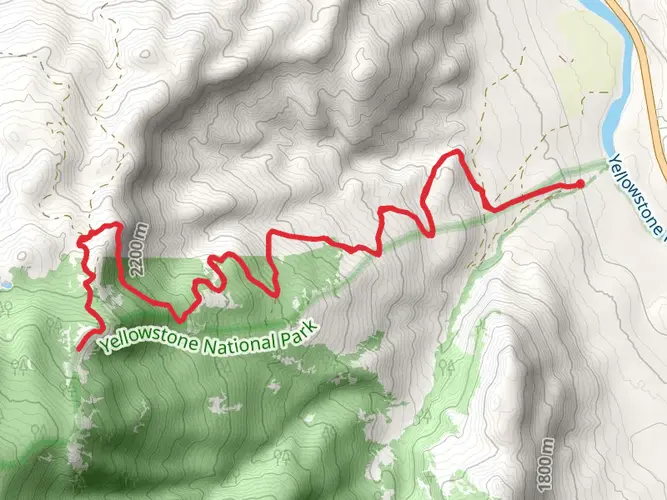
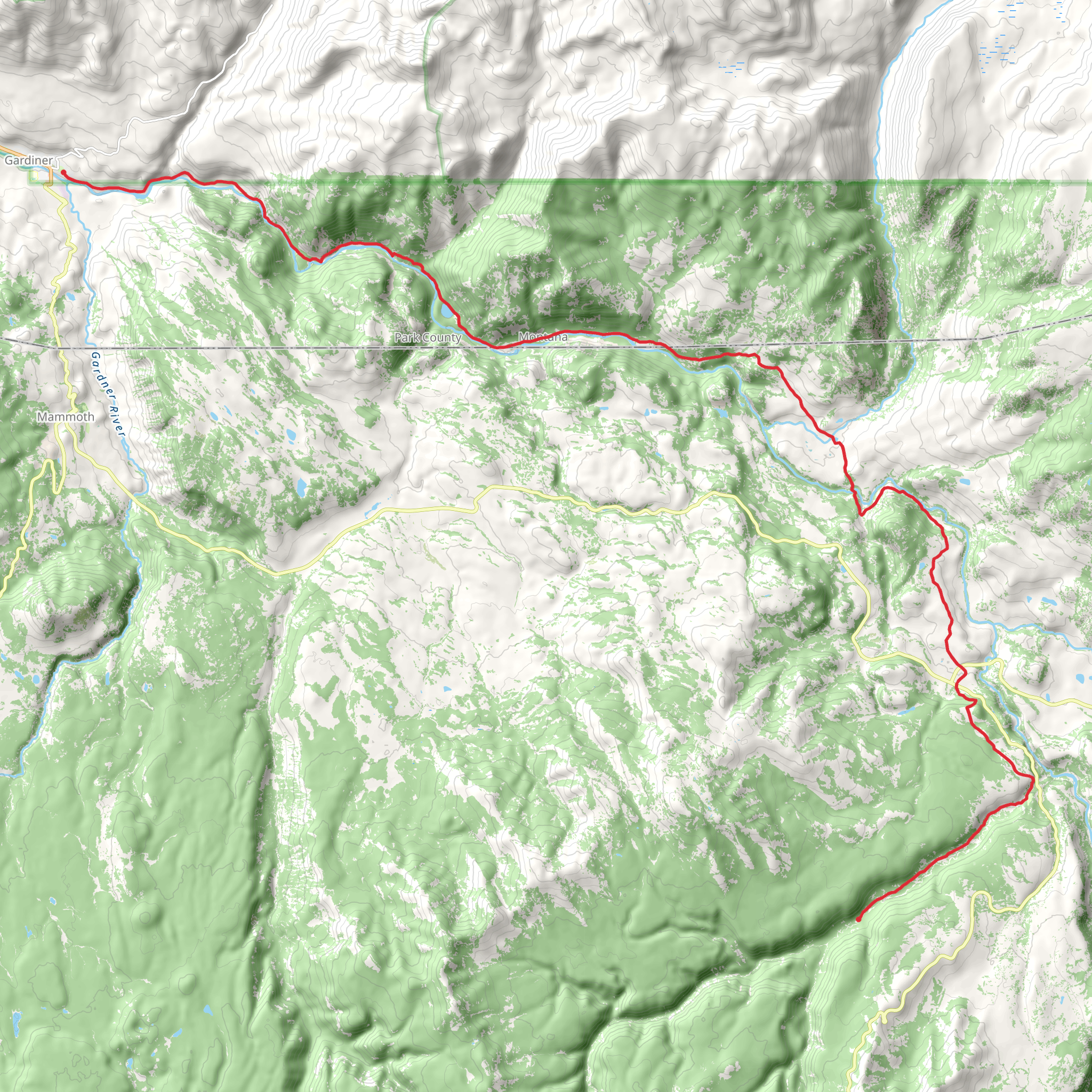
Embarking on the Black Canyon of the Yellowstone trail, hikers will traverse approximately 35 kilometers (about 22 miles) through a rugged and scenic landscape that boasts a total elevation gain of around 800 meters (roughly 2,600 feet). This point-to-point trail, considered difficult due to its length and terrain, begins near Park County, Montana, and offers an immersive experience into the wilderness of the Greater Yellowstone Ecosystem.
Getting to the Trailhead To reach the trailhead, hikers can drive to the northern section of Yellowstone National Park, near Tower Junction. From there, follow the Northeast Entrance Road to a turnoff that leads to the trailhead parking area. Public transportation options are limited, so most visitors opt for personal vehicles or car rentals to access the park.
Navigating the Trail The trail can be navigated using the HiiKER app, which provides detailed maps and waypoints to assist hikers in staying on course. The journey begins with a descent into the canyon, following the Yellowstone River, which will be a constant companion with its soothing sounds and abundant wildlife.
Landmarks and Natural Features As you progress, the trail will reveal the grandeur of the Black Canyon, characterized by steep cliffs and a variety of rock formations. Approximately 10 kilometers (6 miles) in, hikers will encounter the impressive Knowles Falls, where the river cascades over a rocky ledge, creating a picturesque spot for a rest or a photo opportunity.
Further along, the trail meanders through meadows and forests, with the chance to spot wildlife such as elk, bison, and occasionally bears. It's essential to be bear-aware, carrying bear spray and knowing how to use it.
Historical Significance The region is steeped in history, with the Yellowstone River playing a crucial role for Native American tribes and early explorers. The park itself was established in 1872, becoming the world's first national park, and the trail offers a glimpse into the area's past, including the recovery of wildlife populations and conservation efforts.
Elevation and Terrain Challenges The trail's elevation gain is gradual but can be challenging, with some steep sections that require good physical condition. The highest point of the trail offers stunning views of the surrounding mountains and valleys, making the climb worthwhile.
Preparing for the Hike Due to the trail's difficulty and remote nature, hikers should be well-prepared with adequate supplies, including water, food, and layers for changing weather conditions. It's also wise to inform someone of your hiking plans and expected return time.
Conclusion The Black Canyon of the Yellowstone trail is a rewarding adventure for those seeking to explore the rugged beauty of Yellowstone National Park. With its challenging terrain, historical significance, and abundant wildlife, it promises an unforgettable experience for seasoned hikers.
What to expect?
Activity types
Frequently asked questions
How long is the Black Canyon of the Yellowstone hike and how many days does it take?
The Black Canyon of the Yellowstone route is 34.75 km, or about 21.6 miles, with 813 m of climbing. Most hikers treat it as a multi-day point-to-point backpacking trip, typically spread over 2 to 3 days because of the distance, canyon terrain, and river corridor travel.
Where does the Black Canyon of the Yellowstone hike start and where do hikers park?
The route is commonly accessed from the Tower Junction area in Yellowstone National Park, on the park’s northern road network. Parking is generally at designated trailhead areas near Tower Junction rather than roadside pullouts, and overnight vehicle parking is not allowed just anywhere in Yellowstone, so trailhead logistics need to be planned carefully.
Do you need a permit to backpack the Black Canyon of the Yellowstone trail?
Yes. Because the Black Canyon of the Yellowstone is a multi-day backcountry hike inside Yellowstone National Park, overnight trips require a Yellowstone backcountry permit. Camps must be in designated backcountry campsites rather than informal spots, which makes advance trip planning important during the main summer season.
Are dogs allowed on the Black Canyon of the Yellowstone hike?
No. Pets are not allowed on Yellowstone hiking trails or in the backcountry, so dogs cannot go on the Black Canyon of the Yellowstone route. That rule applies throughout the park’s trail system, with the usual exception for qualified service animals under park regulations.
Is the Black Canyon of the Yellowstone hike hard?
The route is rated medium, but it is still a serious backcountry hike at nearly 35 km with 813 m of elevation gain. The challenge comes more from the overall length, the point-to-point format, and the remote canyon setting than from any single steep climb.
What are the main landmarks on the Black Canyon of the Yellowstone hike?
The trail follows the Yellowstone River through the Black Canyon of the Yellowstone, with steep canyon walls and long stretches of rugged river scenery. One of the standout landmarks on the route is Knowles Falls, reached roughly 10 km into the hike, where the river drops over a rocky ledge inside the canyon.
What is the best time of year to hike the Black Canyon of the Yellowstone?
The usual hiking season is summer into early fall, when Yellowstone’s backcountry trails are most reliably snow-free. Conditions can still change quickly, and Yellowstone posts current backcountry conditions and wildlife-related closures, so the best window is often mid-summer through early fall after seasonal access has stabilized.
Comments and Reviews
User comments, reviews and discussions about the Black Canyon of the Yellowstone, Montana.
4.69
average rating out of 5
13 rating(s)