
Download
3D Flyover
Add to list
More
16.2 km
~4 hrs 21 min
668 m
Loop
“A windswept Arra circuit blends lung-stretching climbs, lake-spanning vistas, and haunting ancient stones.”
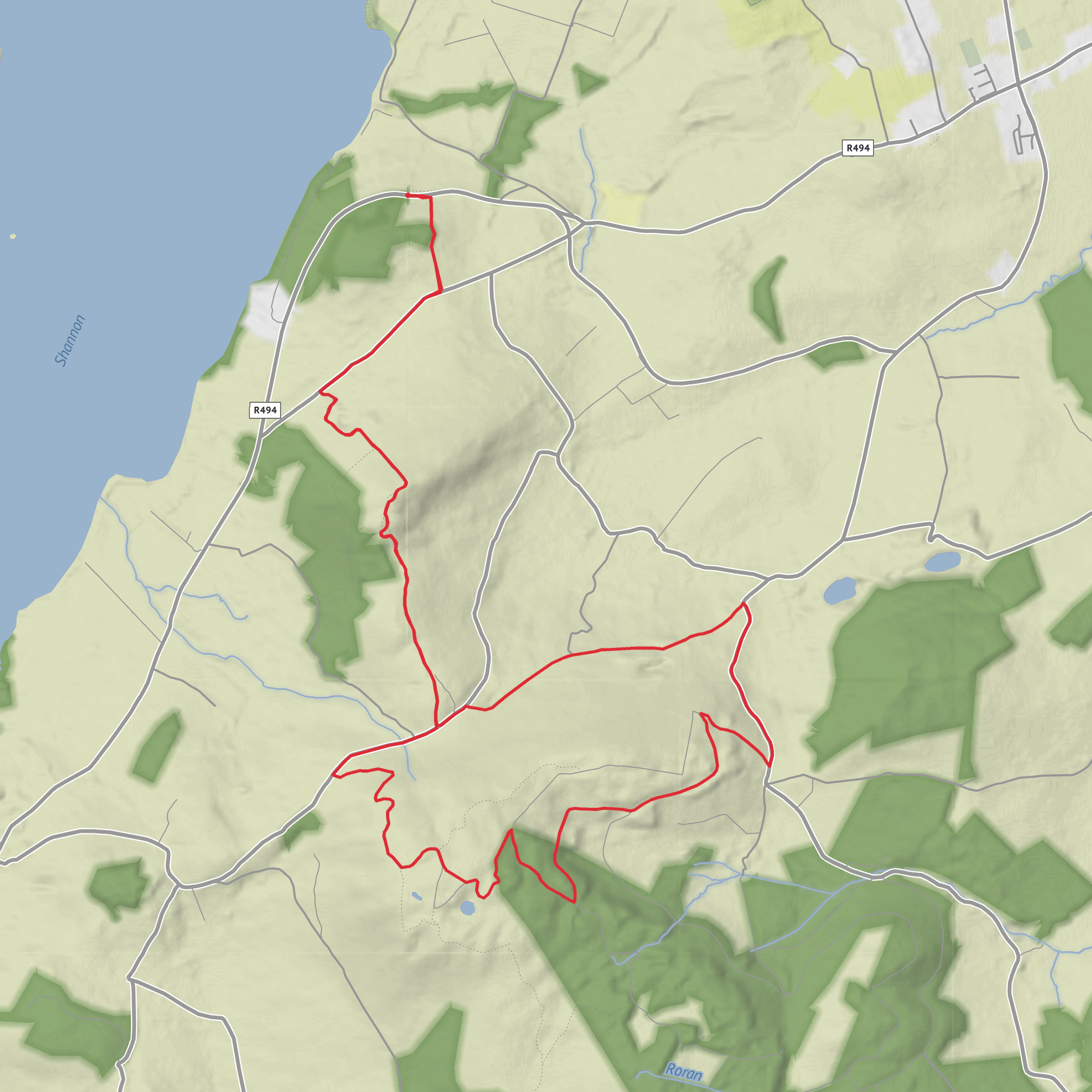
This 16 km / 10 mile circuit in the Arra Mountains packs a lot into a medium-grade day: open hillside, steep climbing, broad views over Lough Derg, and a cluster of archaeological sites that give the route far more character than a straightforward hill loop. Expect roughly 700 m / 2,300 ft of ascent overall, with the hardest work concentrated on the climbs to Tountinna and Laghtea Hill. The route is best suited to hikers who are comfortable with a few sustained uphill sections, uneven ground, and changeable upland weather. The walk is generally associated with the high ground above Portroe in County Tipperary, with the most practical starting point near the Portroe Lookout / Lough Derg Viewpoint on the R494, near Castletown, Portroe, County Tipperary. (greylakeramblers.wordpress.com)
From the start, the landscape opens quickly. Minor road walking and waymarked sections of the Lough Derg Way lead you into a mix of pasture edges, rough tracks, heath, and mountain path. The terrain is not especially technical in dry conditions, but it can feel strenuous because the route repeatedly gains and loses height. The climb toward Tountinna is the bigger mountain effort, while the ascent of Laghtea Hill is shorter but noticeably steep in places, with zigzags and worn sections underfoot. In wet or windy weather, the exposed ridges can feel much more serious than the “medium” rating suggests, so strong footwear, waterproof layers, and careful pacing matter here. (deananderton.com)
Route character and what to expect
A typical outing begins near the viewpoint above Lough Derg, where there is parking and visitor infrastructure. Early on, the route follows quiet roads and signed walking sections before turning onto hill tracks. The first half tends to feel more spacious and gradual, with long views developing over the lake and surrounding farmland. As you gain height on Tountinna, the route becomes more exposed and the sense of scale increases. Communication masts mark the summit area, and the panorama can stretch across Lough Derg, the Shannon corridor, and the rolling interior of Tipperary and Clare on a clear day. (greylakeramblers.wordpress.com)
After Tountinna, the route links across toward the Graves of the Leinstermen, a striking group of ancient stones set on the hillside. This section is one of the most memorable parts of the walk because the archaeology appears suddenly in otherwise open mountain country. From there, the route crosses toward Laghtea Hill, where a well-used path climbs to the summit cross. The final ascent is shorter than the climb to Tountinna but can feel sharp late in the day, especially if the ground is greasy or if there is a strong headwind. (deananderton.com)
The descent can vary depending on the exact line taken, but hikers should expect rougher ground, sections through gorse and scrub, and some stiles or small footbridges on lower tracks. That means this is not a route to underestimate simply because the distance is moderate. Allow enough time for stops, navigation checks on HiiKER, and slower movement if visibility closes in. (greylakeramblers.wordpress.com)
Landmarks, archaeology, and historical significance
The route’s standout historical feature is the Graves of the Leinstermen, a site wrapped in folklore and local tradition. The name is linked in legend to slain warriors from Leinster, often tied to stories involving Brian Boru and conflict in the region around the end of the 10th century. Archaeological interpretation is less certain: the stones have also been described as possibly prehistoric remains, perhaps part of a wedge tomb, court tomb, stone circle, or another ancient funerary monument. That uncertainty is part of what makes the site so compelling—this is a place where folklore and archaeology overlap rather than neatly agree. (deananderton.com)
Laghtea Hill itself is historically important as the site of a prehistoric hillfort. The placename is often interpreted as relating to a grave or burial, and the hill has long been associated with ritual, burial, and local storytelling. Nearby features such as the **
AI Planner
Days planned around your pace, with somewhere to stay each night.
Surfaces
Unknown
Dirt
Comments and Reviews
User comments, reviews and discussions about the Laghtea Hill and Graves of the Leinstermen, Ireland.
average rating out of 5
0 rating(s)

