Download
3D Flyover
Add to list
More
10.2 km
~2 hrs 11 min
90 m
Loop
“A quietly rewarding Skopelos loop weaves piney hills, monasteries, and sea views with more climbing than expected.”
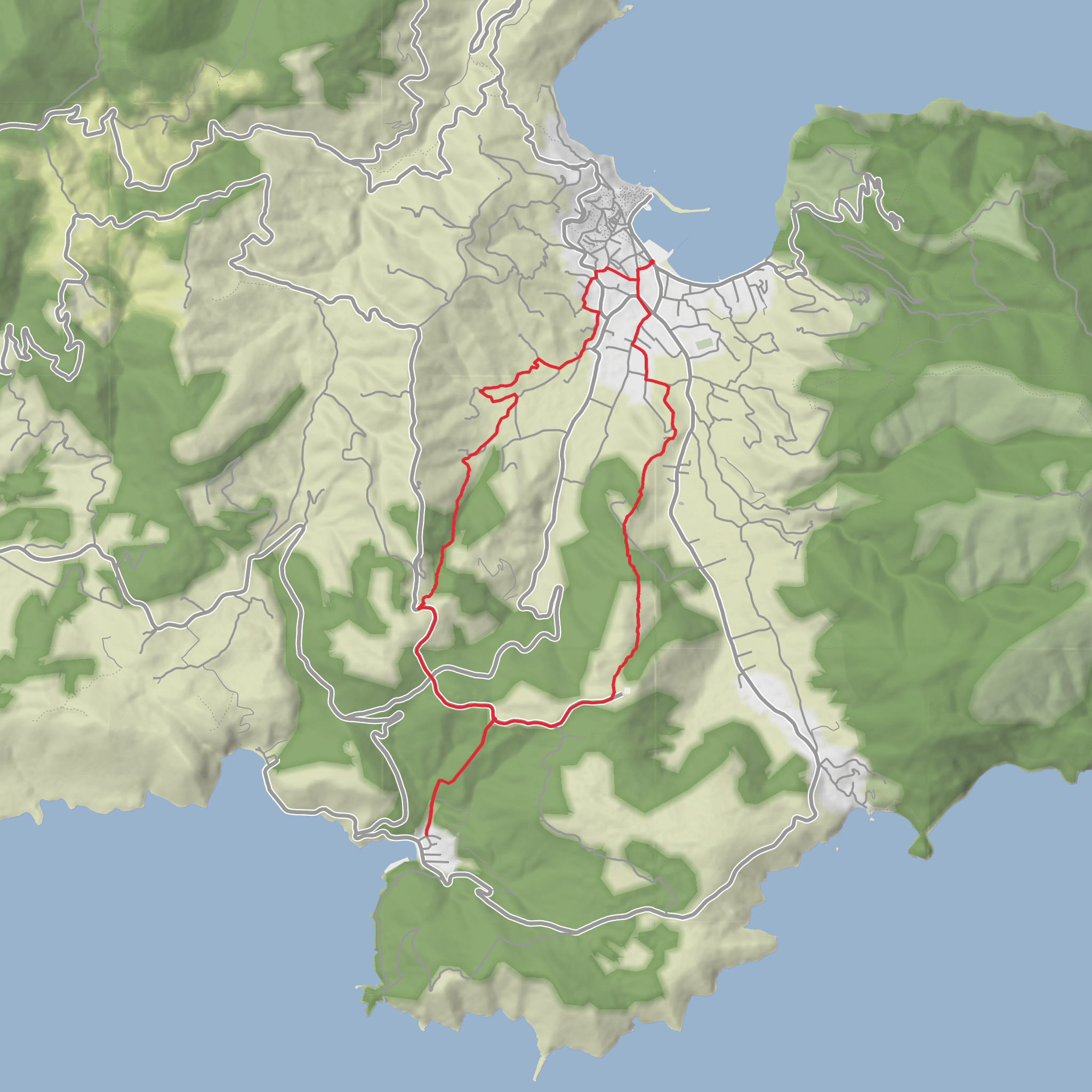
This roughly 10 km (6.2 mile) loop on Skopelos is a gentle but surprisingly varied walk that links quiet countryside, small religious landmarks, and broad views over the island. Although you listed the elevation gain as around 100 metres, the current Skopelos Trails route information for this walk gives a distance of 9.9 km (6.2 miles) with about 384 metres (1,260 feet) of ascent, so it is worth planning for more climbing than the headline suggests, even though the overall difficulty is still generally considered easy for regular walkers. (skopelostrails.com)
The route is associated with Skopelos Town and finishes at the Monument of Saint Riginos, the island’s patron saint, at the place where tradition says he was martyred in AD 362. That makes the nearest clear landmark for the hikehead the Saint Riginos area just outside Skopelos Town, rather than an unnamed rural trailhead. (skopelostrails.com)
Expect a walk that feels more cultural than remote. The paths and lanes around Skopelos have long been used to connect monasteries, chapels, and agricultural land, and this loop follows that same pattern, combining old footpaths with sections that may use local roads or broad tracks. Skopelos Trails describes it as a rewarding day hike with a gentle incline and a mix of natural scenery with historical and religious landmarks. (skopelostrails.com)
What the route is like
From the Skopelos Town side, the early part of the walk typically leads you away from the harbor atmosphere and into the greener interior above town. Skopelos is one of the more wooded Greek islands, and even on a relatively short route you can expect a landscape of pines, olive groves, scrub, stone walls, and occasional openings toward the Aegean. The island itself rises into hillier terrain than many visitors expect, with Mount Palouki reaching 546 metres (1,791 feet), and many of the monastery paths sit on these slopes above the town. (en.wikipedia.org)
Because the ascent is spread through the route rather than concentrated in one steep mountain push, the walk usually feels manageable, but the cumulative climbing can still catch out hikers who arrive expecting a flat stroll. Good walking shoes are enough in dry conditions, but after rain, stone sections and dirt tracks can become slick. In warm weather, exposed stretches can feel hotter than the distance suggests, so carrying more water than you think you need is sensible.
The monastery element gives the route much of its character. On Skopelos, these hillside religious sites are not isolated curiosities; they are part of the island’s identity. The wider monastery network above Skopelos Town is reached either by narrow road or by old hiking paths, and several monasteries in the area date from the 17th and early 18th centuries. (visitskopelos.com)
Landmarks and historical context
Profitis Elias Monastery is one of the key points that gives this loop its name. Even when modest in scale, chapels and monasteries dedicated to Prophet Elijah often occupy elevated ground in Greece, and that usually means open views and a strong sense of place. On this route, the religious landmarks are part of a broader historic landscape shaped by Orthodox devotion, local pilgrimage, and centuries of foot travel between town, fields, and monastic communities. (skopelostrails.com)
Kimisia on this route is best understood as a local religious site or monastery area rather than a modern settlement hub, so hikers should not expect shops or services there. The appeal is in the atmosphere: quiet stone buildings, cultivated terraces, and the sense of moving through an older Skopelos that still survives beyond the waterfront. (skopelostrails.com)
The finish near Saint Riginos adds the strongest historical note. Christianity on Skopelos was formalized with the appointment of Bishop Riginos in the 4th century, and according to island tradition he was martyred under Emperor Julian in AD 362. The monument at the end of the route marks the place associated with that event, so the walk closes with one of the island’s most important sacred sites. (skopelostrails.com)
Skopelos itself also has a deeper past beyond the monasteries. In antiqu
Surfaces
Unknown
Paved
Concrete
Asphalt
Comments and Reviews
User comments, reviews and discussions about the Skopelos, Profitis Elias Monastery and Kimisia Loop, Greece.
average rating out of 5
0 rating(s)