Download
3D Flyover
Add to list
More
6.0 km
~1 hrs 30 min
184 m
Loop
“Stone paths and monastery calm rise above Skopelos Town in a sun-soaked, view-rich hillside loop.”
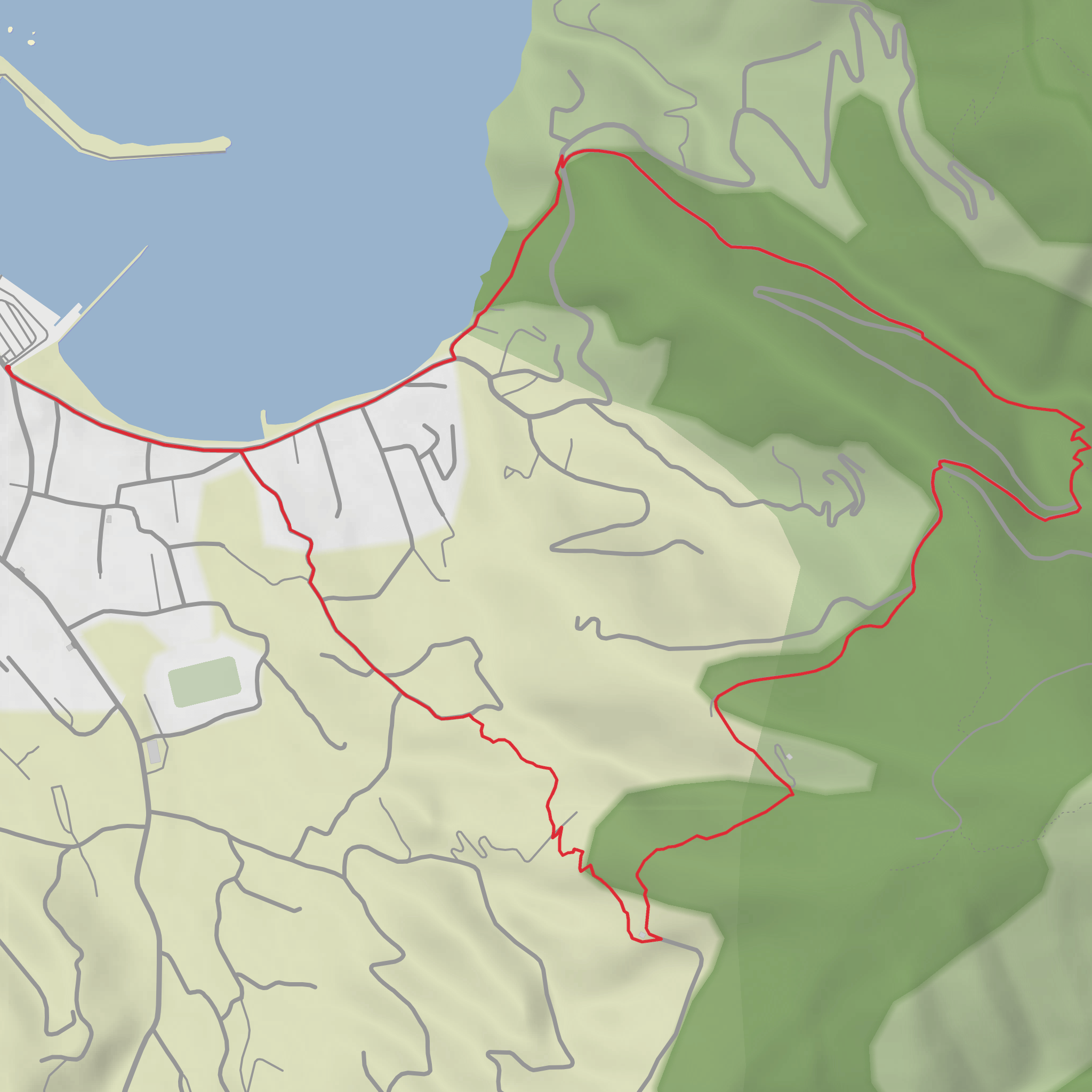
This roughly 6 km / 3.7 mile loop on Skopelos is a moderate outing that combines old island walking routes, monastery architecture, and broad views over Skopelos Town and the Aegean. With around 200 m / 656 ft of elevation gain, it is not especially long, but the climbing is enough to make it feel like a proper half-day walk, especially in warm weather. Expect a mix of paved lanes, old stone paths, monastery approaches, and hillside tracks, with the route rising away from the waterfront and settlement into the quieter slopes above town. The most practical trailhead reference is the monastery zone above Skopelos Town, near the road leading toward the Palouki monasteries and the Monastery of the Transfiguration of Christ, also known locally as Moni Sotiros. For navigation, it is best to check the route on HiiKER before setting out.
The walk is usually most comfortable in spring or autumn, though it can be done year-round in settled weather. Summer heat can make the ascent feel much harder than the distance suggests, so an early start is wise. Carry more water than you might expect for a 6 km / 3.7 mile route, because exposed sections above town can feel hot and dry, and shade may be intermittent depending on the exact line you follow.
What to expect on the route
From the start near Skopelos Town, the route begins with a steady climb through the island’s hillside fringe, where homes, chapels, terraces, and olive groves gradually give way to quieter slopes. The first 1 to 2 km / 0.6 to 1.2 miles are where most of the elevation is gained, and this is the section that tends to define the hike’s medium difficulty. The gradient is manageable for regular walkers, but some stretches can feel steep enough to demand slower pacing, particularly on stone or dusty surfaces.
As you gain height, views begin to open behind you over the whitewashed town, the harbor, and the surrounding sea. Skopelos is known for its dense greenery compared with many other Aegean islands, so the route often feels more wooded and enclosed than hikers may expect from a Greek island walk. Pine, olive, cypress, and Mediterranean scrub are typical features of the landscape, and older cobbled paths survive in parts of the island’s walking network. Skopelos is especially noted for these traditional mule paths, or kalderimia, which historically linked settlements, fields, and religious sites across the island. (visitskopelos.com)
The key landmark on this loop is the Monastery of the Transfiguration of Christ, commonly called Sotiros or Metamorfosis Sotiros. It is regarded as one of the oldest monasteries on Skopelos, with construction placed around the late 15th to early 16th century. The monastery is also associated with architectural influence from Mount Athos, which helps explain why it feels more substantial and historically layered than a simple rural chapel stop. (skopelos.gr)
Around the monastery, hikers should expect a quieter, more contemplative atmosphere than on the coast. Depending on opening conditions and local observance, access to interior spaces may vary, so it is sensible to treat the site respectfully and not rely on facilities being available. Modest clothing is advisable if you hope to enter any religious buildings.
Landmarks, nature, and wildlife
The monastery itself is the standout cultural landmark, but the wider setting is part of what makes the loop memorable. The slopes above Skopelos Town hold a cluster of historic monastic sites, and even when only one is the main objective, the broader hillside has a distinctly spiritual and historic character. Nearby routes in the same area also connect with other monasteries such as Agia Varvara, Prodromos, and Evangelistria, which shows how important this ridge and hillside zone has been in the island’s religious life. (alltrails.com)
Nature on the walk is more about atmosphere than dramatic alpine features. Expect aromatic herbs, dry-stone walls, terraced ground, and a mosaic of woodland and cultivated land. Birdlife can be rewarding, especially in quieter morning hours, with common Mediterranean species likely around scrub, groves, and open slopes. Reptiles such as lizards are also typical in warm months. As with many Greek island trails, hikers should watch where they place hands and feet near rocks or walls, particularly in hotter periods when snakes may be more active, even though encounters are uncommon.
Because the route climbs above the town, the visual highlights are often the changing perspectives: tiled roofs below, church towers, the harbor curve, and the contrast between forested slopes and open sea. After the high point near the monastery area, the return leg generally feels easier, with descending sections leading back toward the settled edge of town. Even so, downhill stone surfaces can be slippery
Surfaces
Asphalt
Unknown
Unpaved
Concrete
Gravel
Comments and Reviews
User comments, reviews and discussions about the Skopelos and Sotiros Monastery Loop, Greece.
average rating out of 5
0 rating(s)