Download
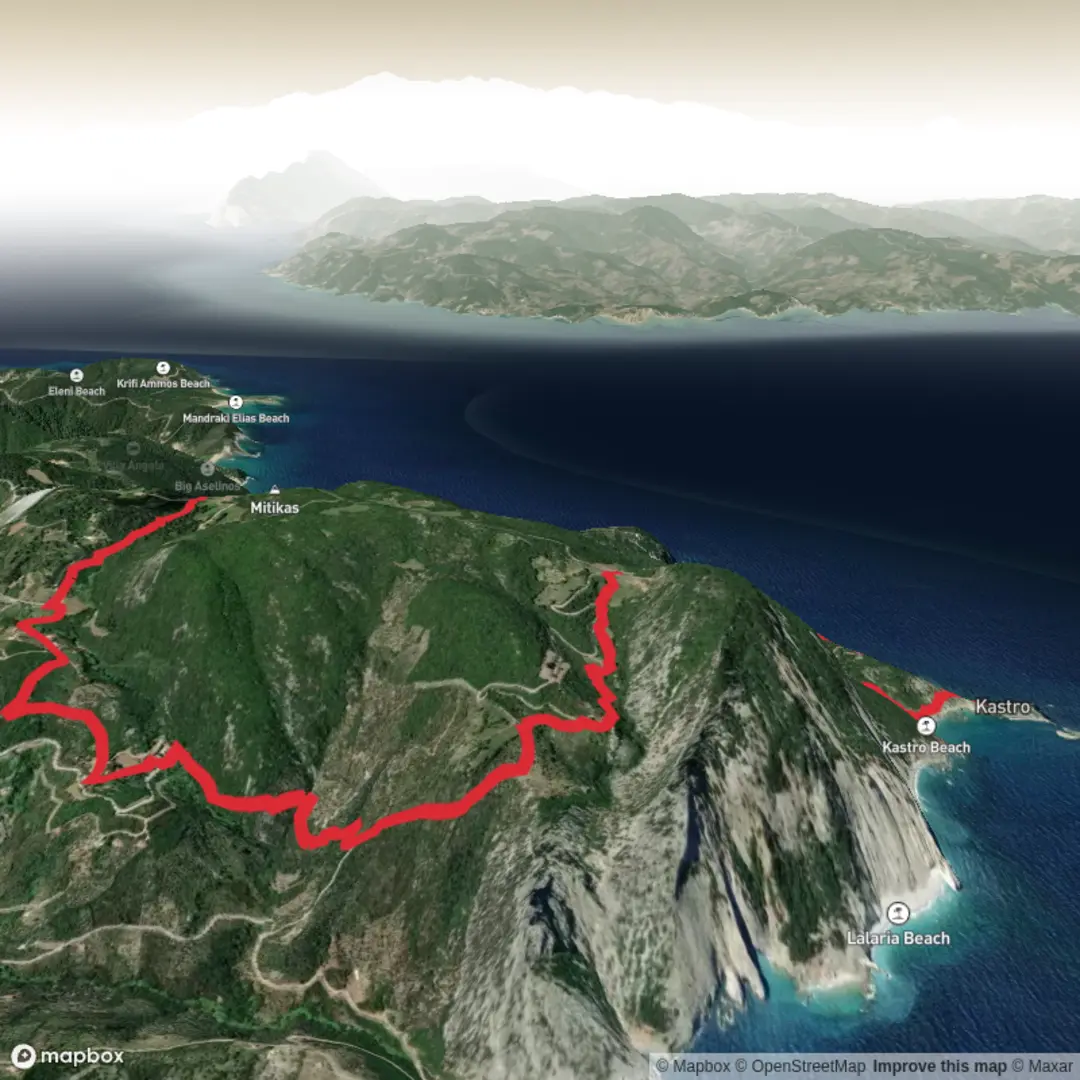
3D Flyover
Add to list
More
10.4 km
~3 hrs 6 min
613 m
Loop
“A windswept journey through monasteries, forest and cliffside ruins, rewarding prepared hikers with Skiathos at its wildest.”
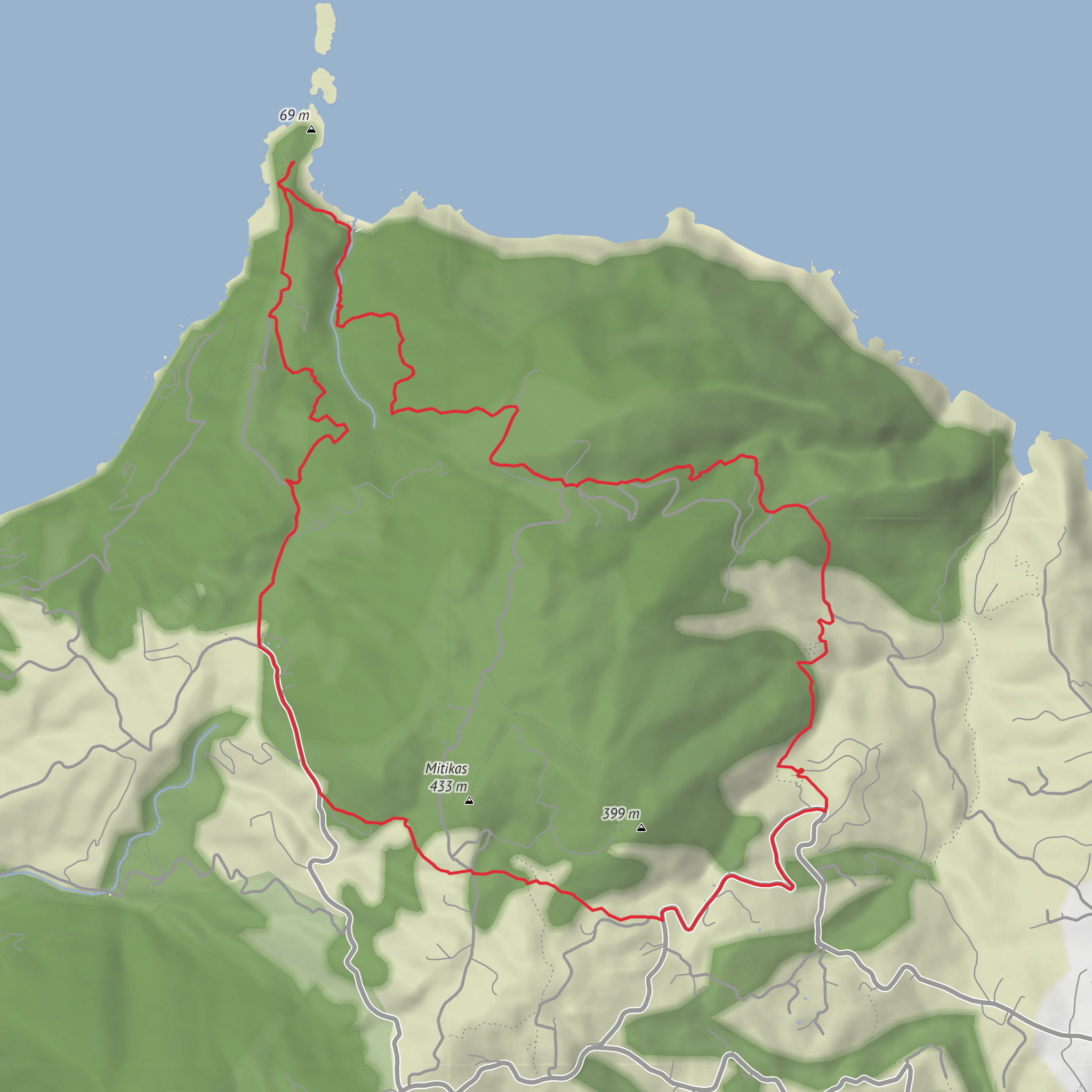
This medium-difficulty loop on northern Skiathos packs a lot into roughly 10.7 km / 6.6 miles, with about 600 m / 1,970 ft of climbing, and it feels more substantial than the numbers suggest. The route combines old mule paths, monastery country, forest sections, exposed coastal approaches, and the dramatic medieval stronghold of Kastro at the island’s northern tip. Much of the walking is on path rather than road, but there are also short asphalt and dirt-road sections, so expect a varied underfoot feel throughout. The high point is around 396 m / 1,299 ft, while the route drops close to sea level near Kastro Beach, which helps explain the repeated climbing and descending. (outdooractive.com)
The start is best understood as being near Evangelistria Monastery, Skiathos, one of the island’s key inland landmarks and a practical reference point for navigation and access. If you are planning with HiiKER, this is the most useful significant landmark to anchor the route around, rather than relying on incomplete trailhead wording. (outdooractive.com)
Reaching the start is fairly straightforward by car or bus. By car, most hikers approach from Skiathos Town and drive north toward the monastery area; if continuing farther toward Kastro, note that the final approach road in that direction becomes unsurfaced, which can matter for rental-car restrictions. By public transport, there is a Skiathos Port–Profitis Ilias–Kastro Junction bus service, with summer 2026 departures running daily from Skiathos Port and return services from Kastro Junction, making it possible to shorten the road approach if timings line up. Because island bus schedules can change seasonally, it is wise to confirm the day’s timetable before setting out. (greekislandbuses.com)
What the route feels like
From the monastery zone, the trail heads into a quieter, more rural side of Skiathos. Early on, expect a mix of olive groves, shrubby slopes, and broadleaf woodland, with stretches through the island’s Aesthetic Forest. The route is often described as one of the fullest walks in the Skiathos trail network because it strings together cultural sites and natural features rather than focusing on a single viewpoint or beach. Track surfaces are mixed: about 2.2 km / 1.4 miles of asphalt, 358 m / 0.2 miles of dirt road, 715 m / 0.4 miles of wilder forest trail, 5.8 km / 3.6 miles of path, and 1.6 km / 1.0 mile of road. (outdooractive.com)
The climbing is steady enough to demand decent fitness, but it is not usually technical in a mountaineering sense. What makes it feel “medium” is the combination of elevation gain, heat exposure, and the fact that the route is long enough to require pacing. In warm weather, the exposed sections can feel much harder than the grade suggests, especially once you leave the more sheltered woodland and move onto the open northern headland. (outdooractive.com)
Landmarks and historical setting
The standout landmark is Kastro, the abandoned medieval capital of Skiathos. It occupies a naturally defensive clifftop headland with sheer drops on three sides, and historically the only landward approach crossed a gap by wooden drawbridge. The settlement was established as a refuge from pirate raids, and islanders lived there for roughly five centuries before moving back down after the coast became safer around 1829–1830. Parts of modern Skiathos Town were reportedly rebuilt using stone taken down from the old capital. (theskiathosguide.com)
As you explore the site, expect ruins rather than a restored village. Surviving features include the Church of Christos sto Kastro, Agios Nikolaos, remains of the mosque, and traces of houses and defensive structures. The atmosphere is more archaeological and windswept than picturesque in a polished sense, which is exactly what gives the place its power. The views out over the Aegean are immense, and the position makes the defensive logic of the settlement immediately obvious. (theskiathosguide.com)
Other route landmarks commonly associated with this loop include Evangelistria Monastery, Agios Charalambos Monastery, Panagia Kardasi, Panagia Doman, springs, fountains, viewpoints, and older rural features such as threshing floors and watermills. Evangelistria is especially significant in Greek history, as it is traditionally
Surfaces
Unknown
Dirt
Asphalt
Cobblestone
Unpaved
Comments and Reviews
User comments, reviews and discussions about the Skiathos - Castle Loop, Greece.
average rating out of 5
0 rating(s)
