
Download
3D Flyover
Add to list
More
7.4 km
~1 hrs 40 min
116 m
Point to Point
“Stone paths and thyme-scented terraces lead from lively Apollonia to Platis Gialos’s shimmering bay.”
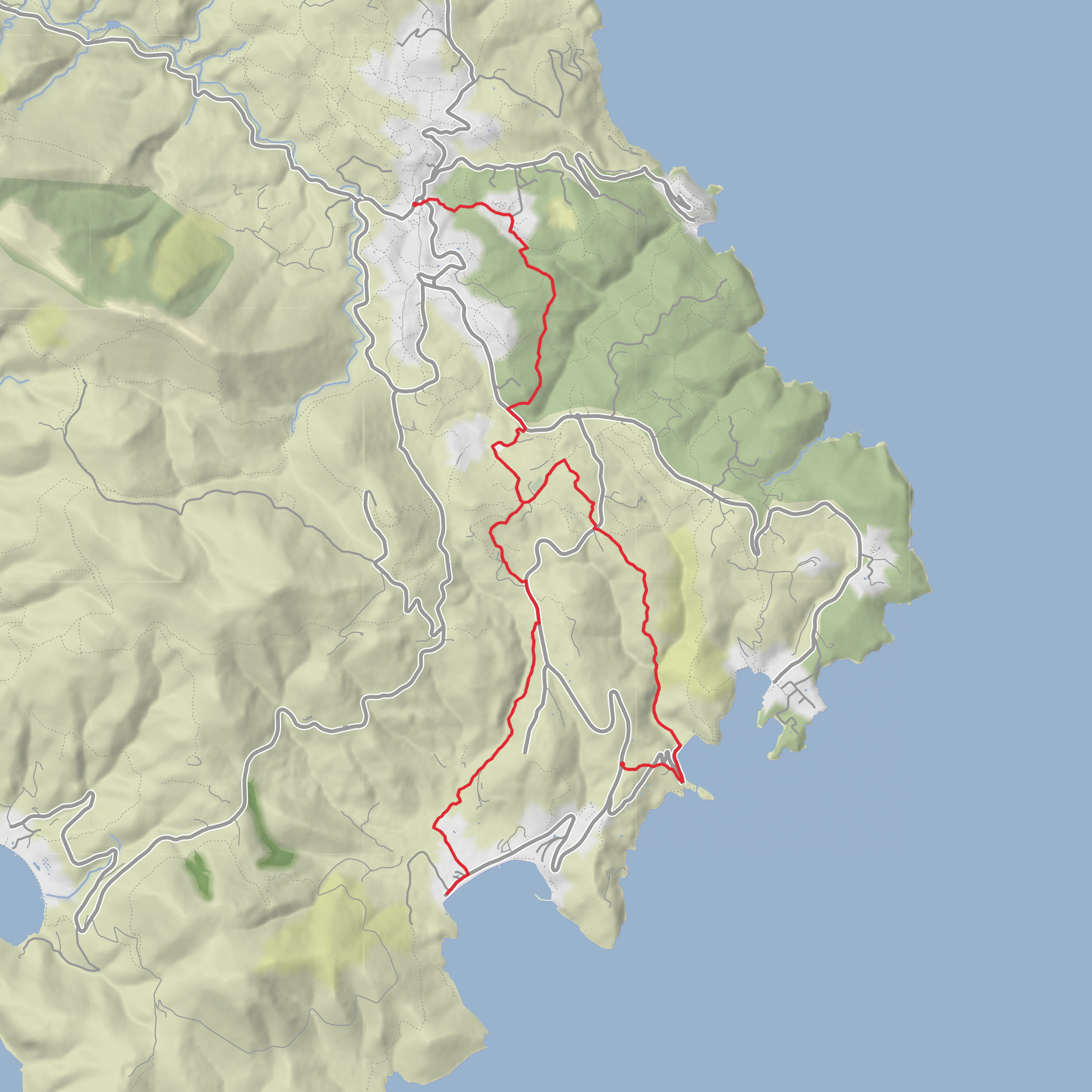
This easy point-to-point walk links inland Apollonia with the broad bay at Platis Gialos on Sifnos, covering about 7.5 km / 4.7 miles with only modest overall climbing, roughly 100 m / 330 ft depending on exactly where you begin and how closely you follow the marked line. It is one of the island’s gentler signed routes, officially listed as Route 3, with a typical walking time of around 2 hours 30 minutes. The usual start is Apollonia Main Square (Plateia Iroon / Heroes Square), and the coastal end is near the Platis Gialos bus stop by the beach. (sifnos.e-sifnos.com)
Getting to the start is straightforward. If arriving by car, most visitors reach Apollonia from Kamares, the ferry port, by the island road network and park in or around the village approach roads before walking into the center. If using public transport, Apollonia is the island’s main hub: buses from Kamares stop by the Post Office, while buses for Platis Gialos use the stop in front of Hotel Anthousa at the main junction. Current municipal timetable information shows regular Apollonia–Platis Gialos service, which makes this route especially convenient as a one-way hike. If you want the simplest trailhead reference for planning in HiiKER, use Heroes Square, Apollonia, Sifnos as the inland start landmark. (dimos.sifnos.gr)
What the walk is like
From Apollonia, the route leaves the island’s lively central settlement and quickly settles into the classic Sifnos landscape of stone-paved paths, dry-stone walls, terraces, chapels, and low agricultural country. Apollonia itself is historically important as the island’s present capital and crossroads settlement, also known as Stavri, with roads branching toward Kamares, Kastro, Faros, Vathi, and Platis Gialos. That crossroads character helps explain why this trail has long been a practical link as well as a scenic one. (sifnos.gr)
The walking is generally uncomplicated, which suits the easy rating, but “easy” here still means sun exposure, uneven stone underfoot, and occasional short rises and dips rather than a flat promenade. Expect a mix of village lanes and old footpaths through cultivated terrain. Good grip matters more than heavy boots; lightweight trail shoes are usually enough in dry conditions.
As you move southward, the route gradually opens wider views over the island’s folds and toward the sea. The descent toward Platis Gialos becomes more apparent in the latter part of the walk, and the finish feels rewarding because the route ends at one of Sifnos’s best-known beaches. The bay is long, open, and sandy, so many walkers plan a swim or meal at the end before taking the bus back. (sifnos.e-sifnos.com)
Landmarks, scenery, and historical context
This walk passes through a landscape shaped as much by history as by nature. Sifnos has been inhabited since prehistoric times and became wealthy in antiquity through mining and craftsmanship, especially metals and pottery. The island’s archaeological record shows major settlement from the Bronze Age onward, and its prosperity in the ancient world was significant enough to leave a strong mark in the wider Cyclades. (cyclades.culture.gov.gr)
Although the Apollonia–Platis Gialos route is not primarily an archaeological trail, it crosses terrain connected to that long human story: terraced hillsides, old mule paths, chapels, and settlement corridors that have linked villages and coasts for generations. Nearby, between Apollonia and Vathi, the Acropolis of Agios Andreas stands as Sifnos’s most important archaeological site, with Mycenaean-era fortification remains and commanding views over parts of the island including toward Platis Gialos. It is not the main feature of this route, but hikers interested in the island’s deeper past may want to pair the walk with a separate visit. (visitsifnos.net)
Nature along the trail is typically Cycladic rather than alpine or forested. Expect aromatic scrub, thyme-scented slopes, olive and almond trees in cultivated pockets, and seasonal wildflowers in spring. Birdlife can include common Mediterranean species using the terraces and rocky edges, while lizards are often seen warming on stone walls. In hotter months, the main environmental factor is not wildlife but exposure: shade can be limited for long stretches.
What to prepare for
Because the route is
Surfaces
Unknown
Cobblestone
Asphalt
Comments and Reviews
User comments, reviews and discussions about the Apollonia – Platis Gialos, Greece.
average rating out of 5
0 rating(s)
