Download
3D Flyover
Add to list
More
9.9 km
~2 hrs 39 min
408 m
Point to Point
“A richly varied Sifnos ramble threads ancient ruins, monastery paths, cliffside Kastro, and shimmering Aegean views.”
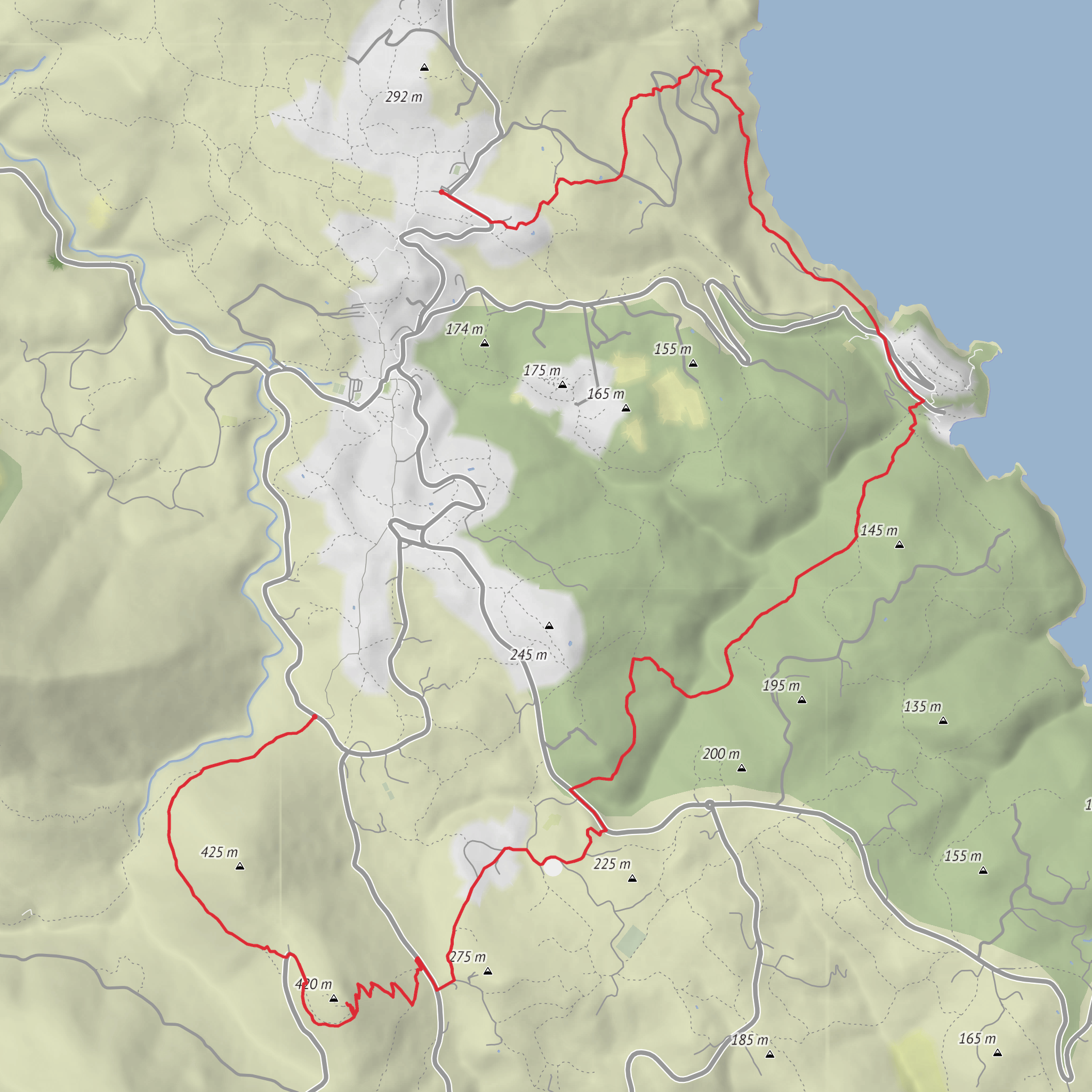
This medium-grade walk links some of Sifnos’ most rewarding inland and coastal landmarks in a route of about 10 km / 6.2 miles with roughly 400 m / 1,310 ft of ascent. It combines old stone footpaths, village lanes, archaeological ground, and sea-facing stretches, so it feels more varied than the numbers suggest. Expect a route that is manageable for regular walkers, but still demanding enough in the climbs and uneven footing to deserve proper preparation. The core signed route between Agios Andreas and Artemonas is listed at 8.6 km, and the inclusion of Kastro brings the outing close to the 10 km mark you’re planning. (sifnostrails.com)
The start is best understood as being near the Archaeological Site of Agios Andreas, above Katavati on Sifnos, rather than at a street address. That is the clearest significant landmark associated with the trailhead, and it is the official starting point used for this route. If approaching from the village side instead, Artemonas main square is the other recognized access point. (sifnostrails.com)
From Agios Andreas, the path begins on one of the island’s historic walking corridors and quickly establishes the character of the day: broad views, dry-stone landscapes, and a strong sense that the route is stitched into the island’s older way of life. The first section tends to feel more open and elevated, with the terrain moving through scrubby hillsides and cultivated patches before descending toward the central villages. The footing is usually on traditional stone-paved or worn earth paths, but there can be loose rock, polished stone, and short steeper sections where care is needed, especially in hot weather or after any moisture. (sifnostrails.com)
What you’ll see along the way
The most important historical landmark is the Mycenaean acropolis of Agios Andreas, one of the standout archaeological sites on Sifnos. The site occupies the hill of Kamalafka and is the island’s only organized archaeological site; it has been operating in its current form since 2010 and received a Europa Nostra award for its presentation and conservation. The remains connect the walk to the Late Bronze Age, giving this route unusual depth for a relatively short island hike. If the site is open, it is worth allowing extra time before setting off. The official Sifnos Trails description notes that if the archaeological area is closed, a marked bypass skirts the fenced section and rejoins the main trail about 200 m later. (cyclades.culture.gov.gr)
Soon after, the route passes through rural country toward the Holy Monastery of Vrysi, a 16th-century monastery that adds another layer of historical continuity between the prehistoric hilltop settlement and the later village world below. This middle part of the walk is where Sifnos often shows its agricultural character most clearly: terraces, chapels, olive trees, and the dry-stone boundaries that define so much of the Cycladic landscape. (sifnostrails.com)
Kastro is one of the major highlights. It was inhabited from ancient times and remained the capital of Sifnos until 1836, so arriving there is not just a scenic moment but a transition into one of the island’s most historically important settlements. The village is known for its cliff-edge position, narrow lanes, and reused ancient material, including Roman sarcophagi noted in descriptions of the settlement. This section is especially atmospheric, with sea views opening out below the old fortified village. (sifnostrails.com)
If your version of the route continues onward toward Panagia Poulati before returning toward Artemonas, expect one of the prettiest coastal interludes of the day. The path near Poulati is often singled out for its dramatic setting above the Aegean, and it gives the walk a stronger contrast between inland heritage and exposed shoreline scenery. From there, the route works back inland toward Artemonas on old donkey paths and village approaches. (sifnostrails.com)
Terrain, effort, and what to watch for
Although the difficulty is only moderate, this is not a flat village stroll. Around 400 m / 1,310 ft of ascent is enough to make the route feel warm and leggy, particularly under the Cycladic sun. The climbs are usually broken into shorter rises rather than one long mountain ascent, but
Surfaces
Unknown
Asphalt
Concrete
Cobblestone
Paved
Comments and Reviews
User comments, reviews and discussions about the Agios Andreas, Kastro and Artemonas, Greece.
average rating out of 5
0 rating(s)