
Ardington, Robert Loyd Lindsay Memorial and East Lockinge Loop
Download
3D Flyover
Add to list
More
11.6 km
~2 hrs 34 min
155 m
Loop
“From estate lanes to windswept downs, this varied loop pairs grand views with village charm.”
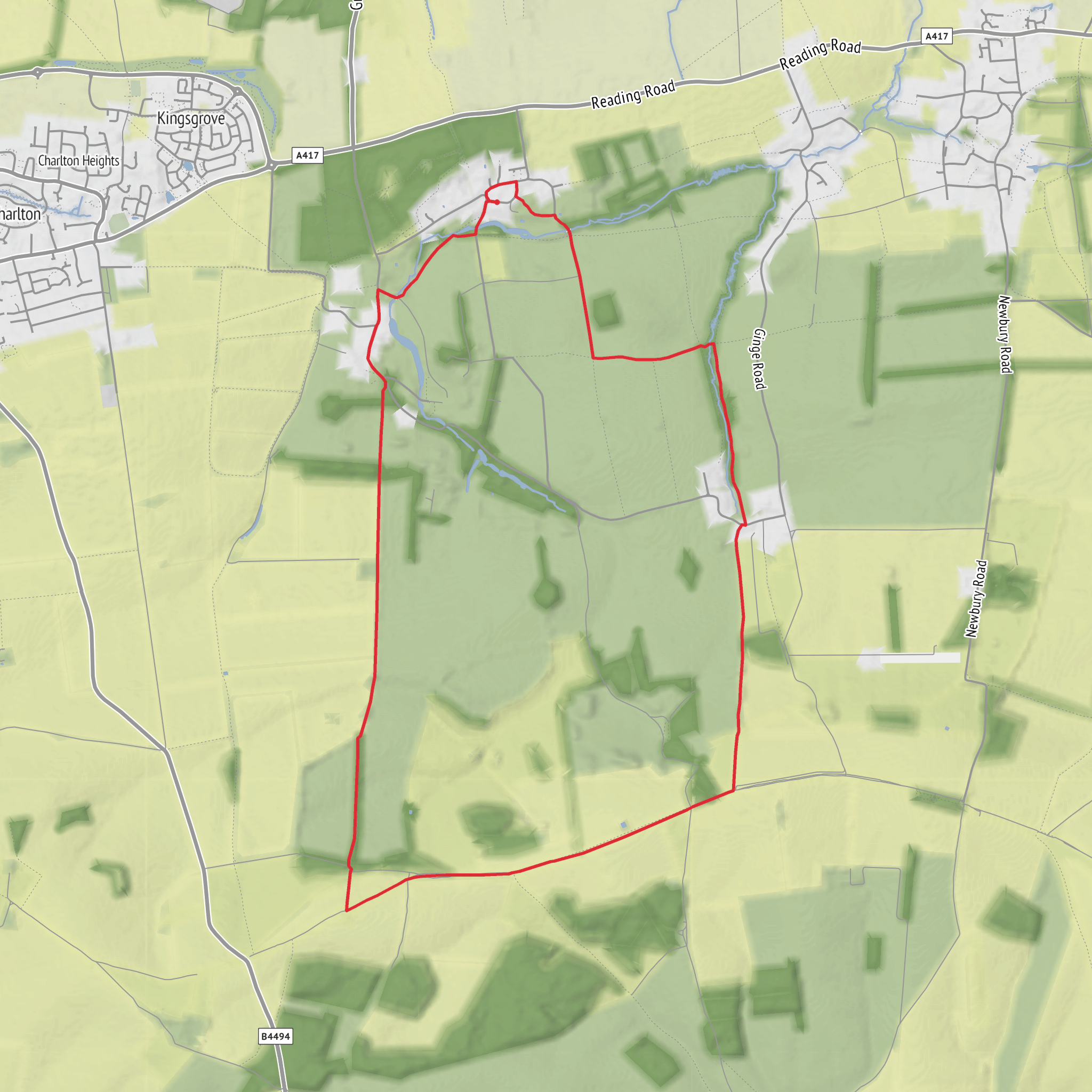
This easy loop of around 12 km / 7.5 miles with roughly 200 m / 656 ft of ascent links the estate villages of Ardington and East Lockinge with open downland, broad views from the Ridgeway, and the striking Robert Loyd Lindsay Memorial above the Vale of White Horse. The route is best thought of as a varied countryside circuit rather than a demanding hill walk: the climbing is noticeable but generally steady, and much of the walking is on village lanes, estate tracks, field-edge paths, and chalk or grass downland paths. The main challenge is not technical terrain but exposure on the higher ground, where wind, sun, and muddy chalk can all affect conditions depending on the season. The walk is commonly started in Ardington, near the Loyd Lindsay Rooms on Church Street, a well-known local landmark in the village. (ratedtrips.com)
Getting to the start is fairly straightforward by car, with Ardington lying about 2 miles / 3.2 km east of Wantage. A practical landmark for the start is the area around the Loyd Lindsay Rooms, Church Street, Ardington, near Wantage, Oxfordshire, OX12 8PS, which is frequently used as a meeting point for local walks. If arriving by public transport, Wantage is the main nearby hub; from there, local onward travel is typically by bus or taxi toward Ardington, though services in the parish are limited and the neighbourhood plan notes only a single bus stop serving the area, so checking current timetables before setting out is important. For drivers, village parking should be approached considerately because this is a small residential community within the Lockinge Estate. (ramblers-oxon.org.uk)
The opening section is usually gentle, taking you through attractive estate country with a distinctly planned rural character. Ardington and Lockinge are closely tied to the historic Lockinge Estate, and that influence is still visible in the cottages, estate buildings, tree belts, and the ordered feel of the landscape. Early on, expect easy walking on quiet village surfaces and farm tracks, with only modest elevation change before the route begins to rise more decisively toward the downs. This lower part of the walk is a good place to settle into pace, especially for less experienced hikers or families, because navigation is simpler and the gradients are mild. After rain, gateways and field margins can become slick, while in dry weather the footing is usually fast and straightforward. (en.wikipedia.org)
Climb to the downs and the memorial
The most sustained ascent comes as the route leaves the sheltered estate landscape and heads up toward the Ridgeway and Betterton Down. Although the total elevation gain is only around 200 m / 656 ft, this section will feel like the real effort of the day. The climb is not especially long by upland standards, but it is enough to raise heart rate and reward steady pacing. As height is gained, the views begin to open across the Vale, and the character of the walk changes from enclosed pastoral scenery to open chalk downland. In wet or wintry conditions, chalk paths can be slippery underfoot, and in summer there may be very little shade, so water, sun protection, and an extra wind layer are all worth carrying even on an easy-rated outing.
A key landmark is the Robert Loyd Lindsay Memorial, also known as the Wantage Monument, which stands on the Ridgeway above Lockinge. It is a tall memorial cross with far-reaching views and serves as both a visual focal point and a natural pause point on the route. The monument commemorates Robert Loyd-Lindsay, later Baron Wantage, a Crimean War Victoria Cross recipient, local benefactor, and co-founder of what became the British Red Cross. Its position on the high ground gives this part of the walk a strong sense of place, combining local history with one of the best viewpoints on the circuit. (nationaltrail.co.uk)
Landscape, wildlife, and route character
From the higher ground, expect classic North Wessex Downs scenery: rolling chalk slopes, open skies, and long agricultural views. Depending on season, the fields below may be bright green, golden, or freshly worked, while the downland margins can support chalk grassland flora and attract butterflies and farmland birds. Hikers should keep an eye out for red kites overhead, along with kestrels, skylarks, and other common open-country species. In the lower sections near hedgerows, copses, and estate woodland, you may also encounter pheasants, rabbits, and signs of deer. Wildlife activity is often best in the quieter morning and evening hours, while spring and early summer tend to be the most rewarding seasons for birdsong and wildflowers.
The route then turns back toward East Lockinge, descending from the exposed ridge into a more sheltered and settled landscape. This contrast is one of the walk’s strengths: broad, airy downland above and intimate estate village scenery below. East Lockinge is known
Surfaces
Dirt
Unknown
Unpaved
Asphalt
Concrete
Gravel
Comments and Reviews
User comments, reviews and discussions about the Ardington, Robert Loyd Lindsay Memorial and East Lockinge Loop, England.
average rating out of 5
0 rating(s)
