
Download
3D Flyover
Add to list
More
2.1 km
~33 min
83 m
Loop
“A short but stirring Dartmoor loop, where jagged granite, sweeping moorland, and medieval ruins steal the show.”
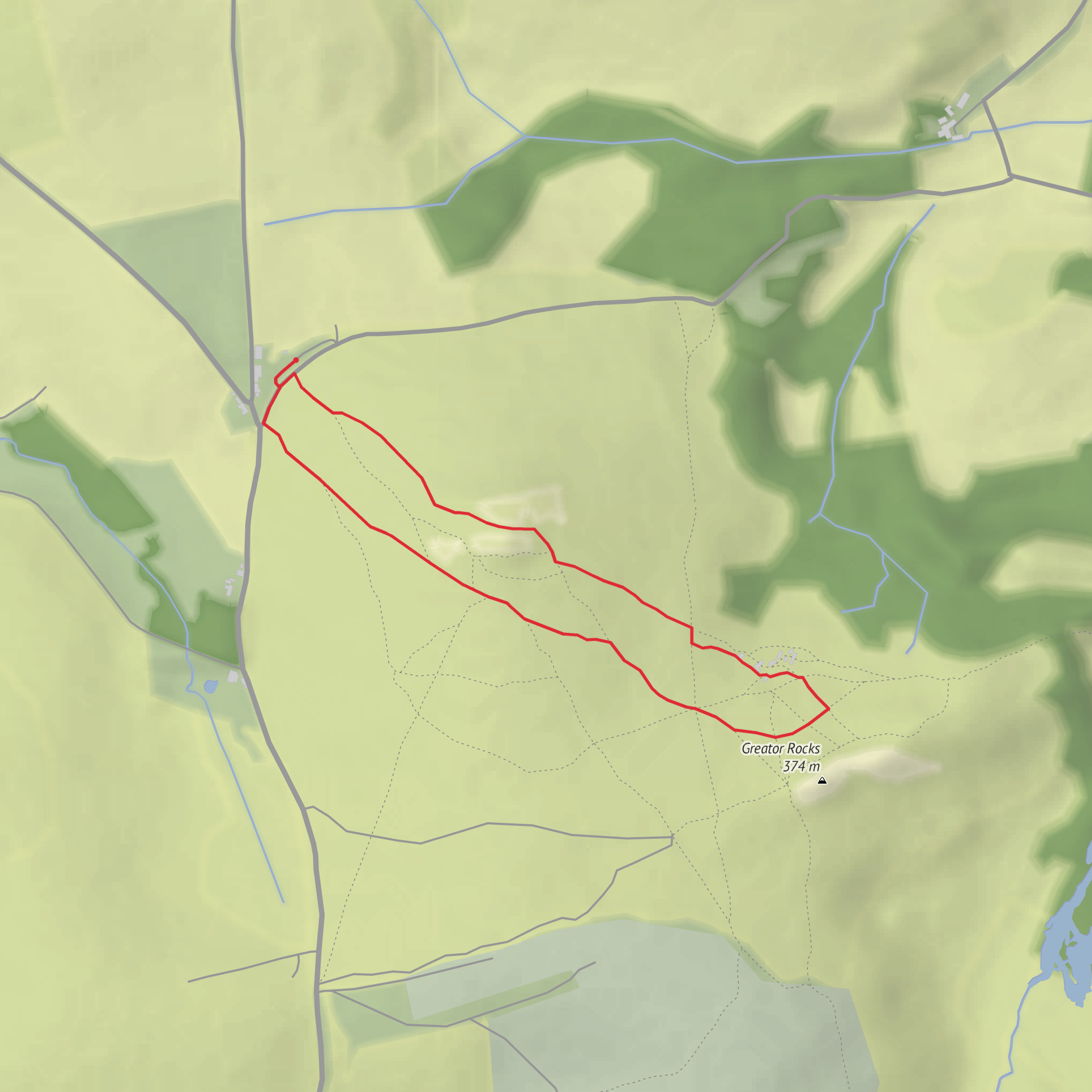
This short loop around Hound Tor packs a surprising amount into roughly 2 km / 1.2 miles, with about 100 metres / 330 feet of ascent. Although the distance is modest, the terrain gives it a more solid “medium” feel than the mileage suggests. Expect uneven moorland paths, short rocky climbs, exposed ground, and sections that can become slick in wet or windy weather. It suits walkers who want a compact Dartmoor outing with big views, striking granite formations, and a strong sense of history. The usual starting point is the Hound Tor car park at Swallerton Gate, near Manaton, Newton Abbot, Devon, on the eastern side of Dartmoor National Park. (dartmoorcam.co.uk)
The route typically begins with a steady pull from the car park toward the tor itself. The climb is short but noticeable, gaining much of the route’s elevation early on. Underfoot, you can expect a mix of compacted earth, stone, and open moorland ground. After rain, puddles and boggy patches are common, and the granite can be polished and slippery. Because the tor rises abruptly from the surrounding moor, even a brief ascent feels dramatic, and the reward is wide-reaching views across this part of southeast Dartmoor. On clear days, the landscape opens out toward nearby tors, rolling moorland, and the greener enclosed farmland at the moor’s edge. (dartmoor.gov.uk)
What to expect on the loop
Hound Tor is best known for its weathered granite outcrops, stacked into jagged shapes that stand out against the open skyline. These tors are part of Dartmoor’s granite upland landscape, and the rock formations here are one of the main reasons the walk feels so memorable despite its short length. The tor itself is the visual centerpiece, and many walkers spend time weaving around the boulders, taking care on the steeper rock sections where footing can be awkward. If visibility drops in mist, the area can feel much bigger and more confusing than the map suggests, so carrying and checking your route on HiiKER is sensible even for a short circuit. (english-heritage.org.uk)
From the tor, the loop usually swings toward the remains of the deserted medieval village of Hound Tor, one of the most important landmarks on the walk. The village ruins lie on the slopes below and are among the best-known deserted medieval settlements in southern England. You can still make out the outlines of longhouses and enclosures, which give a clear impression of how people once lived and farmed here in a far harsher upland environment than many visitors expect today. The settlement is generally dated to the medieval period and was later abandoned, with Dartmoor’s climatic deterioration and the wider demographic shock of the Black Death in the 14th century often cited as major factors in the abandonment of settlements like this one. (english-heritage.org.uk)
History and landscape
This is one of those walks where the historical setting is as important as the scenery. Hound Tor’s name is tied to the animal-like shapes people saw in the rock stacks, and the surrounding landscape preserves evidence of centuries of human use. The medieval village is the standout feature, but the wider area around Hound Tor also reflects Dartmoor’s long story of farming, settlement, and adaptation to a demanding upland climate. The remains here help explain how communities once tried to make a living on the moor before environmental pressures and disease reshaped the region. (english-heritage.org.uk)
The broader eastern Dartmoor area is also rich in archaeological interest beyond the village itself. Nearby landscapes contain prehistoric and later remains that show this has been a lived-in and worked landscape for thousands of years, not just a wild open moor. That gives the loop an added layer of interest: even on a short outing, walkers are moving through a landscape shaped by both geology and human history over a very long timescale. (dartmoor.gov.uk)
Nature, wildlife, and conditions
The habitat around Hound Tor is classic Dartmoor moorland, with rough grasses, heather, gorse in places, and open ground that supports upland birdlife. Depending on season and time of day, walkers may notice skylarks, crows, ravens, and other moorland birds, while the surrounding fields and edges of the moor can attract grazing livestock and ponies typical of Dartmoor’s landscape character. Conditions change quickly here: wind exposure is one of the biggest factors, and even a short walk can feel much colder on the tor than at the car park. Low cloud and mist can also reduce visibility fast. (dartmoor.gov.uk)
Because the route is short, many people underestimate it. Good footwear is still important, especially for the rocky approach to the tor and any damp ground around the loop. Waterproof layers are worth carrying year-round,
What to expect?
Surfaces
Grass
Unknown
Asphalt
Comments and Reviews
User comments, reviews and discussions about the Hound Tor Loop, England.
average rating out of 5
0 rating(s)

