
Download
3D Flyover
Add to list
More
11.3 km
~2 hrs 58 min
434 m
Loop
“Granite tors, sweeping moor, and medieval echoes make this Dartmoor loop feel wild and storied.”
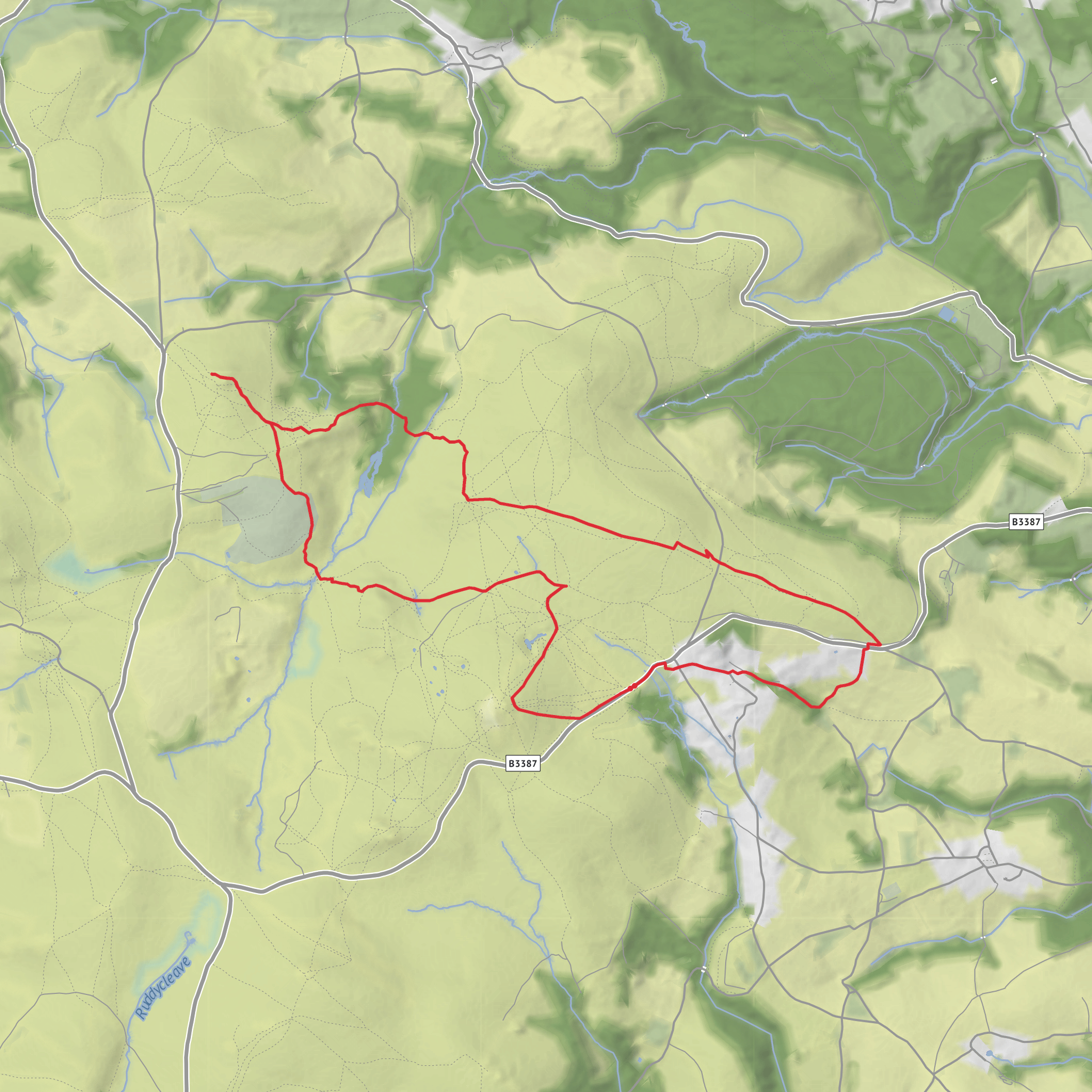
This medium-difficulty loop on eastern Dartmoor packs a lot into roughly 11 km / 6.8 miles, with about 400 m / 1,310 ft of ascent. It links two of the moor’s best-known granite tors, crosses open downland, and passes one of Dartmoor’s most evocative archaeological sites, so it suits hikers who want big views, varied terrain, and a strong sense of place rather than a purely gentle countryside ramble. The route is usually associated with the Haytor and Hound Tor area, and the most practical trailhead landmark is Haytor Visitor Centre, Haytor Vale, near Bovey Tracey, Devon, with nearby parking on the B3387. Hound Tor car park at Swallerton Gate, near Manaton/Widecombe-in-the-Moor, is another common starting point if you prefer to begin closer to the medieval remains. (dartmoor.gov.uk)
Expect a mix of clear trods, stony moorland paths, short grassy sections, and some rougher, rockier ground around the tors. Although the distance is moderate, the route feels more demanding when the wind is up or the ground is wet, and the repeated climbs over exposed high ground can make it feel longer than the numbers suggest. In dry weather it is a rewarding half-day walk; in mist, rain, or winter conditions it becomes much more serious because the open moor can quickly reduce visibility and make route-finding harder. For navigation, carrying the route on HiiKER is the most sensible way to stay oriented across the broader, less defined sections.
What the route feels like
From the Haytor side, the walk usually begins with a steady climb onto Haytor Down, where the landscape opens almost immediately. Haytor Rocks is one of Dartmoor’s most recognisable tors, and the granite stacks rise abruptly above the surrounding moor. The first few kilometres are often the busiest, especially near the visitor centre and main car parks, but the sense of space grows as you move away from the immediate Haytor hub. Views can stretch across eastern Dartmoor and, on a clear day, toward the South Devon coast. Dartmoor’s tors were formed from granite emplaced deep underground and later exposed by erosion, creating the blocky outcrops that define this skyline. (english-heritage.org.uk)
As the loop continues, the route typically undulates across Haytor Down toward Hound Tor, with a combination of open moor, grazing land, and old quarrying landscapes. This is not a heavily wooded walk; it is a broad, airy moorland outing where weather and visibility shape the experience. Sheep, cattle, and Dartmoor ponies may be present on or near the route, so give all livestock space and keep a close eye on footing where paths are churned or muddy.
Landmarks, history, and character
The standout historical feature is the Hound Tor deserted medieval village, which lies between the granite landmarks of Hound Tor and Greator Rocks. The visible remains include longhouses and enclosures from a small farming settlement that was occupied in the medieval period. English Heritage notes that the hamlet sits in a landscape with much older prehistoric use, and Dartmoor National Park highlights it as one of the area’s key archaeological sites. It is one of those places where the moor’s human history becomes unusually easy to read on the ground. (dartmoor.gov.uk)
Haytor adds a different layer of history. The granite here was extensively quarried in the 19th century, and the Haytor Granite Tramway was built to move stone from the quarries toward Teignmouth. Dartmoor National Park specifically notes the tramway and quarry as major heritage features, while English Heritage records that Haytor granite was used for prominent London buildings, including the British Museum, and more broadly in major construction projects. That industrial story gives the walk more depth than a simple tor-to-tor circuit: you are moving through a landscape shaped not only by geology and farming, but also by quarrying and transport innovation. (dartmoor.gov.uk)
Hound Tor itself is also famous beyond hiking circles because its dramatic rock formations have long fed local folklore and have made it one of the most atmospheric tors on the moor. The tors around this route are not just viewpoints; they are the defining architecture of the landscape.
Nature and wildlife
This part of Dartmoor is classic upland heath and moorland habitat. Around Haytor, Dartmoor National Park highlights species such as **skylarks, meadow pipits, stonechats, wheatears, Dartford warblers, and occasional
Surfaces
Grass
Unknown
Gravel
Asphalt
Comments and Reviews
User comments, reviews and discussions about the Hound Tor, Haytor Down and Haytor Rocks Loop, England.
average rating out of 5
0 rating(s)



