
Download
3D Flyover
Add to list
More
10.7 km
~2 hrs 17 min
85 m
Loop
“Big skies, whispering reeds and shining pools make this a peaceful Somerset wetland wander.”
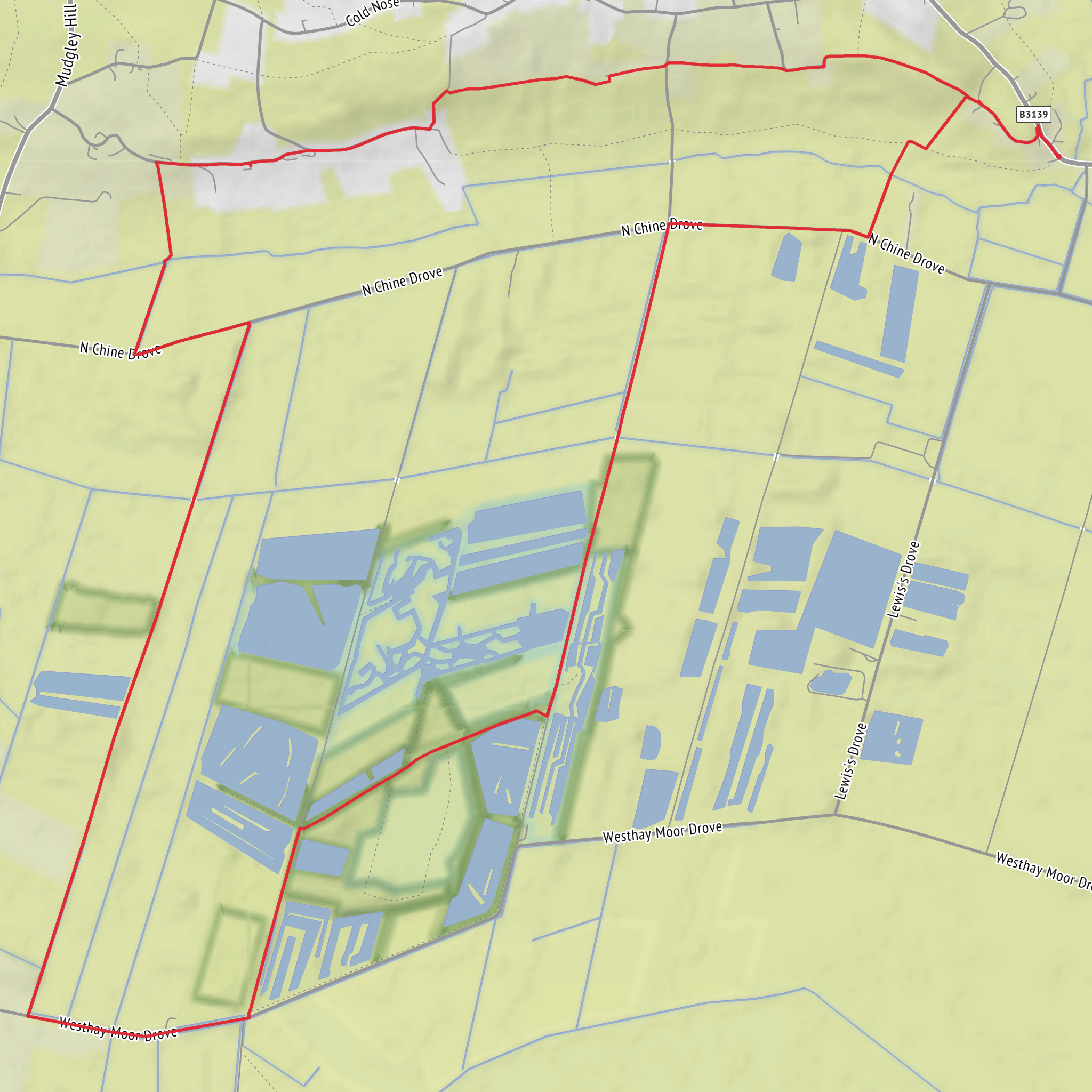
This easy-going wetland circuit explores one of the most distinctive landscapes in Somerset: a broad, open mosaic of reedbeds, pools, peat moor, drainage channels and big skies. At around 11 km / 6.8 miles with roughly 100 m / 328 ft of total ascent spread very gently across the route, it is more of a long, level ramble than a strenuous hike, and it suits walkers who enjoy wildlife, open views and quiet paths rather than steep climbing. The start is best associated with Westhay Moor National Nature Reserve car park, near Westhay Moor Drove, Westhay, Glastonbury BA6 9TX, noting that the postcode can point you a little west of the actual parking area. The reserve car park itself is reached from the minor road between Westhay village and Godney, with grid reference ST 456 437. (somersetwildlife.org)
Getting to the start is straightforward by car and a little more awkward by public transport. Drivers usually approach from the B3151 between Glastonbury and Wedmore, then follow the brown signs for Westhay Moor; the reserve car park is about 1.5 miles from the turn-off and currently operates as a paid car park. For public transport, the wider Avalon Marshes area is the key reference point: the nearest rail stations listed for the area are Highbridge and Bridgwater, with Castle Cary and Taunton also possible, but onward travel is limited. The nearest practical bus access is generally Ashcott, about 4 km / 2.5 miles away, so anyone arriving without a car should expect to combine rail or bus travel with a taxi or a longer approach on foot. (somersetbirding.org.uk)
The walking itself is usually on broad reserve tracks, old drove routes and embanked paths through the wetlands. Underfoot, expect mostly firm gravel or compacted paths on the reserve sections, but conditions can change quickly after heavy rain, with puddles, softer edges and occasional muddy patches where tracks meet field margins or less formal sections. Because the landscape is so open and low-lying, wind can feel stronger than forecast, and there is very little shelter from sun or rain. Waterproof footwear is useful year-round, and insect repellent can be worth carrying in warmer months.
What the route feels like
The first part of the loop is typically very gentle, easing you into the reserve landscape rather than demanding effort. The elevation gain is so modest that most walkers will barely register the climbing, but the terrain still has variety: straight drove roads, reed-fringed water, occasional viewing points, and long sightlines across the Somerset Levels. This is a place where the scenery changes through texture and light rather than through altitude. One stretch may feel enclosed by reeds and willow scrub, while the next opens into wide water and sky.
As the route develops, the most memorable features are the wetland habitats themselves. Westhay Moor sits within the Avalon Marshes and the wider Somerset Wetlands National Nature Reserve, an internationally important landscape for birds and peatland restoration. The reserve is known for restored peat workings that have become a patchwork of open water, reedbed and wet woodland, and it also protects the largest surviving remnant of lowland acid mire in the South West. (gov.uk)
If your loop uses the main reserve tracks, you can expect several strong landmark points rather than dramatic topographic features: broad meres and flooded workings, reedbeds alive with sound in spring and summer, and occasional hides or viewpoints that break up the walk. Older Somerset Wildlife Trust route material for Westhay highlights paths leading toward the Viridor Hide and Tower Hide, both useful reference points when orienting yourself on the reserve. For navigation, it is worth having the route loaded on HiiKER, especially because wetland paths and intersecting droves can look deceptively similar in flat light or mist. (somersetwildlife.org)
Wildlife and seasonal highlights
This is one of the best parts of Somerset for wetland wildlife. Birdwatchers are especially drawn here for species associated with reedbeds and open marsh. Bittern is one of the signature birds of the wider marshes, and Westhay is also well known for marsh harrier, with extensive reed habitat supporting breeding and wintering wetland birds. Depending on season and luck, walkers may also encounter egrets, herons, ducks, swans, reed warblers and raptors quartering low over the reeds. (gov.uk)
The atmosphere changes a lot through the year. In spring, birdsong and fresh reed growth make the reserve feel lively and expansive. Summer brings dragonflies, damselflies and lush vegetation, though it can also mean more exposed heat and insects. Autumn often gives the route
Surfaces
Unknown
Grass
Comments and Reviews
User comments, reviews and discussions about the Westhay Moor and Somerset Wetlands Loop, England.
average rating out of 5
0 rating(s)

