
Download
3D Flyover
Add to list
More
10.0 km
~2 hrs 12 min
120 m
Loop
“Woodland hush gives way to shimmering lake views on this gently varied High Weald loop.”
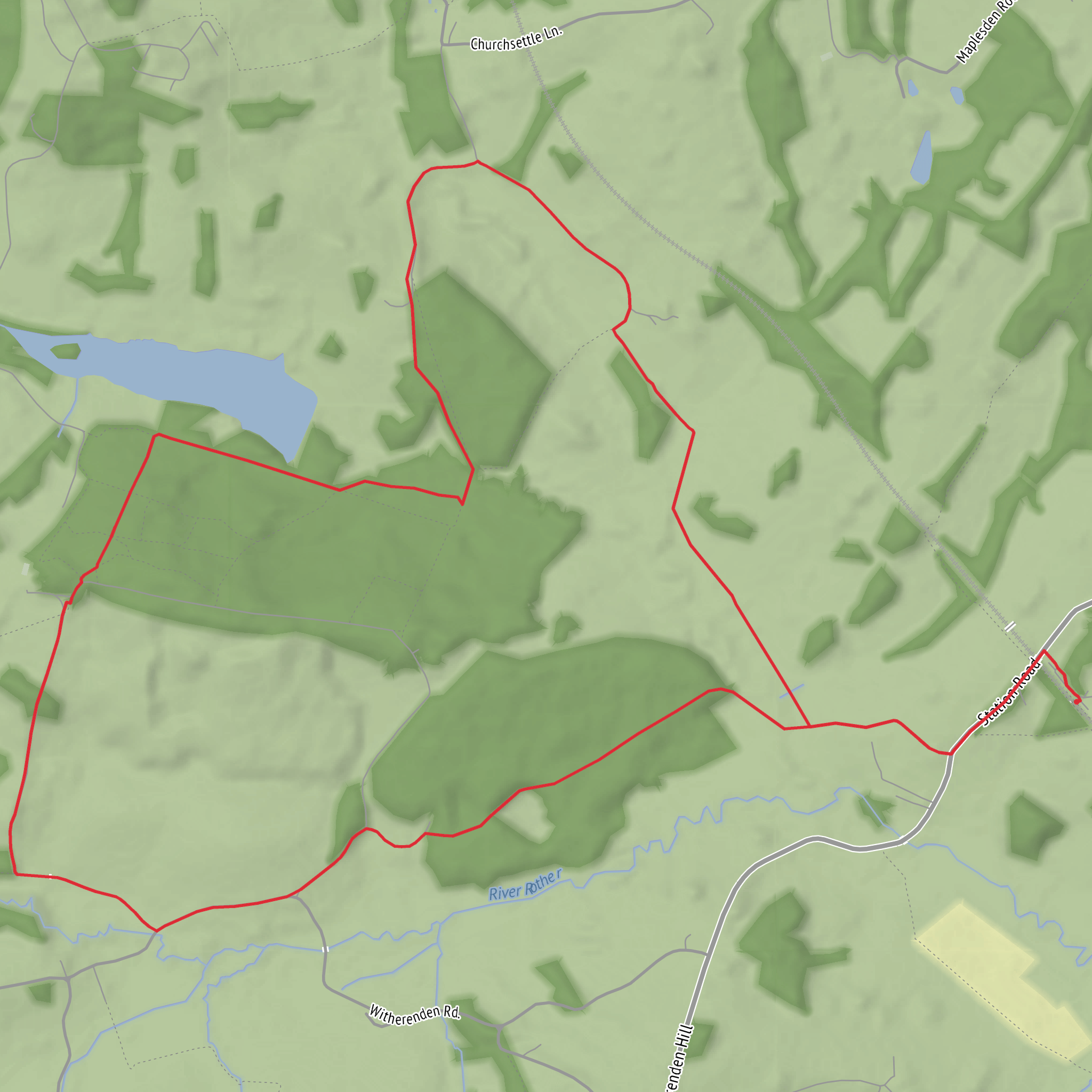
This easy loop through the High Weald mixes broadleaf woodland, estate tracks, open parkland views and a long look across Wadhurst Park Lake, all on a route of about 10 km / 6.2 miles with roughly 100 m / 330 ft of ascent. The gradients are generally gentle, but the route can feel a little more demanding after rain because woodland paths and field-edge sections in this part of East Sussex often turn soft, slick and muddy. The walking is best suited to anyone comfortable with uneven ground, tree roots, occasional stiles and short road links rather than a fully surfaced trail. Wadhurst Park does not provide public parking, so planning your start point matters. (wadhurstpark.co.uk)
The walk lies near Wadhurst in East Sussex, within the High Weald National Landscape, and the most useful nearby landmark for orientation is Wadhurst Park, Wadhurst, East Sussex, with Wadhurst railway station, Station Road, Wadhurst, TN5 6RZ as the nearest rail access point. If you are arriving by train, Wadhurst station is the obvious public-transport gateway, and local bus services also serve Wadhurst and Wadhurst Railway Station. If driving, use public parking in or near Wadhurst village rather than expecting estate parking at Wadhurst Park itself. (nationalrail.co.uk)
The character of the route changes steadily as you go. Early sections are usually enclosed by woodland, with Newbridge Wood and Batt’s Wood giving that classic Wealden feel: tall mixed trees, filtered light, leaf litter underfoot and a network of rides and rights of way threading through the estate woods. Batt’s Wood is described as mixed conifer and deciduous woodland, with Dens Wood extending north and Newbridge Wood extending east, so even on a relatively short outing there is a pleasing variety in texture and tree cover. (geograph.org.uk)
What to expect on the ground
For the first few kilometres, expect quiet woodland walking with modest ups and downs rather than any sustained climb. With only around 100 m / 330 ft of total ascent across the whole loop, this is a route where the effort comes more from surface conditions than elevation. In dry weather, the paths are straightforward and relaxed; in wet weather, the clay-rich soils of the Weald can become sticky and slippery, so waterproof footwear with decent grip is a sensible choice. Because the route passes through managed estate land and deer country, it is worth keeping an eye out for signage asking walkers to stay on the public footpath. (commons.wikimedia.org)
As the walk opens out near Wadhurst Park Lake, the scenery broadens from enclosed woodland to landscaped parkland. This is one of the most memorable parts of the loop: the lake appears as a long, reflective feature set within the old estate landscape, with views across water, pasture and the wooded slopes beyond. Some route descriptions note views toward the eastern dam of the lake, and this section tends to provide the strongest sense of the area’s historic designed landscape rather than simple forest walking. (highweald.org)
Dens Wood brings the route back into a more sheltered, wooded atmosphere. This later part of the loop often feels quieter and more secluded, especially outside peak walking times. The transitions between wood, ride, meadow edge and lake-side outlook are what make the route interesting despite its easy grade and moderate length. It is a good choice for walkers who want variety without committing to a long day. (christophersomerville.co.uk)
Landmarks, wildlife and seasonal interest
Wadhurst Park Lake is the standout landmark. The estate is actively restoring the lake and surrounding habitats, and the wider landscape is managed with wildlife in mind, including woodland, grazing land and wetland edges. The estate notes rare Sussex trees on the property, including wild pear, wild service tree, local black poplar clones, crab apple and veteran white willow, which adds botanical interest for anyone who enjoys looking beyond the main path. (wadhurstpark.co.uk)
Wildlife is one of the main reasons to slow the pace here. Deer are especially associated with this route and the surrounding parkland; reports from the area mention red, roe and fallow deer, and walkers may see them at woodland edges or out in the open near the lake, particularly in quieter hours. The estate also records Daubenton’s and Nathusius’ pipistrelle bats feeding over Wadhurst Park Lake on summer evenings. Birdlife will vary by season, but the
Surfaces
Unknown
Asphalt
Grass
Dirt
Concrete
Comments and Reviews
User comments, reviews and discussions about the Newbridge Wood, Batt's Wood, Wadhurst Park Lake and Dens Wood Loop, England.
average rating out of 5
0 rating(s)

