
Download
3D Flyover
Add to list
More
8.1 km
~1 hrs 41 min
46 m
Loop
“A gentle Sherwood loop blends the legendary Major Oak with tranquil heath, ancient woodland, and wildlife-rich clearings.”
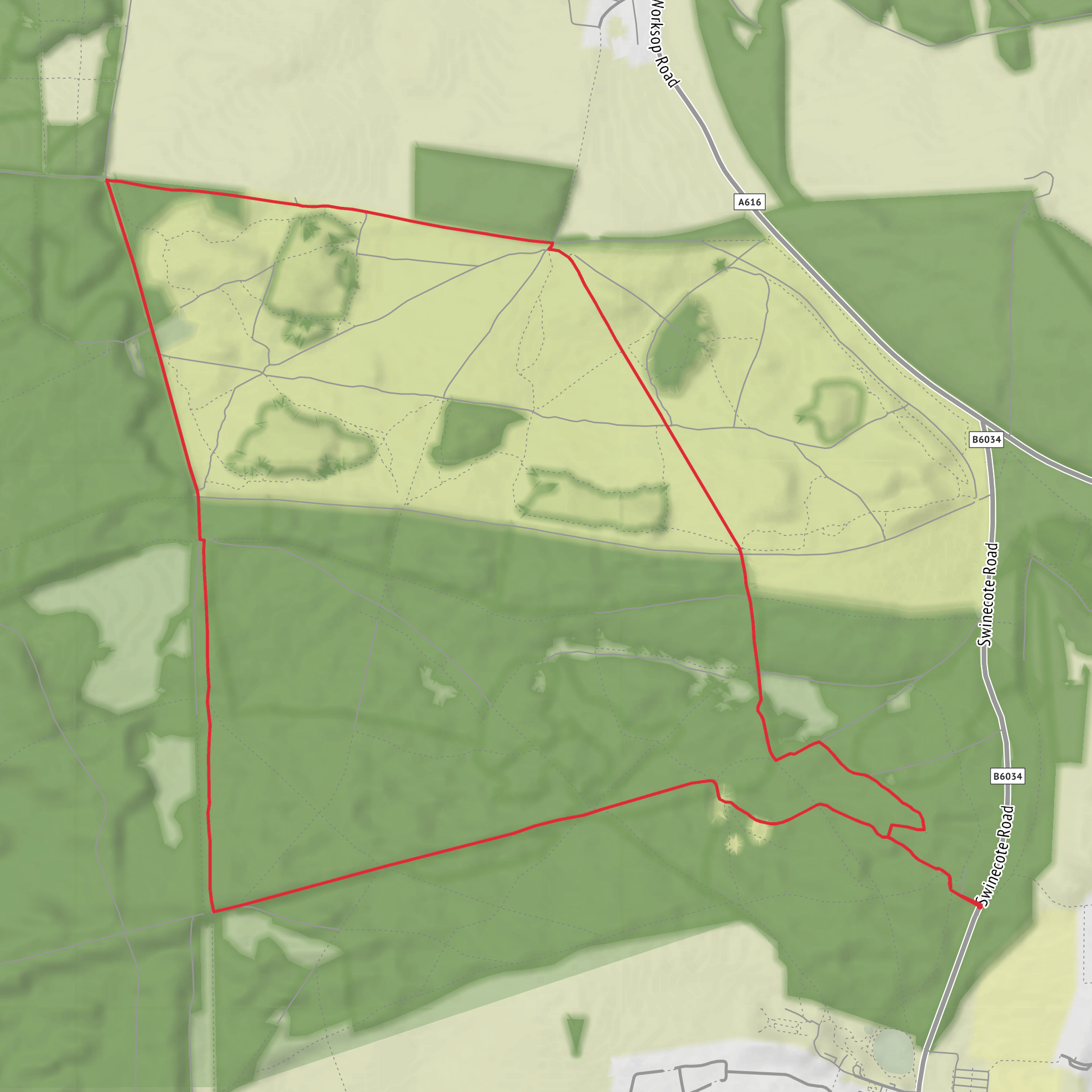
This easy loop of around 8 km (about 5 miles) explores the best-known parts of Sherwood Forest National Nature Reserve and the more open landscapes of Budby South Forest, with almost no climbing overall. Expect a mostly level walk on broad woodland paths, sandy tracks, and heathland routes, making it a good choice for families, casual walkers, and anyone wanting a relaxed day out rather than a strenuous hike. The route is best known for combining the legendary Major Oak with quieter stretches of ancient woodland and lowland heath, so it offers a strong mix of history, scenery, and wildlife in a relatively short distance. (gov.uk)
The usual starting point for this walk is the Sherwood Forest Visitor Centre at Forest Corner, Edwinstowe, Mansfield, Nottinghamshire, NG21 9QB, accessed from the B6034 Swinecote Road. Some sources also list the visitor centre address as NG21 9RN, so using “Sherwood Forest Visitor Centre, Forest Corner, Edwinstowe” is the clearest way to navigate there by car. Parking is available on site, and current visitor information notes that parking is typically charged for non-members. (web-cdn.rspb.org.uk)
If arriving by public transport, the most straightforward option is the Stagecoach Sherwood Arrow bus, which runs between Nottingham, Worksop, and Sherwood Forest and stops at the visitor centre. If coming by rail, Mansfield Woodhouse is the nearest station, about 8 km (roughly 5 to 6 miles) away, and you would normally continue by bus or taxi from there. For route-finding on the day, HiiKER is the best tool to check the loop line, junctions, and any small path variations through the forest and heath. (web-cdn.rspb.org.uk)
What to expect on the route
The opening section is usually the busiest, following well-used paths through the heart of Sherwood Forest toward the Major Oak. This part is gentle underfoot, with little elevation change, and it gives a quick introduction to the character of the reserve: veteran oaks, birch, holly, hawthorn, and patches of open glades. The official Major Oak Trail alone is about 2.4 km (1.5 miles), but this longer loop extends beyond it into quieter country. (visitsherwood.co.uk)
At around 1.5 to 2 km (about 1 mile) into the walk, the Major Oak is the standout landmark. It is the forest’s most famous tree and is thought to be nearly twice the age of many of the reserve’s already ancient oaks, with the wider reserve containing more than a thousand ancient oaks, most over 500 years old. The tree is often associated with Robin Hood folklore and is one of the defining symbols of Sherwood. Because this area attracts many visitors, expect a more social atmosphere here, especially on weekends and school holidays. (gov.uk)
Beyond the Major Oak, the route becomes more varied and often quieter as it heads toward Budby South Forest. The transition is noticeable: dense and characterful ancient woodland gives way to more open heath and sandy clearings. Budby South Forest is one of the most important surviving fragments of lowland heath in the area, with broad views, heather, and a more exposed feel than the woodland sections. On breezy or hot days, this contrast can make the walk feel more changeable than the distance suggests, so light layers and water are worth carrying even on an easy outing. (gov.uk)
Nature, wildlife, and seasonal interest
Sherwood Forest is nationally important for its ancient trees and the wildlife they support. The reserve is noted for having the highest concentration of ancient trees in Europe, and those old, decaying trunks and limbs provide habitat for rare beetles, flies, spiders, and other invertebrates. This means the walk is not only scenic but ecologically significant, especially for anyone interested in old-growth woodland systems. (gov.uk)
In the Budby South Forest section, look for lowland heath species and a more open mosaic of ling heather and rough grassland. This habitat supports insects and ground-nesting birds including woodlark, nightjar, and tree pipit. If walking between 1 March and 31 August, it is especially important to be careful around these sensitive areas; official guidance requires dogs to be kept on a short lead in Budby South Forest during that period to protect nesting birds. (gov.uk)
Seasonally
Surfaces
Gravel
Unknown
Dirt
Unpaved
Asphalt
Comments and Reviews
User comments, reviews and discussions about the The Major Oak, Budby South Forest and Sherwood Forest Loop, England.
average rating out of 5
0 rating(s)
