Download
3D Flyover
Add to list
More
9.6 km
~1 hrs 54 min
0 m
Point to Point
“Big skies, whispering reeds, and wheeling birds make this exposed marsh walk quietly unforgettable.”
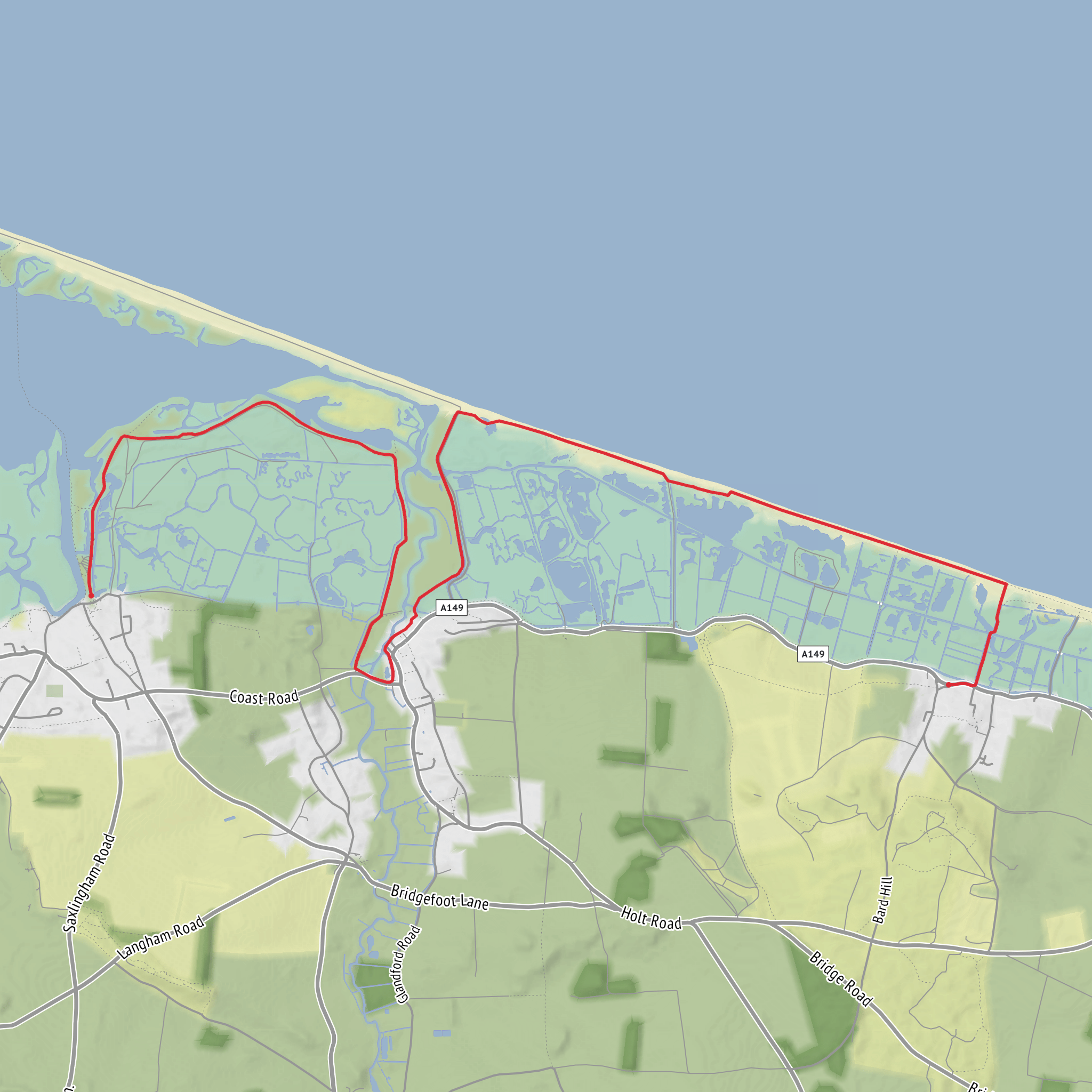
This easy coastal walk of around 10 km / 6.2 miles is all about wide skies, open marsh, sea-edge scenery, and birdlife rather than climbing, with roughly 0 m / 0 ft of ascent overall. It begins near Cley Windmill, The Quay, Cley-next-the-Sea, Holt, Norfolk NR25 7RP, one of the best-known landmarks on the North Norfolk coast, and passes through a landscape shaped by saltmarsh, shingle, drainage channels, grazing marsh, and reedbeds. The route is generally flat and straightforward, making it suitable for most walkers, but the exposed setting means wind, rain, and sun can all feel stronger than expected. (cleywindmill.co.uk)
From the start, expect a distinctly coastal-marsh atmosphere rather than a village or woodland walk. The windmill stands beside the old quay area at Cley, and almost immediately the landscape opens into big horizons with the marshes stretching toward the sea. Even on a short route, the sense of space is one of the defining features here. Paths and tracks in this area often run beside drainage ditches, embankments, and old sea-defence lines, so the walking is usually easy underfoot, though it can become muddy after wet weather and more uneven where grassy sections meet shingle or rougher marsh-edge ground. (visitnorfolk.co.uk)
What to expect on the route
The early part of the walk is likely to feel gentle and expansive, with the windmill behind you and the marshes drawing you outward toward the coast. This is a landscape where small changes matter: freshwater reedbeds give way to grazing marsh, channels cut through the flats, and the shingle ridge near the sea forms a natural barrier that has played a major role in the area’s history. Because the terrain is so level, the visual drama comes from light, weather, and bird movement rather than from elevation. (norfolkwildlifetrust.org.uk)
As you continue toward Mean Low Water and the Salthouse side of the reserve, the route moves through one of the most important wetland systems on the North Norfolk coast. Cley and Salthouse Marshes now form a linked reserve of more than 300 hectares, and the area is especially valued for its lagoons, reedbeds, grazing marsh, and coastal habitats. The walking here can feel wonderfully peaceful, but it is also very exposed, so a breezy day can make the route feel more demanding than the distance suggests. (norfolkwildlifetrust.org.uk)
If your line of walking reaches the sea edge or shingle bank, expect a change in footing. Shingle can be slower and more tiring than the inland sections, and in windy conditions it can be uncomfortable. If the route stays mainly on embankments and reserve tracks, it remains much easier. Either way, this is a place where checking the route carefully on HiiKER before setting out is worthwhile, especially because marsh paths, access points, and coastal conditions can feel less obvious on the ground than they appear on a map.
Wildlife and seasonal interest
This walk is especially rewarding for birdwatchers. Cley Marshes is one of the oldest nature reserves in the country and is internationally known for wildfowl, waders, and migratory birds. Depending on season, walkers may encounter geese, ducks, avocets, waders on the pools and mud, marsh harriers quartering low over the reeds, and, in suitable conditions, species such as bittern and spoonbill associated with the reserve’s freshwater habitats. The reserve is also known for reedbed and grazing-marsh wildlife beyond birds, with otters also noted in the area. (visitnorthnorfolk.com)
The plant life and habitat mix are also significant. The coastal pastures at Cley and adjacent Salthouse Marshes support salt-influenced grassland and marsh vegetation, while the broader reserve includes reedbeds, pools, and grazing marsh. That variety is one reason the walk stays interesting even though it is almost completely flat. Bring binoculars if wildlife is a priority, and allow extra time if you enjoy stopping frequently to scan the pools and channels. (en.wikipedia.org)
Historical significance
This is not just a scenic route; it is a walk through a long-managed coastal landscape. Cley next the Sea was historically linked to the River Glaven and to coastal trade, and the quay area around the windmill reflects that maritime past. Cley Windmill itself is an early
Surfaces
Gravel
Unknown
Dirt
Grass
Concrete
Unpaved
Ground
Asphalt
Comments and Reviews
User comments, reviews and discussions about the Cley Windmill, Mean Low Water and Salthouse Marshes, England.
average rating out of 5
0 rating(s)