
Download
3D Flyover
Add to list
More
4.9 km
~1 hrs
12 m
Loop
“A breezy heathland loop of purple heather, reed-fringed calm, and quietly layered coastal history.”
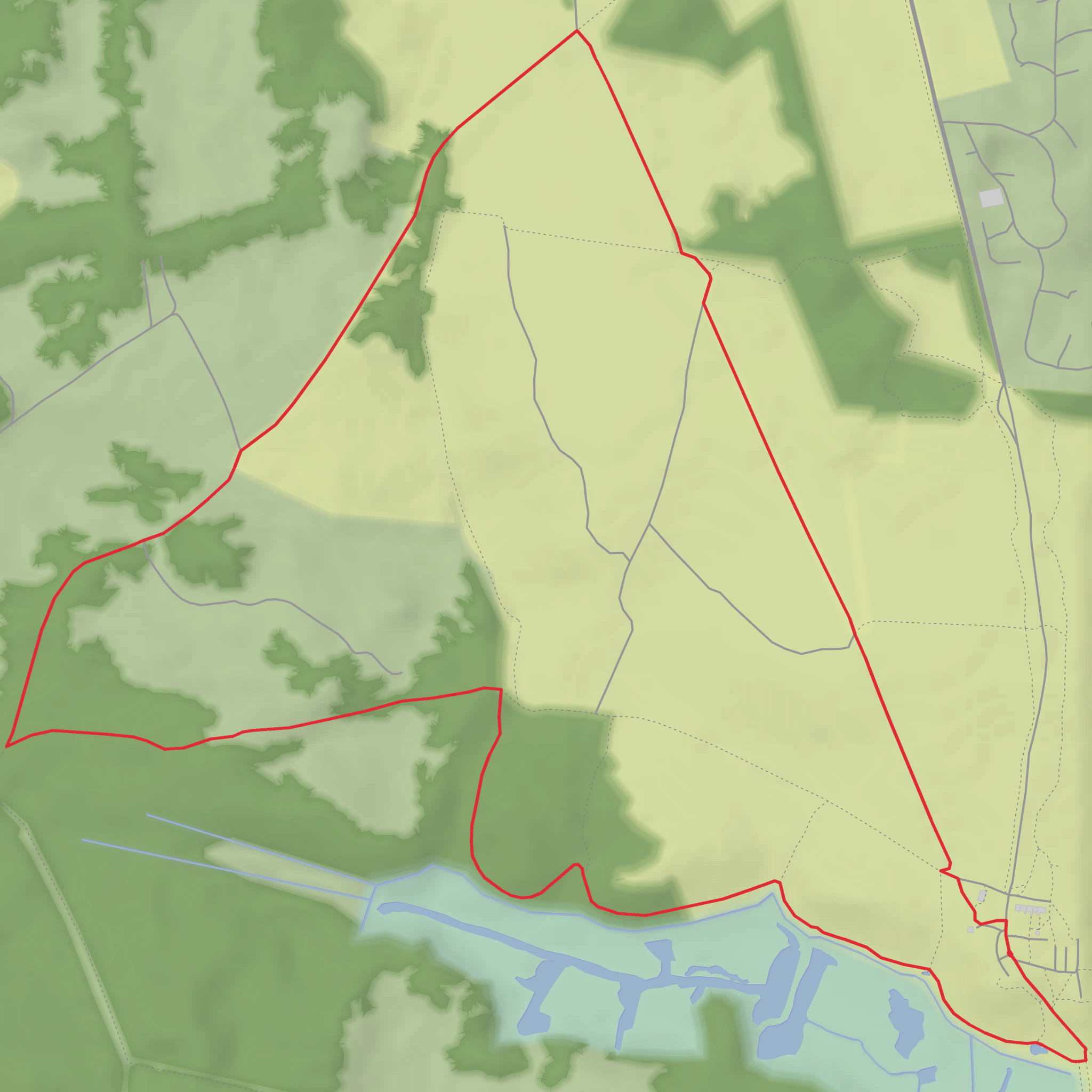
This easy loop on Dunwich Heath is a gentle 5 km / 3.1 mile walk with virtually no real climbing—about 0 m / 0 ft of elevation gain—so it suits families, casual walkers, and anyone after a relaxed outing with big coastal character rather than physical challenge. The route is associated with the National Trust’s heathland trails around Dunwich Heath and Beach, Coastguard Cottages, Minsmere Road, Dunwich, Saxmundham, Suffolk IP17 3DJ, which is the clearest nearby landmark and practical start point for planning. The paths here are generally broad and easy-going, crossing open heath, light woodland, and the edge of wetland near Docwra’s Ditch. (nationaltrust.org.uk)
Expect a landscape that feels open and airy from the start. Because the terrain is so flat, the walk is more about atmosphere than effort: purple heather and gorse in season, sandy or compacted paths underfoot, and long views across heath and reed-fringed water. Even on a short route, the scenery changes nicely, with stretches of exposed heathland giving way to more sheltered sections among oak and silver birch near Docwra’s Ditch. The lack of ascent makes it easy to keep a steady pace, but the exposed sections can feel breezy, especially in cooler months or on windy coastal days. (nationaltrust.org.uk)
What to expect on the route
The loop typically begins near the Coastguard Cottages and visitor facilities, then heads out across Dunwich Heath on well-used paths. Early on, you are likely to be walking through classic lowland heath habitat, one of the most distinctive landscapes on the Suffolk coast. This is not a mountainous or dramatic trail in the usual sense; its appeal comes from texture and space—heather, bracken, scattered trees, sandy tracks, and the sense of being between coast, marsh, and woodland. (nationaltrust.org.uk)
Around the middle portion, the route reaches Docwra’s Ditch, one of the walk’s defining features. Here the character shifts from dry heath to wetter ground, with reedbeds and marshy habitat creating a very different feel. This is often one of the best places to slow down and look for birdlife. The walking remains easy, but after wet weather some sections can feel softer underfoot, so waterproof shoes are useful even on such a short outing. (nationaltrust.org.uk)
If you are planning the walk independently, HiiKER is the best tool to use for checking the exact line of the loop, nearby path junctions, and your position on the heath, especially because several intersecting trails cross the area. Although this is not a remote or technically difficult route, the open heath and multiple path options can make it worth having a reliable map to hand.
Wildlife and seasonal interest
Dunwich Heath is especially valued for wildlife, and that is a major reason to walk here slowly rather than treat it as a quick fitness loop. The heath supports species such as Dartford warblers, nightjars, woodlarks, ant-lions, and adders, while the wetter areas around the ditch and reedbeds attract additional birdlife. Depending on season and time of day, you may hear birds before you see them, particularly in the scrub and woodland edges. (discoversuffolk.org.uk)
Late summer is often the most visually striking time, when the heather colors the heath in purple tones, but the route works well year-round. In cooler months the open skies and coastal light become part of the appeal, while spring brings fresh growth and more birdsong. Because this is a sensitive habitat, it is worth staying on established paths and keeping an eye out for ground-nesting bird areas and any seasonal signage. Dogs are welcome in the area, but local controls may apply to protect wildlife. (static.nationaltrust.org.uk)
Historical significance
This short walk also passes through a landscape with notable military history. Dunwich Heath was used for military training during both world wars, and the wider area played a role in Britain’s wartime coastal defenses and radar development. Docwra’s Ditch itself was dug by the army around 1968 and was named after Jack Docwra, Dunwich Heath’s first warden. What now feels like a peaceful wildlife corridor is therefore also part of a much more recent human story of defense, training, and landscape change. (nationaltrust.org.uk)
The broader Dunwich area is historically significant as well. Dunwich was once an important medieval port, much of which was later lost to coastal erosion over centuries. While this particular loop stays on the heath rather than exploring the vanished town in depth, the sense of a
What to expect?
Surfaces
Unknown
Sand
Dirt
Gravel
Asphalt
Comments and Reviews
User comments, reviews and discussions about the Docwra's Ditch and Dunwich Heath Loop, England.
average rating out of 5
0 rating(s)



