Download
3D Flyover
Add to list
More
14.2 km
~4 hrs 10 min
802 m
Loop
“Embark on a 14 km loop near Cumberland, England, blending challenging climbs, breathtaking vistas, and rich history.”
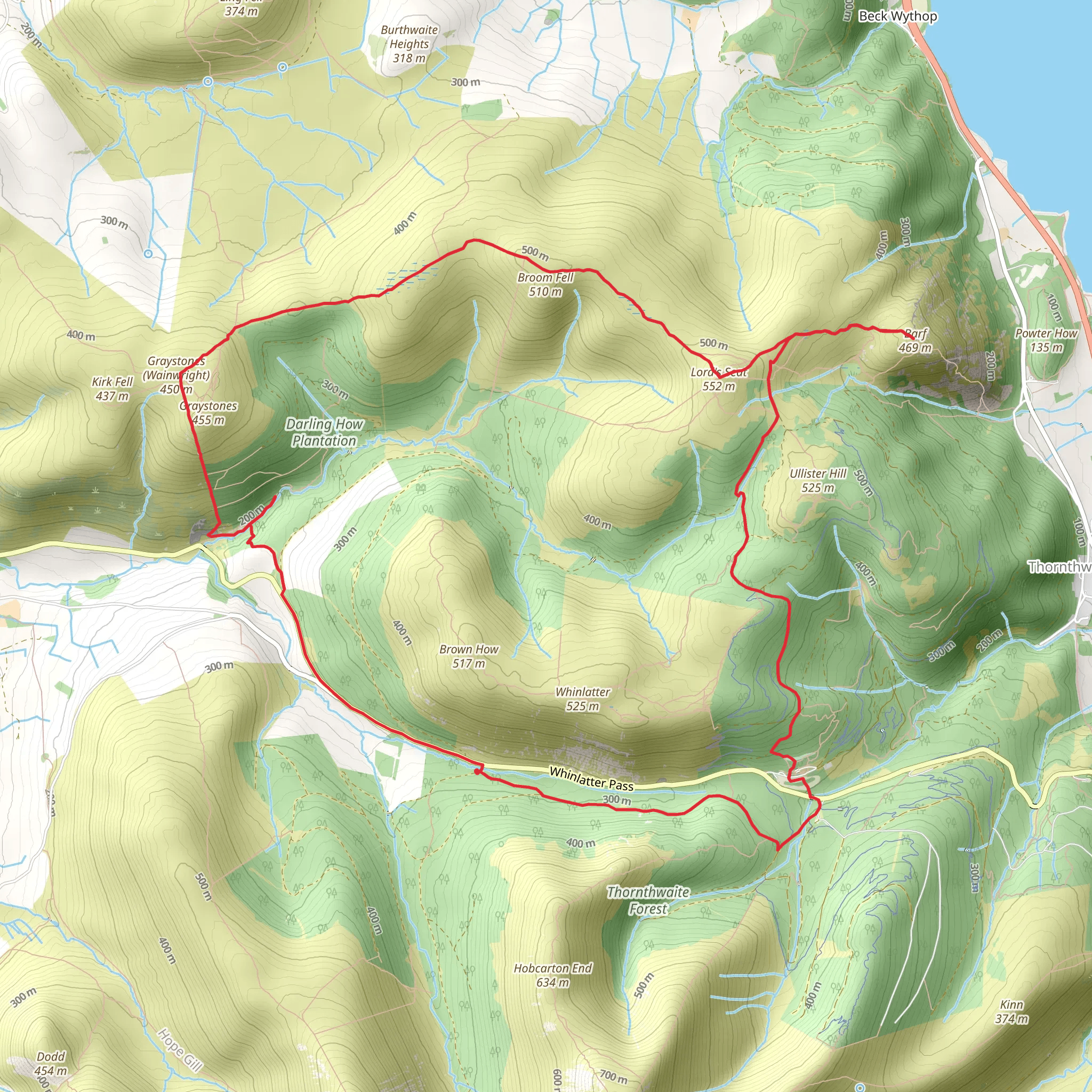
Starting your adventure near Cumberland, England, this 14 km (approximately 8.7 miles) loop trail offers a moderate challenge with an elevation gain of around 800 meters (about 2,625 feet). The trailhead is conveniently located near the Whinlatter Forest Park, which is accessible by car or public transport. If you're driving, you can park at the Whinlatter Forest Park Visitor Centre. For those using public transport, the nearest significant landmark is Keswick, from where you can catch a bus to the Whinlatter Forest Park.
Initial Ascent to Barf
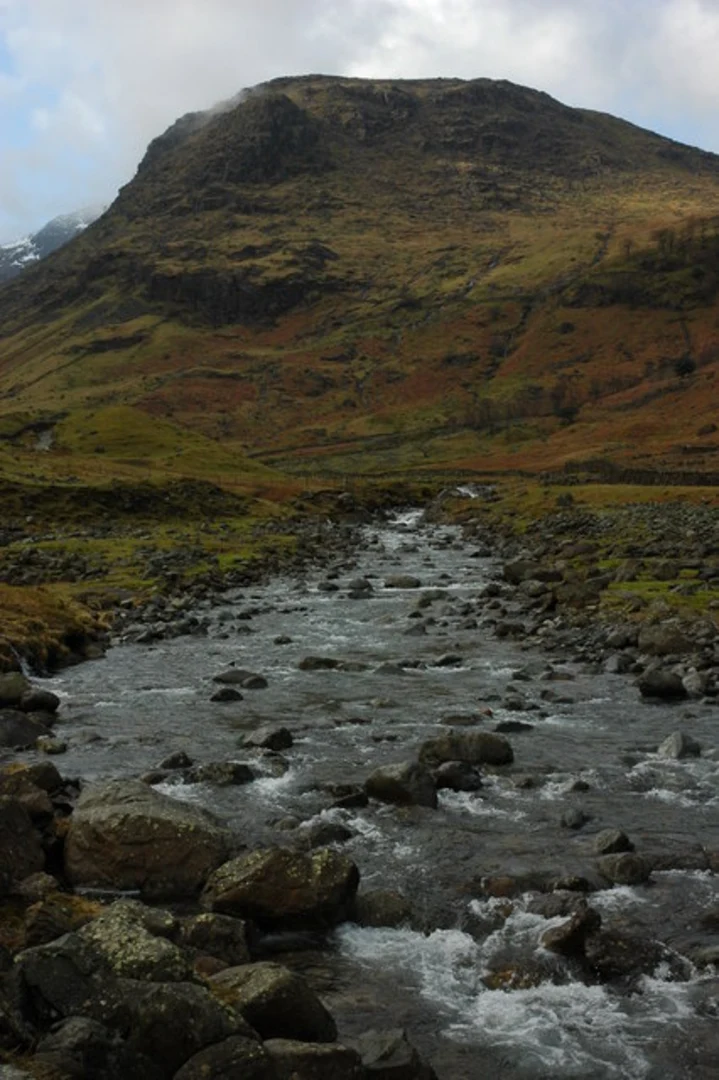
The hike begins with a steady climb towards Barf, a peak that stands at 468 meters (1,535 feet). The initial ascent can be quite steep, so be prepared for a bit of a workout. As you climb, you'll be rewarded with stunning views of Bassenthwaite Lake and the surrounding fells. The terrain here is a mix of rocky paths and grassy slopes, so sturdy hiking boots are recommended.
Lord's Seat and Broom Fell
After reaching Barf, the trail continues towards Lord's Seat, which is the highest point on this hike at 552 meters (1,811 feet). The path between Barf and Lord's Seat is relatively straightforward, with a gentle incline. From the summit of Lord's Seat, you can enjoy panoramic views of the Lake District, including Skiddaw and the Helvellyn range. The trail then descends slightly before climbing again to Broom Fell, which stands at 511 meters (1,677 feet). This section of the trail is less steep but can be boggy in places, so watch your footing.
Graystones and Spout Force
Continuing on, you'll make your way to Graystones, which is slightly lower at 456 meters (1,496 feet). The descent from Broom Fell to Graystones is gradual, and the path is well-trodden. Graystones offers a quieter, more secluded experience compared to the earlier peaks. From Graystones, the trail descends more steeply towards Spout Force, a beautiful waterfall nestled in a wooded gorge. This is a great spot to take a break and enjoy the natural beauty of the area.
Flora and Fauna
Throughout the hike, you'll encounter a variety of flora and fauna. The lower sections of the trail are dominated by deciduous woodland, home to species like oak, ash, and birch. As you ascend, the vegetation changes to heathland and moorland, where you might spot red grouse, skylarks, and even the occasional red deer. Keep an eye out for rare plants like the sundew, a carnivorous plant that thrives in the boggy areas.
Historical Significance
The region is steeped in history, with evidence of ancient settlements and Roman roads. The name "Barf" is derived from the Old Norse word "barfr," meaning a bare or exposed hill. The area was also significant during the medieval period, with local legends and folklore adding to its mystique. The nearby Whinlatter Forest was historically used for timber and charcoal production, and remnants of these activities can still be seen today.
Navigation and Safety
Given the varied terrain and potential for boggy conditions, it's advisable to use a reliable navigation tool like HiiKER to stay on track. Weather conditions can change rapidly in the Lake District, so always check the forecast before setting out and be prepared with appropriate clothing and gear.
This trail offers a rewarding mix of challenging climbs, stunning vistas, and rich natural and historical features, making it a must-do for any avid hiker.
What to expect?
Activity types
Comments and Reviews
User comments, reviews and discussions about the Barf, Lord's Seat, Broom Fell Graystones and Spout Force, England.
5.0
average rating out of 5
2 rating(s)
