
Download
3D Flyover
Add to list
More
12.8 km
~2 hrs 34 min
7 m
Point to Point
“Castle views, breezy waters, and hushed wetlands shape a gentle Thames loop with changing moods.”
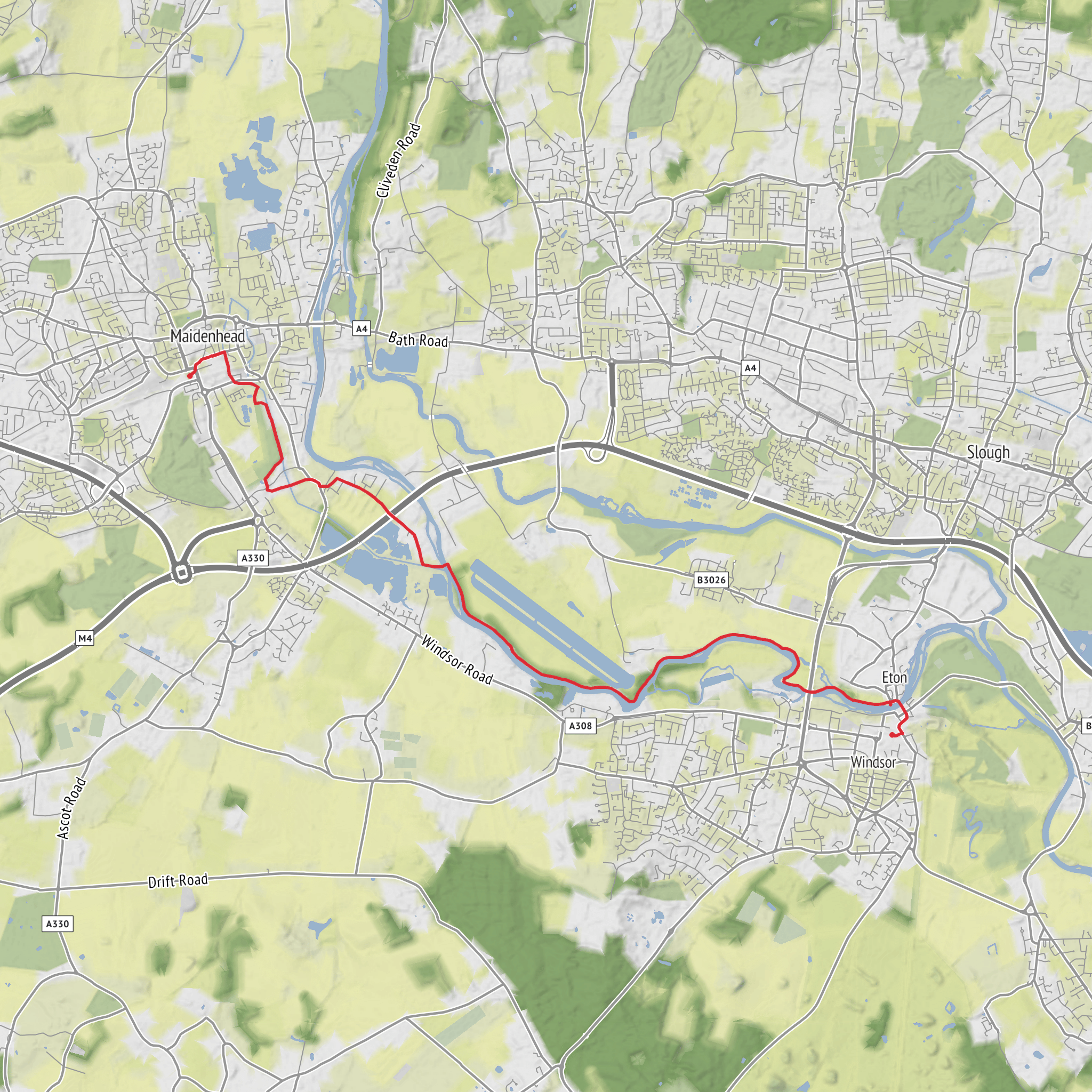
This easy, mostly level circuit of about 13 km / 8.1 miles links royal riverside scenery with open water, meadow-edge paths, and a quieter finish through one of Maidenhead’s key local nature areas. With only negligible climbing—effectively around 0 m / 0 ft of ascent—it suits walkers looking for a relaxed half-day outing rather than a strenuous hike. The route combines some of the best-known landscapes on this stretch of the Thames: close views toward Windsor Castle, broad riverside walking, the watersports lake at Bray Lake, and the wooded and wetland character of Braywick Park Nature Reserve. (windsor.gov.uk)
The walk is best understood as a lowland riverside loop between Windsor and Maidenhead. Expect a mix of paved town sections, well-used Thames Path stretches, waterside tracks, and park and reserve paths that can become softer after rain. Because the terrain is flat, the main challenges are not physical but practical: busy shared-use sections, occasional muddy patches, exposed riverside weather, and the need to stay alert at path junctions where urban paths, cycle routes, and riverside trails meet. For navigation, HiiKER is the best tool to keep the loop clear through the transitions between Windsor, Bray, Bray Lake, and Braywick.
The most logical start point is near Windsor & Eton Central station, close to Windsor Castle and Windsor Royal Station, Windsor SL4 1PJ, or alternatively near Windsor & Eton Riverside station, Datchet Road, Windsor SL4 1QG. Those are the clearest known landmarks for the Windsor end of the route and place walkers directly beside the castle and the Thames. On the Maidenhead side of the loop, a useful landmark is Braywick Nature Centre, Braywick Road, Maidenhead SL6 1BN, and for Bray Lake the nearest clear address is Bray Lake Watersports, Monkey Island Lane, Maidenhead SL6 2EB. (windsor.gov.uk)
What to expect on the route
The opening section is the most iconic. From central Windsor, the route heads out beside the River Thames with repeated views toward Windsor Castle, whose origins go back to the 11th century under William the Conqueror. The castle’s position above the river was strategic as well as symbolic, and that long relationship between monarchy, river crossing, and defended high ground still shapes the landscape of the walk today. Even on an easy outing, this gives the first few kilometres a strong historical atmosphere. (en.wikipedia.org)
Once away from the busiest town centre stretch, the walk settles into gentler riverside progress. The Thames here is broad and slow-moving, with meadows, towpath-style walking, and long open views. This part is usually the easiest underfoot, though it can feel exposed in wind or summer sun because there is limited shelter along some reaches. Waterfowl are common throughout the year, and depending on season you may also notice swans, geese, ducks, and other river birds using the margins and backwaters. (thames-path.org.uk)
Around the middle of the route, the character changes as the walk reaches Bray Lake, a large open-water recreation area on Monkey Island Lane. This is a visual contrast to the historic riverside: instead of castle views and old riverbanks, you get a broad, modern watersports setting with open skies and a more expansive feel. It is worth being prepared for breezier conditions here, and for more activity around access points, especially when the lake is busy. (windsor.gov.uk)
Nature, wildlife, and quieter sections
From Bray Lake, the route turns toward Braywick Park Nature Reserve, where the atmosphere becomes noticeably greener and more enclosed. Braywick is described by the Royal Borough as a flagship space for nature, and the reserve includes habitats that support wildlife interest beyond the more manicured riverside sections. Paths here can feel more informal, with woodland edges, grassland, and wetter pockets depending on the exact line of the walk and recent conditions. (rbwmtogether.rbwm.gov.uk)
This is the section where walkers should slow down and look more carefully. The reserve is known for active nature education and habitat work, and local material highlights features such as bat boxes, wildlife gardening, and broader biodiversity value. Birdlife is often one of the main rewards, especially in quieter hours, and the reserve’s mix of scrub, trees, and wet ground can make it
Surfaces
Unknown
Unpaved
Asphalt
Gravel
Dirt
Wood
Concrete
Comments and Reviews
User comments, reviews and discussions about the Windsor Castle, River Thames, Bray Lake and Braywick Park Nature Reserve, England.
average rating out of 5
0 rating(s)


