
Download
3D Flyover
Add to list
More
11.4 km
~2 hrs 18 min
23 m
Out and Back
“A sun-washed ramble past quiet coves, drystone walls and St Nicholas’s ruins captures Krk’s timeless coast.”
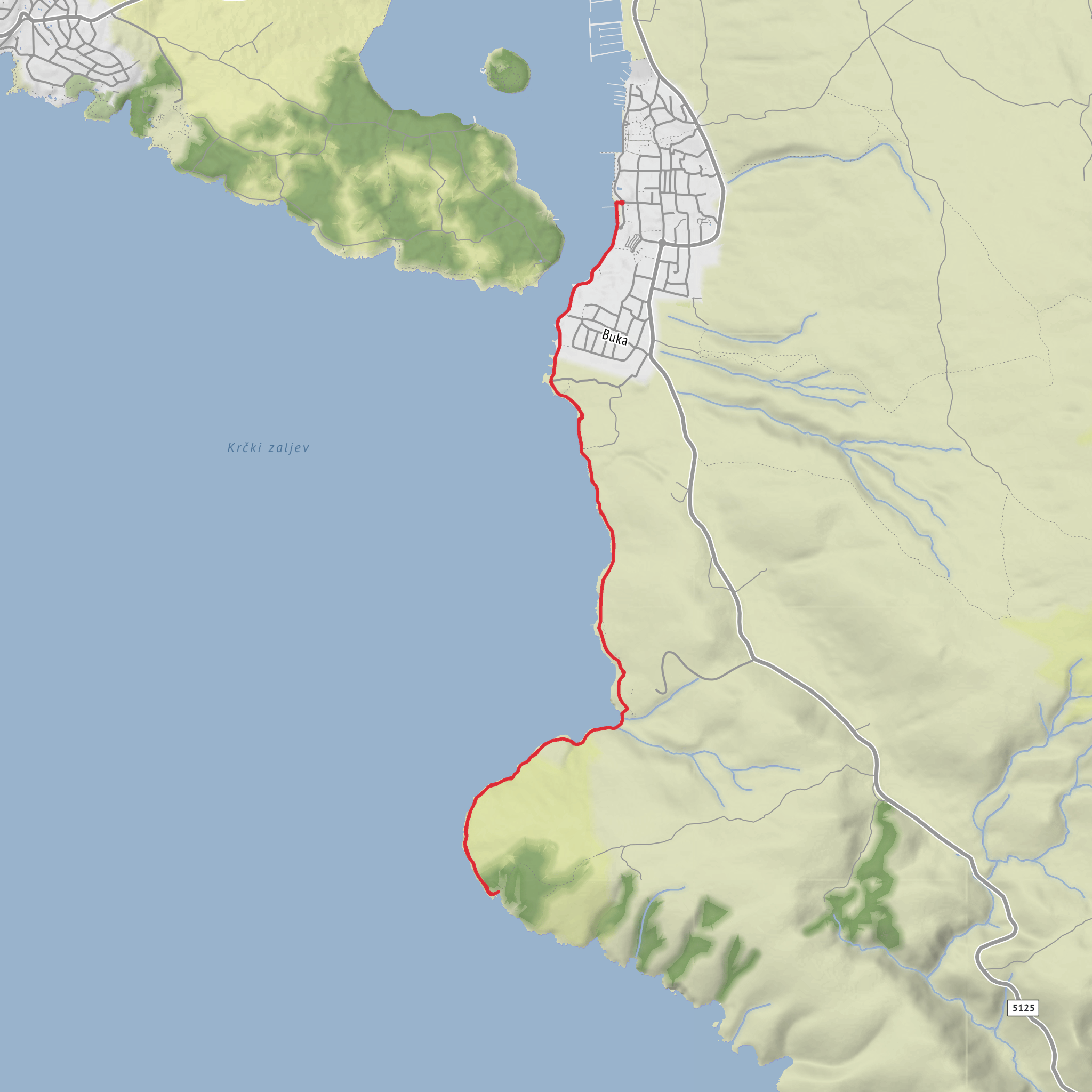
This easy coastal walk on the southwest side of Krk Island links a string of quiet coves with Cape Negrit and the ruins of St Nicholas’s Church, following a mostly low-lying shoreline route of about 11 km / 6.8 miles with only minor undulation. Official local trail information for the closely matching route from Punat to Cape Negrit lists 11.4 km / 7.1 miles and about 30 m / 98 ft of ascent, so although it feels essentially flat, hikers should still expect a few short rises and dips rather than a perfectly level promenade. (krk-outdoor.hr)
The walk is best understood as a relaxed out-and-back or there-and-back coastal ramble near Punat, Island of Krk, Croatia, with the practical trail access point near the southern edge of Punat and the promenade leading past Naturist Camping Konobe, HR-51521 Punat, Obala bb. That is the clearest nearby known address tied to this stretch of coast, and it sits roughly 3 km / 1.9 miles south of Punat’s center. (camping.hr)
From the start, the route heads away from the built-up waterfront into a quieter limestone coast where the scenery alternates between pebble coves, rocky shelves and low cliffs above very clear Adriatic water. The terrain is generally straightforward for an easy-rated hike, but the surface can still be uneven underfoot, with coastal stone, compacted dirt and rougher rocky patches that require attention, especially if the rock is polished by salt, wind or recent moisture. Around the headlands, the path becomes more exposed to sun and sea breeze, so even on a short outing it helps to carry more water than the distance alone might suggest. (krk-outdoor.hr)
What to expect along the route
As the walk unfolds, the coastline passes a sequence of coves including Uvala Zubizemlja and Konobe Cove, then continues toward Rt Negrit. The character is scenic rather than strenuous: open sea views, sparse Mediterranean vegetation, drystone walls, olive groves in places, and pockets of holm oak. Local trail descriptions also note aromatic plants and medicinal sage, which are typical of this dry coastal environment and can be especially noticeable in warm weather. (wikiloc.com)
One of the most distinctive features of this area is the pastoral landscape behind the shore. Sheep are commonly associated with this part of Krk, grazing in meadows influenced by salty sea air, and the combination of stone walls, scrub and open grassland gives the route a very traditional island feel. Birdlife can also be rewarding along the coast, particularly seabirds riding the wind off the headlands, though sightings vary by season. Because this is a dry karst landscape, shade can be limited for long stretches, and summer heat can make an otherwise easy route feel much harder. (krk-outdoor.hr)
Beyond Mala Krasa and Konobe Cove, views extend inland toward Veli and Mali Kašlir, where remains of Illyrian hillfort settlements have been noted. That adds an important historical layer to the walk: this is not just a scenic coast path, but a landscape shaped over centuries by early settlement, grazing and stone-built field boundaries. The extensive drystone walls seen in the area are part of that long agricultural history and are among the most characteristic cultural features of Krk’s rural terrain. (krk-outdoor.hr)
Cape Negrit and St Nicholas
Approaching Rt Negrit, the coast becomes more rugged and dramatic, with steeper rocky edges and a stronger sense of exposure above the sea. This is usually the section where hikers should slow down most, not because of major climbing, but because rough limestone and cliffside edges demand better foot placement and more awareness in windy conditions. If children are on the walk, this is the area where closest supervision matters most. (krk-outdoor.hr)
Cape Negrit is also associated with the old Tranjevo lighthouse, described locally as dating to 1874. Even when viewed from outside, it gives the route a strong maritime character and helps explain the long-standing navigational importance of this coastline. (krk-outdoor.hr)
A key landmark near the far end is the Church of St Nicholas on Cape Negrit, near Punat. Local heritage information identifies the surviving remains as a 13th-century church, with some
Surfaces
Unknown
Concrete
Asphalt
Gravel
Ground
Comments and Reviews
User comments, reviews and discussions about the Uvala Zubizemlja, Konobe Cove, Rt Negrit and Nikola, Croatia.
average rating out of 5
0 rating(s)


