
Download
3D Flyover
Add to list
More
2.4 km
~32 min
31 m
Loop
“A gentle Lokrum loop weaves through pine shade, peafowl calls, and sparkling Adriatic headlands.”
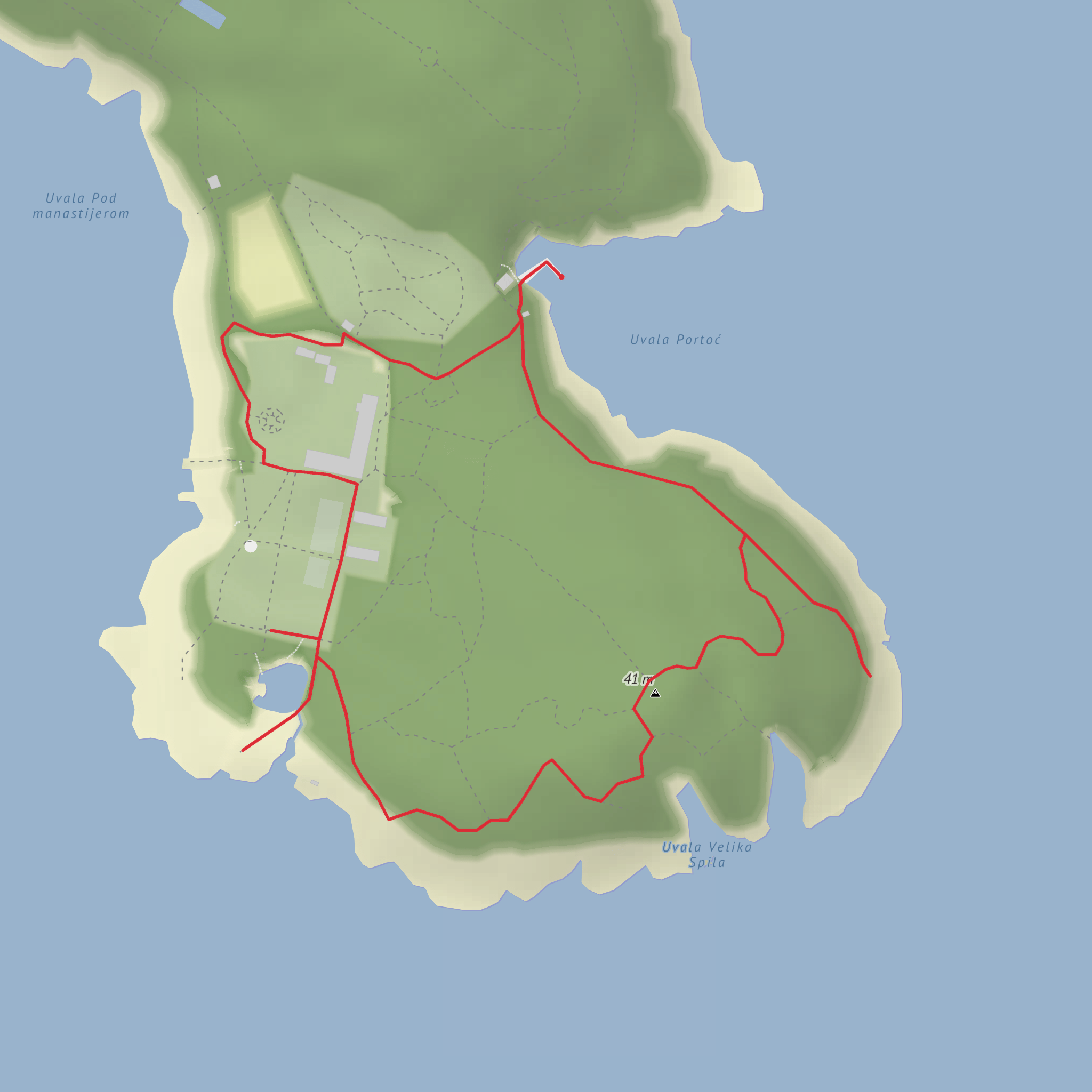
This short coastal loop on Lokrum is an easy, low-commitment walk of about 2 km / 1.2 miles with virtually no climbing, making it a good choice for families, casual walkers, and anyone wanting a scenic outing without a strenuous effort. The route begins near Portoč, the island’s main landing area beside the Forester’s House, which functions as the visitor reception point for the Lokrum Reserve. Portoč is the nearest clear landmark for the trailhead and is the most practical reference point for navigation planning. (lokrum.hr)
From the start, expect broad, well-used island paths rather than a rugged mountain trail. With only around 0 m / 0 ft of elevation gain, the walk is more about shoreline scenery, sea views, and the atmosphere of Lokrum than physical challenge. Even so, the ground can be uneven in places, with exposed rock, roots, and worn limestone that may become slick, especially near the coast or after damp weather. Lightweight walking shoes with decent grip are usually enough for an easy route like this. Using HiiKER before setting out is helpful for confirming the exact loop and any junctions around the headlands.
What the route feels like
Leaving Portoč, the path quickly settles into the character that defines much of Lokrum: shaded Mediterranean vegetation, glimpses of open Adriatic water, and short transitions between sheltered coves and more exposed rocky points. Because this loop links Uvala Portoč with Cape Bačela and Cape Škrinja, hikers can expect a mix of small-bay scenery and headland viewpoints rather than long inland stretches. The island itself is heavily forested, with about 90% of its surface covered by forest vegetation, so even a short walk often alternates between sun and shade. (lokrum.hr)
The cove at Portoč is one of the most important orientation points on the island, since it is the main arrival area and the location of visitor services. As you move away from it, the route remains gentle and compact, making it easy to shorten or retrace if needed. On a walk of only about 2 km / 1.2 miles, most hikers should allow extra time not for fitness reasons, but for stopping at viewpoints, watching the water, and exploring the atmosphere around the shoreline.
Landmarks, nature, and wildlife
Lokrum is protected as a special reserve of forest vegetation, and that protected status is one of the main reasons this short loop feels so distinctive despite its modest length. The island supports classic Mediterranean plant communities, including Aleppo pine, holm oak, myrtle, mastic tree, and other coastal species that create dense green cover and a fragrant backdrop along the paths. (lokrum.hr)
Wildlife is one of the highlights. Lokrum is especially well known for its peafowl, which are now an established part of the island landscape, and the reserve also records a notable variety of birdlife. Species documented on the island include resident and visiting birds such as hooded crows, blackbirds, Sardinian warblers, greenfinches, and birds of prey. Bats are also present around the monastery complex, though hikers on this loop are more likely to notice birds and peafowl than nocturnal species. (lokrum.hr)
Because this is a protected area, hikers should be prepared to move carefully and respectfully. Do not feed wildlife, and keep a little distance from birds even if they seem accustomed to people. On coastal sections, watch for rough limestone edges and wave-washed rock near the waterline. In hot weather, the route is short but can still feel warm where tree cover opens up, so carrying water is sensible even for such a brief outing.
Historical significance of the area
Lokrum has far more historical depth than its size suggests. The Benedictines established an abbey on the island in 1023, and organized gardens began developing here in the 11th century, making Lokrum one of the oldest continuously shaped garden landscapes in the Dubrovnik area. (lokrum.hr)
Later centuries added further layers. The Benedictine monastery remained central to the island’s identity, and in the 19th century Archduke Maximilian of Habsburg reshaped parts of Lokrum, refurbishing the monastery complex and introducing exotic plants that influenced the island’s horticultural character. (lokrum.hr)
The wider island also reflects military history. After the French took Dubrovnik in 1806, they recognized Lokrum’s strategic importance and began building a fortress on the island’s highest point, Glavica, at 96
Surfaces
Unknown
Cobblestone
Concrete
Comments and Reviews
User comments, reviews and discussions about the Uvala Portoc, Lokrum, Cape Bacela and Cape Skrinja Loop, Croatia.
average rating out of 5
0 rating(s)

