
Download
3D Flyover
Add to list
More
1.6 km
~27 min
79 m
Out and Back
“A short but punchy climb through Dubrovnik’s sunlit stone stairways rewards effort with rooftops, sea, and history.”
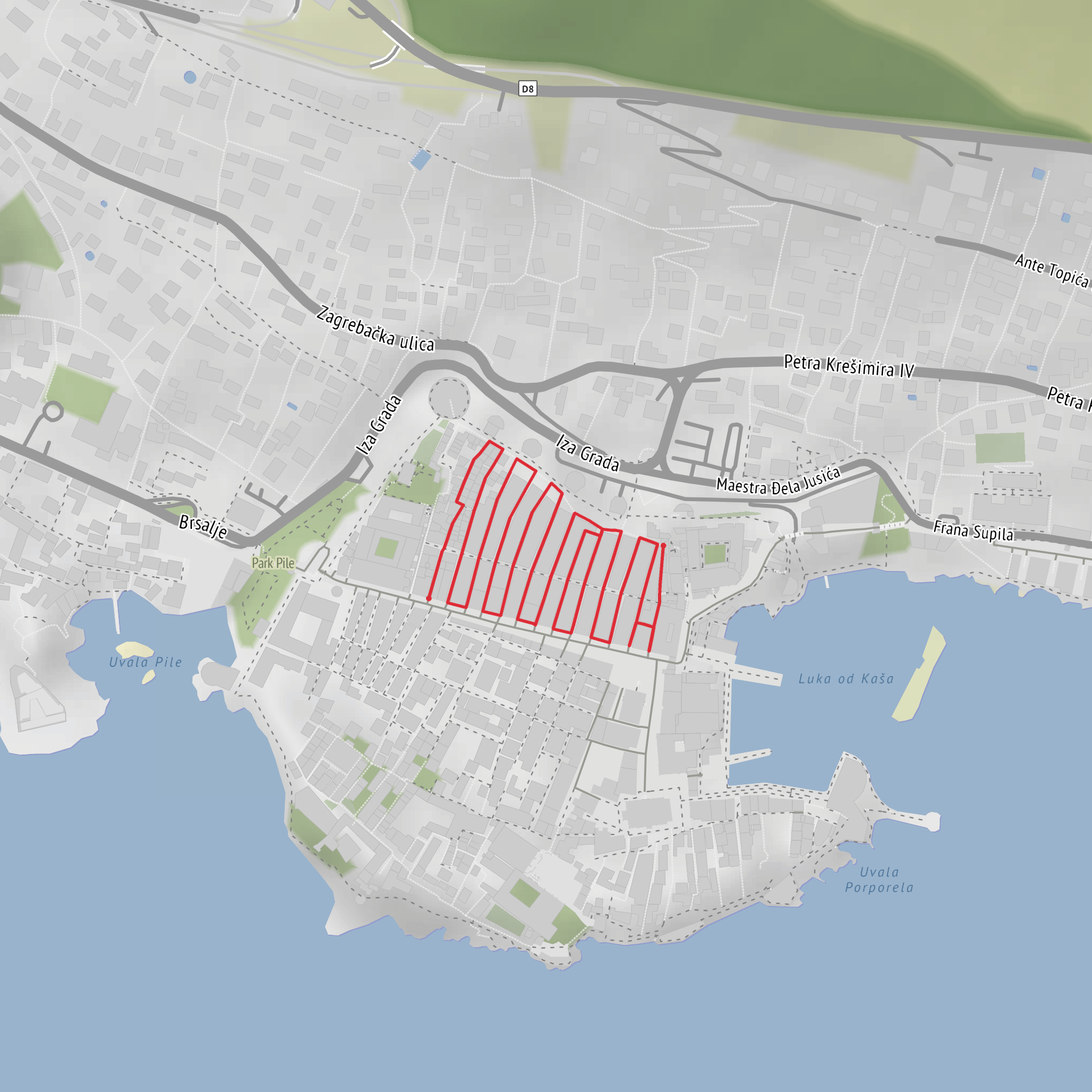
This short urban hike packs a surprising amount of climbing into roughly 2 km / 1.2 miles, threading through Dubrovnik’s steep limestone lanes and stairways in and above the Old Town. With around 100 m / 330 ft of elevation gain, it feels more strenuous than the distance suggests, especially in warm weather when the polished stone can radiate heat and become slick underfoot. The most likely starting point for a walk of this kind is near Pile Gate, Dubrovnik Old Town, the main western entrance to the historic center and the easiest landmark for navigation and meeting up. Pile Gate is also the city’s busiest access point to the walled core. (navigate-dubrovnik.com)
Expect a route defined less by trail tread and more by old urban fabric: broad stone streets, narrow stepped alleys, and repeated stair pitches that rise quickly between squares, churches, and viewpoints. Dubrovnik’s main street, Stradun, runs about 300 m / 0.2 miles through the Old Town and is the natural flat section before the route turns upward into the stair network. From there, the walk typically becomes a steady leg workout, with short but sharp climbs and very little soft ground anywhere underfoot. (absolute-croatia.com)
What to expect on the climb
The defining feature here is the staircase terrain. Some parts of Dubrovnik’s upper Old Town streets involve well over 100 steps in a single rise, and the Jesuit Stairs area alone is commonly noted as a major stepped section within the historic core. Even though the overall distance is short, the route can feel “medium” because the climbing is concentrated, the footing is hard stone, and there are few chances to settle into an easy rhythm. (navigate-dubrovnik.com)
Footwear matters more than many visitors expect. Smooth limestone steps can be slippery from sea air, rain, or simply centuries of wear. In summer, heat and crowding add another layer of difficulty, while after rain the stair edges deserve extra care. Trekking poles are usually more awkward than helpful in the busiest lanes, so most hikers are better served by grippy walking shoes and a light pack. For navigation, use HiiKER before setting out so you can identify the stair-heavy sections and any alternate streets that reduce backtracking.
Landmarks and atmosphere
One of the standout landmarks on a stairs-focused Dubrovnik walk is the Jesuit Stairs, the dramatic Baroque staircase linking Gundulić Square with the Church of St. Ignatius. The stairs are often compared to Rome’s Spanish Steps and are among the city’s most recognizable urban ascents. They also gained modern pop-culture fame as a filming location in Game of Thrones, but their real appeal is architectural: a grand ceremonial staircase set within a dense medieval street plan. (nomads-travel-guide.com)
Depending on the exact line of the walk, you may also pass or glimpse Gundulić Square, Stradun, the Old Port, and elevated views toward the terracotta rooftops and the Adriatic. The city’s stairways often open suddenly onto small squares, church fronts, and lookout points, so the route has a stop-start rhythm: climb, pause, look out over the roofs, then climb again. The visual reward is constant, even on such a short outing. (dubrovnikgameofthrones.com)
Nature and wildlife
This is primarily a cultural and urban walk rather than a wilderness hike, but there is still plenty to notice. The setting is classic Adriatic limestone country, with sun-baked stone, pockets of Mediterranean planting, potted citrus, climbing vines, and occasional fig or cypress in courtyards and terraces. Seabirds are the wildlife most hikers are likely to notice, especially gulls circling above the walls and waterfront, along with small urban-adapted birds in quieter lanes. Because the route sits so close to the sea, breezes can shift quickly between sheltered stair corridors and exposed viewpoints.
Shade can be limited, particularly on open staircases and brighter stone streets. Carry more water than the distance alone would suggest, especially from late spring into early autumn. A 2 km / 1.2 mile walk with 100 m / 330 ft of climbing on reflective stone can feel much harder than the numbers imply.
Historical significance
Dubrovnik’s Old Town is a UNESCO-listed historic center, and every staircase here is part of a city shaped by centuries of maritime trade, diplomacy, and defense. Historically known as the Republic of Ragusa, Dubrovnik developed into a powerful Adriatic city-state whose wealth funded churches, monasteries, palaces, fountains, and the carefully planned street network still used today. The stairways are not decorative extras
Surfaces
Unknown
Cobblestone
Comments and Reviews
User comments, reviews and discussions about the Dubrovnik Stairs Walk, Croatia.
average rating out of 5
0 rating(s)


