
Best medium hikes in Connecticut
Ready for a bit more of a challenge? These medium-difficulty hikes offer the perfect balance between effort and reward.
Here are some great hikes to explore in Connecticut.
Most popular hikes
Reviews for medium hikes in Connecticut



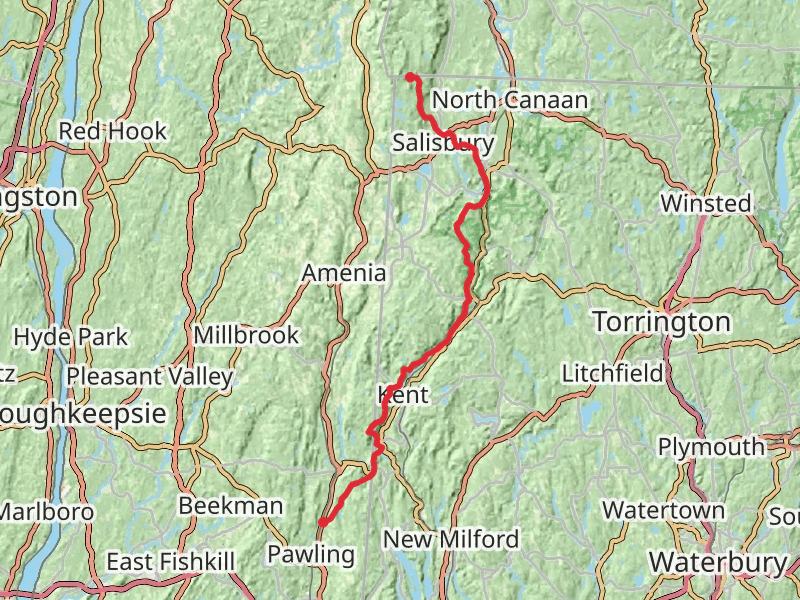
Appalachian Trail Section Hike - Sage Ravine to Pawling
Rachel Lambert · reviewed almost 6 years ago


Frequently asked questions for hikes in Connecticut

Connecticut experiences a moderate climate with unique hiking opportunities each season. Spring (March-May) brings mild temperatures and blooming wildflowers, though trails may be muddy. Summer (June-August) offers warm, sunny days ideal for longer hikes, but remember to stay hydrated.
Autumn (September-November), with its cooler temperatures and vibrant foliage, is often considered the best time for hiking. Winter (December-February), while cold, presents a serene landscape for those prepared for snowy conditions.
Check the weather before heading out and gear up accordingly. Connecticut's official state website (https://portal.ct.gov/) provides helpful resources, and for trail information, visit the Connecticut Forest & Park Association (https://www.ctwoodlands.org/).
Most hiking trails in Connecticut are free to access and do not require permits. For certain activities like camping or fishing, permits may be needed. For further details, it's advisable to check the Connecticut Department of Energy & Environmental Protection's website (https://portal.ct.gov/DEEP).

Wild camping in Connecticut is typically restricted to designated campgrounds within state parks and forests. Certain areas may allow backcountry camping with proper permits. Always follow Leave No Trace principles. For camping information and permit inquiries, visit the Connecticut Department of Energy & Environmental Protection's website (https://portal.ct.gov/DEEP).

In case of emergencies during hiking in Connecticut, dial 911 to reach local law enforcement, who will coordinate with other agencies as needed. The Connecticut Department of Energy & Environmental Protection's Environmental Conservation Police (EnCon Police) also assist in rescue operations. For more information, visit their website (https://portal.ct.gov/DEEP).

Hiking in Connecticut, expect to see deciduous forests with species like oak, maple, and birch, as well as various wildflowers in spring and summer. Beware of poison ivy in wooded areas. For more about Connecticut's flora, the Connecticut Botanical Society's website (http://www.ct-botanical-society.org/) is a helpful resource.

Connecticut trails offer encounters with a variety of wildlife, including white-tailed deer, squirrels, and many bird species. Be cautious of ticks, which can carry Lyme disease. Black bears are present but usually avoid humans. For more on Connecticut wildlife, visit the Department of Energy & Environmental Protection's website (https://portal.ct.gov/DEEP).
More hikes in Connecticut
by type
by activity