
Download
3D Flyover
Add to list
More
10.9 km
~2 hrs 36 min
248 m
Loop
“A rolling loop from hushed Bois de Preus shade to breezy Ruhr banks, with punchy climbs.”
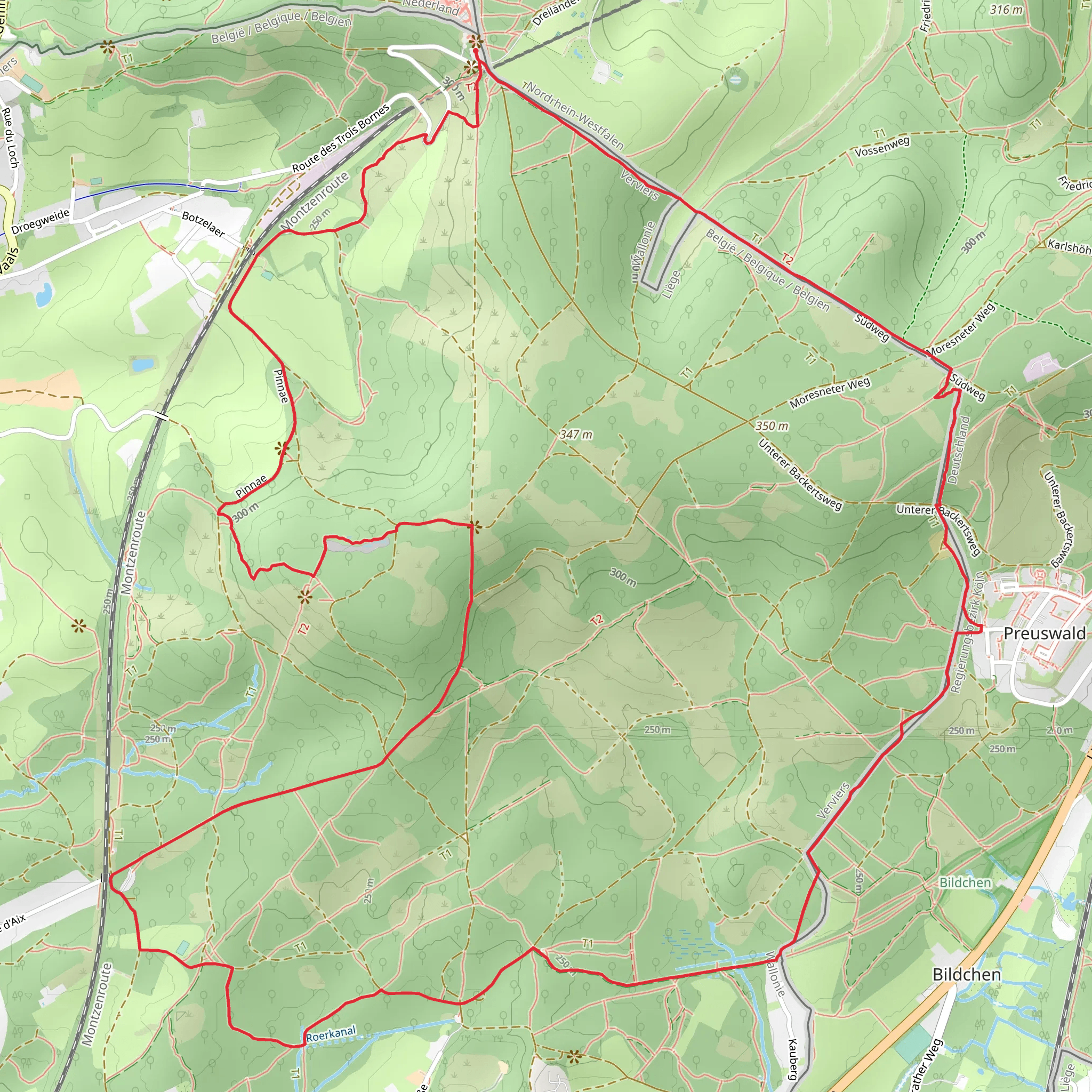
This medium loop is a varied woodland-and-river walk of about 11 km (6.8 mi) with roughly 300 m (985 ft) of climbing—enough to feel like a proper hike, but on terrain that’s generally forgiving if you pace the ups and downs. Expect a mix of shaded forest tracks through the Bois de Preus and more open, breezier sections as you swing onto the Ruhr side of the loop, with frequent changes in underfoot conditions (leaf litter, compacted dirt, occasional gravel, and short muddy patches after rain).
Getting to the start (car + public transport)
Because the start point is listed only as “near” (with no coordinates or town), the best I can do is describe how to plan access once you’ve pinned the trailhead in HiiKER:
- By car: Use HiiKER to navigate to the nearest marked trail access/parking icon at the loop’s closest road. In this region, trailheads are often served by small forest pull-ins or signed “Wanderparkplatz” (hiker parking). Arrive early on weekends—popular Ruhr-valley paths can fill up quickly.
- By public transport: The Ruhr corridor is typically well-served by regional rail and buses. In HiiKER, identify the nearest station/bus stop to the loop (often a town-edge stop near the river), then plan a short walk (usually 0.5–2 km / 0.3–1.2 mi) to the trail access. If you share the nearest town name or coordinates, I can convert that to the closest recognizable station/landmark and give a concrete route.
What the hike feels like (terrain, pacing, and the climbs)
Over 11 km (6.8 mi), 300 m (985 ft) of gain usually means you’ll be doing several short-to-moderate climbs rather than one long grind. The “medium” feel typically comes from: - Punchy rises as the loop transitions between river level and the wooded slopes/plateau. - Rolling contouring through forest where the trail repeatedly dips into small gullies and climbs back out. - Variable footing: roots and slick leaf cover in the woods; firmer, sometimes stonier tread nearer the river paths.
A sensible pacing plan is to treat the first 2–3 km (1.2–1.9 mi) as a warm-up, then expect the most sustained climbing to appear in the middle third of the loop. If conditions are wet, budget extra time for careful foot placement on rooty traverses and any short, steep descents.
Landmarks, nature, and what to look out for
Woodland character (Bois de Preus):
The forest section is the “quiet core” of the loop—cooler, more sheltered, and often rich in birdsong. You’ll likely pass through mixed woodland where the trail can narrow and weave between trunks, with occasional clearings that open brief views before you drop back under canopy. In spring and early summer, woodland edges can be lively with insects and wildflowers; in autumn, leaf fall can hide roots and small rocks.
Ruhr river corridor:
As you approach the Ruhr side, the landscape typically becomes more linear and navigationally straightforward—paths tend to follow the river’s shape, with flatter gradients and a different feel underfoot. River sections can be breezy and cooler than the forest, and after heavy rain the Ruhr can run high; low-lying path segments may be damp or briefly flooded.
Wildlife:
In wooded Ruhr-valley terrain, common sightings can include deer sign (tracks, browsing), woodpeckers, and small raptors overhead in open stretches. Near the river, watch for waterfowl and songbirds in reeds and shrubs. Ticks can be a concern in grassy margins and leaf litter—long socks and a post-hike check are wise in warmer months.
Navigation and safety notes (what can trip people up)
- Wayfinding: Forest junctions can come quickly and look similar. Keep HiiKER handy and confirm turns at every major intersection, especially where a wider forestry track meets a narrower singletrack.
- Slippery sections: Leaf-covered roots and short clay-like patches can be slick. Trekking poles help on the steeper downs if you have them.
- Cyclists: River paths and wider tracks can be shared-use. Stay alert on blind bends and listen for bikes approaching from behind.
- Weather: The river corridor can feel noticeably colder and windier than the woods. Carry a light layer even on mild days.
Historical context of the region
The Ruhr valley is closely tied to the broader story of western Germany’s industrial development—rivers like the Ruhr were vital corridors for settlement, transport, and later industry. Even when you’re walking in quiet woodland, you’re often moving through a landscape shaped by centuries of land use: managed forests, old track alignments, and river-adjacent routes that historically connected communities. Depending on the exact segment of the loop, you may also be near small heritage features typical of the area—older bridges, remnants of historic paths, or viewpoints that once served practical purposes (surveying land, watching river traffic) before becoming recreational highlights.
Practical prep (what to bring for an 11 km / 6.8 mi medium loop)
- Footwear: Light hiking boots or sturdy trail shoes with good wet-grip; expect occasional mud.
- Water: Typically 1–1.5 L is comfortable for most hikers on a medium 11 km loop; more in warm weather or if you linger at viewpoints.
- Food: A snack or light lunch—there’s enough climbing to justify steady fueling.
Surfaces
Gravel
Ground
Unknown
Grass
Asphalt
Dirt
Comments and Reviews
User comments, reviews and discussions about the Bois de Preus and Ruhr Loop, Belgium.
average rating out of 5
0 rating(s)
