Download
3D Flyover
Add to list
More
309.3 km
18 days
10896 m
Multi Day
“Embark on the storied Camino Primitivo, where misty mountains, ancient towns, and vibrant forests inspire every step.”
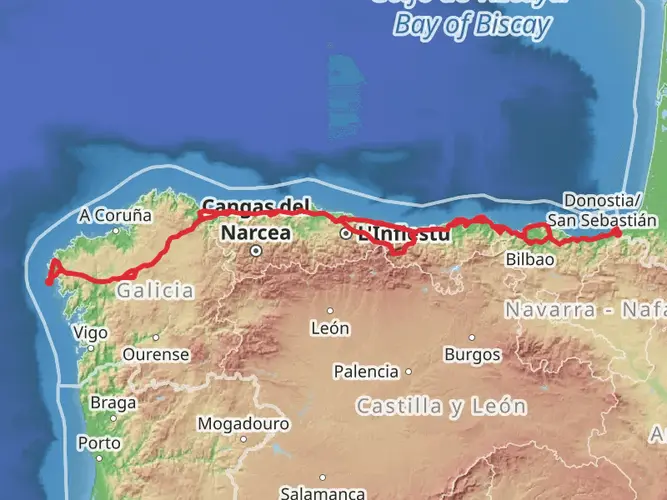
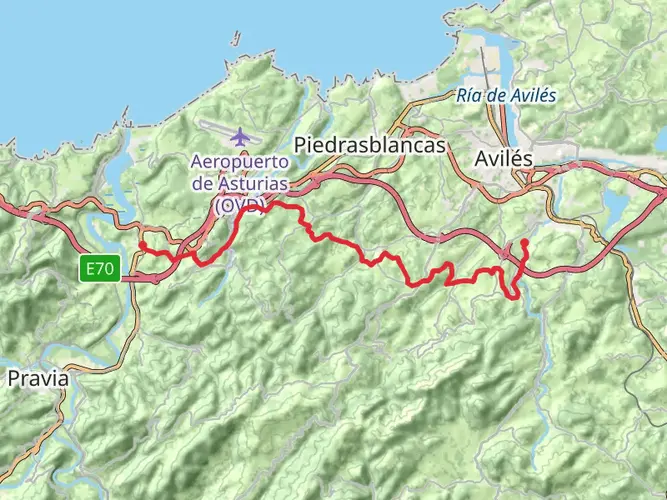
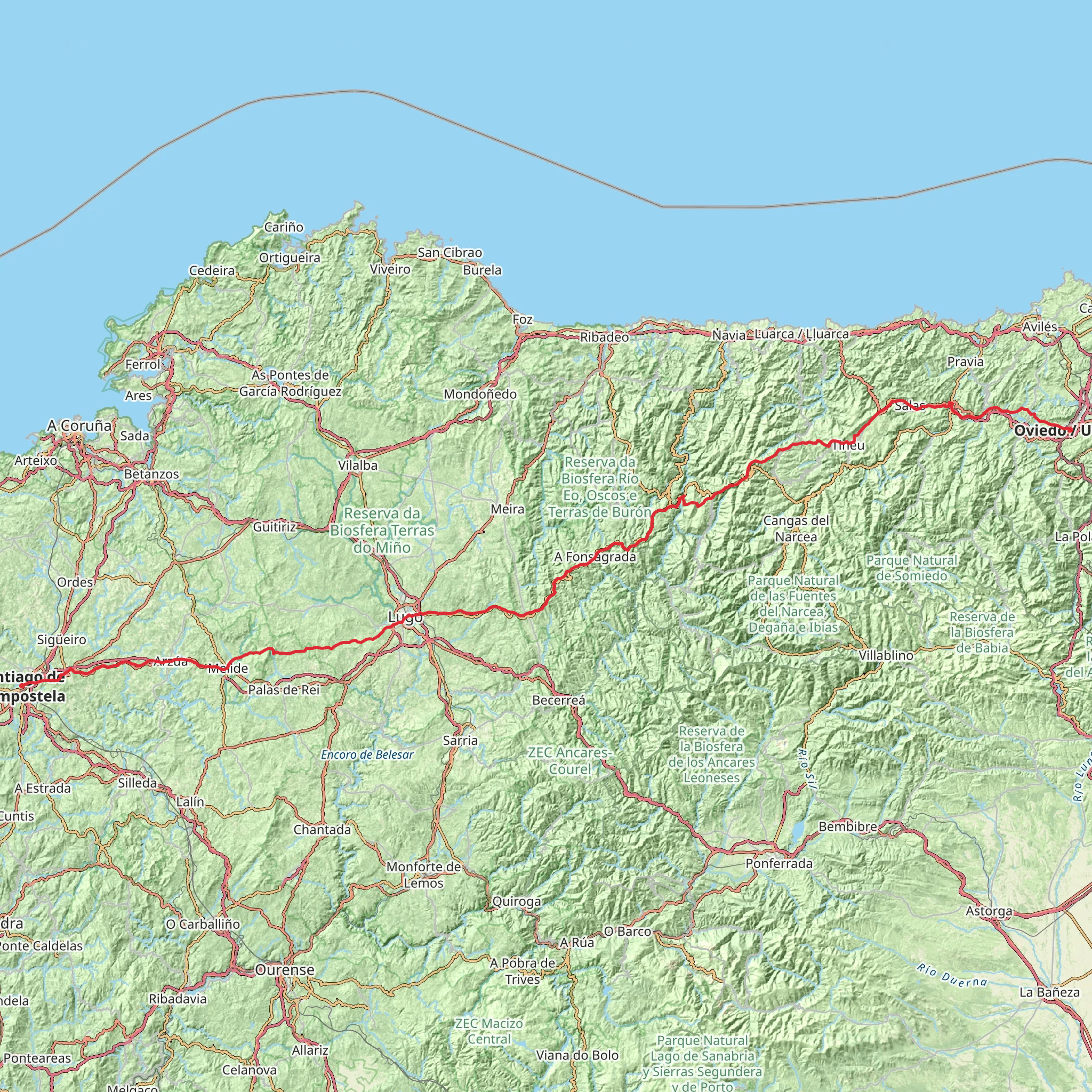
Starting from the historic city of Oviedo in northern Spain, the Camino Primitivo stretches approximately 309 km (192 miles) to Santiago de Compostela, with a total elevation gain of about 10,900 metres (35,760 feet). This ancient pilgrimage route is considered the oldest of the Camino de Santiago paths, tracing the footsteps of King Alfonso II in the 9th century. The journey begins at the Cathedral of San Salvador in Oviedo, a significant landmark and the traditional starting point for pilgrims.
Getting There
Oviedo is well-connected by public transport. Trains and buses run regularly from major Spanish cities such as Madrid and Bilbao. The city’s main train station, Estación de Oviedo, is centrally located, and the bus station is nearby. For those arriving by car, parking is available in the city center, but long-term parking options should be arranged in advance.
Trail Overview and Terrain
The Camino Primitivo is a point-to-point trail, renowned for its rugged beauty and challenging ascents. The route traverses the lush, mountainous landscapes of Asturias and Galicia, with frequent steep climbs and descents. Expect to cover an average of 20–30 km (12–19 miles) per day, with some days involving over 1,000 metres (3,280 feet) of elevation gain. The highest point is the Hospitales route, reaching nearly 1,200 metres (3,940 feet) above sea level, where weather conditions can change rapidly.
Navigation and Waymarking
Waymarking is generally reliable, with yellow arrows and scallop shell symbols guiding the way. For detailed navigation, HiiKER provides up-to-date maps and trail information, which is especially useful in remote sections where signage may be sparse or weather may obscure markings.
Significant Landmarks and Historical Sites
- Oviedo Cathedral: The starting point, a UNESCO World Heritage Site, is famed for its Gothic architecture and the Cámara Santa, a relic chamber.
- Grado: About 25 km (15.5 miles) from Oviedo, this market town is known for its traditional Asturian cider and lively weekly market.
- Salas: At 48 km (30 miles), Salas features a medieval castle and the Colegiata de Santa María la Mayor, a church with a rich history.
- Pola de Allande: Around 100 km (62 miles) in, this mountain village is a gateway to the challenging Hospitales route, a remote and scenic section with ruins of ancient pilgrim hospitals.
- Lugo: At 190 km (118 miles), Lugo is famous for its intact Roman walls, another UNESCO World Heritage Site, and offers a vibrant old town for rest and resupply.
- Melide: At 250 km (155 miles), the trail merges with the Camino Francés, increasing the number of fellow pilgrims and amenities.
Nature and Wildlife
The trail passes through dense forests of oak, chestnut, and eucalyptus, open meadows, and high mountain passes. Wildlife includes roe deer, wild boar, and a variety of birds such as red kites and buzzards. In spring and early summer, wildflowers blanket the hillsides, while autumn brings vibrant foliage and the scent of chestnuts roasting in village squares.
Weather and Seasonal Considerations
The climate is variable, with frequent rain in Asturias and cooler temperatures at higher elevations. Summer offers the most stable weather, but also the busiest trails. Spring and autumn provide quieter paths and lush scenery, though hikers should be prepared for mud and slippery conditions. Winter is not recommended due to snow and limited services.
Accommodation and Services
Albergues (pilgrim hostels) are spaced every 10–20 km (6–12 miles), with more options in larger towns. Private guesthouses and hotels are also available. Most villages offer basic supplies, but some remote stretches, especially between Pola de Allande and Grandas de Salime, require carrying extra food and water.
Preparation and Safety
Given the trail’s difficulty, good physical conditioning is essential. Waterproof gear, sturdy hiking boots, and trekking poles are highly recommended. Mobile coverage is intermittent in the mountains, so download offline maps from HiiKER before setting out. Always check local weather forecasts and be prepared for rapid changes, especially on exposed ridges.
The Camino Primitivo offers a blend of history, natural beauty, and physical challenge, making it a rewarding journey for experienced hikers and pilgrims alike.
Comments and Reviews
User comments, reviews and discussions about the Camino Primitivo, Spain.
4.87
average rating out of 5
31 rating(s)