
Download
3D Flyover
Add to list
More
3.0 km
~44 min
81 m
Loop
“A compact park loop blending gentle cruising with brief, heart-lifting climbs and occasionally slick footing.”
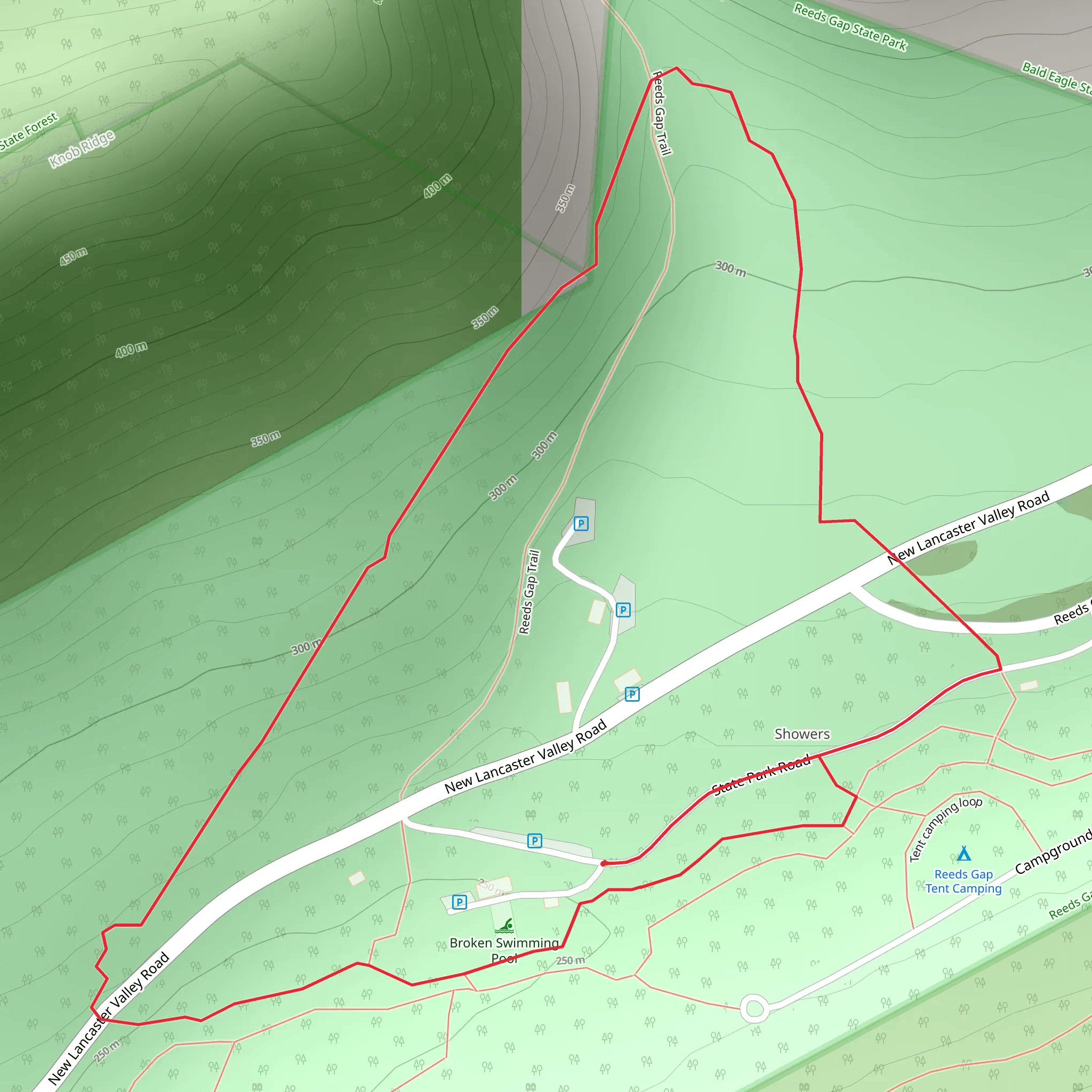
A compact loop with a steady little climb, this walk packs a lot into ~3 km (about 1.9 miles) and ~100 m of ascent (about 328 ft). Expect a mix of easy park paths and short, punchier grades that briefly raise your heart rate, then level out into gentler cruising. With a “Medium” feel at this length, the challenge usually comes from a couple of short inclines, uneven patches, and any wet leaves or mud that can make the footing slick.
Getting to the trailhead (car + public transport)
You’ve listed the hike head as “near” but didn’t include coordinates or a town/region. If you share a lon/lat (or even the nearest city/state), I can convert it to the closest known address or landmark and give precise directions.
For now, here’s the practical approach that works for most park loop trailheads: - By car: Search for “Reeds Gap Park” in your maps app and aim for the main park entrance/primary parking area (typically near the largest picnic area, playground, or main information board). Arrive earlier on weekends—small parks can fill quickly. - By public transport: If the park is in/near a town, the most reliable method is usually bus/train to the nearest central stop, then a short rideshare/taxi to the park entrance. If you tell me the nearest town, I can outline the most realistic transit chain (and where you’ll likely need that last-mile ride).
What the route feels like underfoot
Most 3 km park loops start with a gentle warm-up on wider, well-trodden track before the climb begins. With ~100 m (328 ft) total gain, you’ll likely encounter: - A main climb segment of roughly 0.6–1.2 km (0.4–0.7 mi) where the grade becomes noticeable. - Rolling terrain after the high point—short rises and dips that add up to the total gain. - A smoother return that trends downhill or stays mostly level back toward the start.
Plan on 45–75 minutes at a relaxed pace with stops for photos, reading signs, or watching wildlife; faster walkers can do it in less, but the “Medium” rating suggests there’s enough elevation or uneven surface to keep it from being a pure stroll.
Landmarks and points of interest to watch for
Without the exact park location, I can’t responsibly name specific signed features, overlooks, or historic structures unique to this loop. Still, on a “gap” route, there are a few common, useful cues hikers can look for: - The “gap” itself: Often a low saddle between higher ground. These spots can be breezier and cooler, and they’re frequently where trails intersect—pay attention to junction signage. - Interpretive boards / boundary markers: Many park loops include short educational panels about local ecology, watershed, or land use history. - Drainages and seasonal seeps: Even small parks can have damp hollows that stay muddy after rain.
If you use HiiKER, check the loop’s junctions ahead of time and note where the route changes direction—small park networks sometimes have multiple short connectors that can accidentally shorten or lengthen your loop.
Nature, terrain, and wildlife
A 3 km park loop typically passes through a few micro-habitats—open edges near lawns or picnic areas, then denser woodland as you climb. What to expect and what to look out for: - Vegetation: Woodland understory can be thick in warmer months; in cooler seasons you’ll often get better sightlines through the trees. After storms, expect small branches down across the path. - Wildlife: You’re most likely to see songbirds, squirrels, and other small mammals. At dawn/dusk, larger animals may be more active. Keep food secured and give any wildlife space. - Insects and ticks: In many U.S. parks, ticks are a real consideration in brushy edges and leaf litter. Long socks, repellent, and a post-hike tick check are smart. - Footing hazards: Wet leaves on hardpack, muddy ruts in low spots, and exposed roots on the steeper pitches are the usual culprits. Trekking poles can help on the short climbs/descents, especially if it’s damp.
Effort, pacing, and what to pack
For ~3 km (1.9 mi) with ~100 m (328 ft) gain: - Footwear: Light hiking shoes or trail runners with decent tread are usually ideal; avoid smooth-soled casual shoes if it’s wet. - Water: 0.5–1.0 L is typically plenty for most people at this distance, more in heat/humidity. - Layers: Even short hikes can feel cooler at the high point or in shaded gullies; bring a light layer if temperatures are variable. - Navigation: Download the route in HiiKER before you arrive in case cell service is patchy under tree cover. - Time of day: Midday is easiest for visibility; early morning can be slick with dew on shaded sections.
Historical significance (how to make this accurate)
“Reeds Gap” could refer to different places, and historical context varies a lot by state/region (Indigenous history, early settlement routes through gaps, logging/mining, rail corridors, or conservation-era park creation). If you provide the park’s coordinates or the nearest town/state, I’ll add the correct local history and any notable heritage features along or near the loop.
Send either:
1) the lon/lat for the trailhead, or
2) the **nearest
Comments and Reviews
User comments, reviews and discussions about the Reeds Gap Park Loop, Pennsylvania.
average rating out of 5
0 rating(s)
