Download
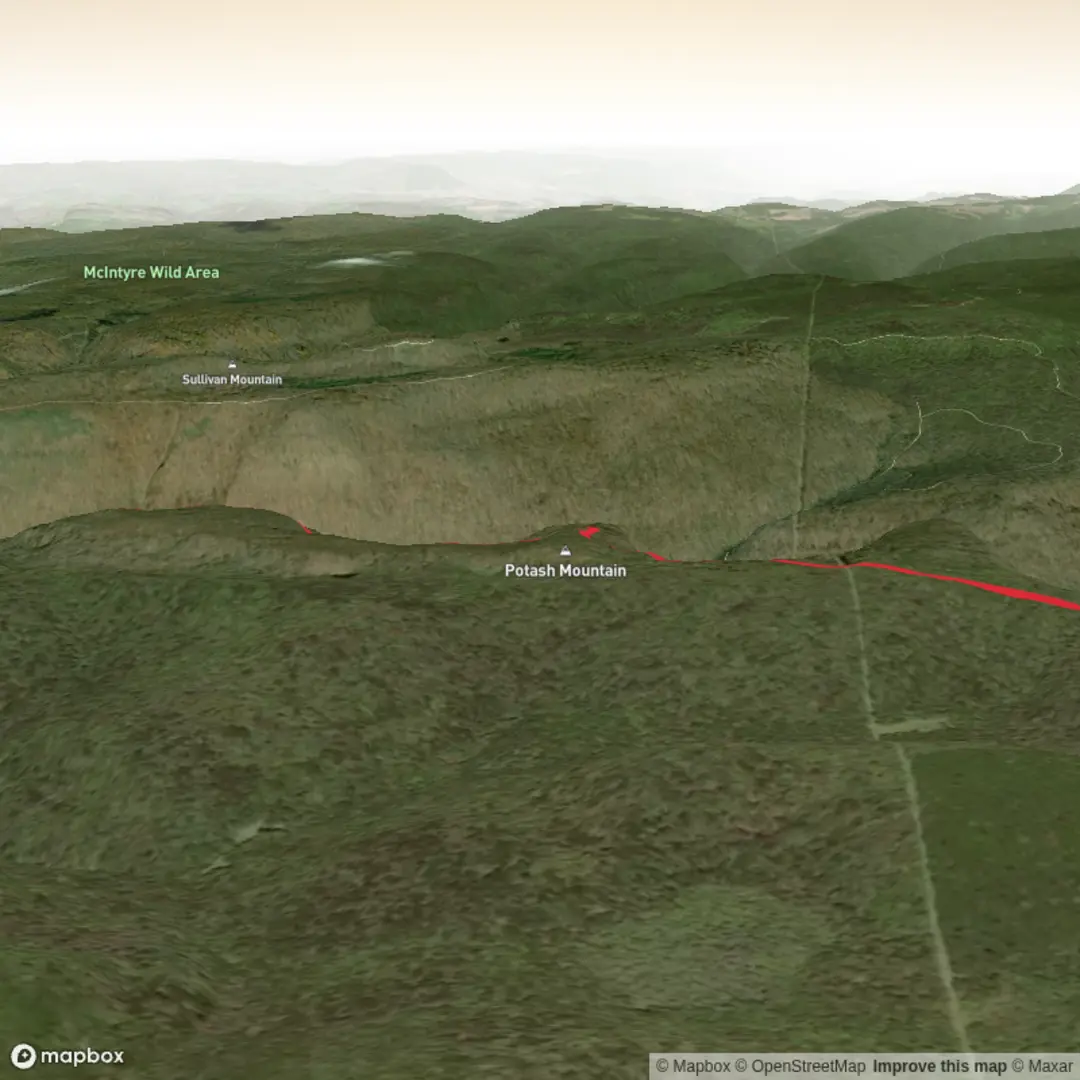
3D Flyover
Add to list
More
4.8 km
~1 hrs 3 min
58 m
Out and Back
“A gentle wander to Potash Mountain—fresh forest air, a brief steep push, and wide-open views.”
Potash Mountain is a short, low-effort outing at roughly 5 km (3.1 mi) with about 100 m (330 ft) of total ascent—ideal for a relaxed half-day walk where the main goal is fresh air, open views, and a gentle climb rather than a sustained workout. With an “Easy” rating, most hikers will find the footing and gradients manageable, but it still pays to plan for a few steeper minutes near the high point and for potentially slick sections after rain.
Getting to the trailhead (car + public transport)
You’ve left the hike-head location blank (“near …”), so I can’t convert coordinates to a nearby address or landmark yet. If you share either:
- a longitude/latitude pair, or
- the nearest town/park/trailhead name, or
- a HiiKER link,
…I’ll pin it to the nearest known address or significant landmark and give precise, realistic directions.
In the meantime, here’s what to plan for depending on where “Potash Mountain” is in your region:
By car - Expect a small roadside pull-off or a modest trailhead lot rather than a large developed parking area. - Arrive early on weekends; easy, short hikes often fill up quickly because they suit families and casual walkers. - If the access road is unpaved, drive slowly—potholes and washboarding are common, and spring thaw can soften shoulders.
By public transport - Many “local peak” hikes are reachable by a bus/train to the nearest town, then a short rideshare/taxi to the trailhead. - If you’re aiming to do this car-free, check the last return service time before you start; a 5 km (3.1 mi) hike can still run long if you linger at viewpoints.
What the route feels like (distance + elevation, broken down)
Because the exact trail alignment isn’t provided, the outline below describes the most common structure for a 5 km (3.1 mi), ~100 m (330 ft) easy mountain walk—use HiiKER to confirm the exact junctions and any alternate spurs once you share the start point.
0.0–1.5 km (0.0–0.9 mi): gentle approach - Typically a gradual warm-up on a wide path, old access track, or well-trodden singletrack. - Elevation gain is usually modest here—around 20–40 m (65–130 ft)—with plenty of chances to settle into a comfortable pace. - Watch for muddy patches in low spots and around drainage lines, especially in spring or after storms.
1.5–2.5 km (0.9–1.6 mi): the main climb - The grade often steepens for a short stretch as the trail commits to the hillside. - Expect the bulk of the ascent here—roughly 50–70 m (165–230 ft) over about 1 km (0.6 mi). - Footing can change quickly: packed dirt may give way to loose gravel, roots, or small rock steps. Trekking poles can help with stability, particularly on the descent.
2.5 km (1.6 mi) to the high point: views and a breather - Many “Potash” peaks have a partially open summit area or a ledge/clearing that delivers the payoff. - If there’s exposed rock, it can be slick when wet or frosty; give yourself extra space near edges and keep kids close.
Return (back the same way unless it’s a loop) - Descending is usually the most slip-prone part of an easy hike. Take shorter steps on steeper pitches and avoid rushing the last kilometer when legs feel fresh again.
Landmarks, landscape, and what to look for
Without the exact region, the name “Potash Mountain” still hints at a common historical thread: potash was widely produced in forested areas by leaching wood ash to make potassium salts used in soap, glass, and early fertilizer. In many parts of the U.S., potash production was tied to periods of land clearing and early settlement industry. If your Potash Mountain sits near old homesteads, logging roads, or stone walls, those can be subtle signs of that era of landscape change.
On the hike itself, typical features on short, low-gain “local mountain” routes include: - Old woods roads: wider, straighter grades that may have been used for logging or access. - Stonework (in some regions): low walls, stacked stones, or old foundations tucked into the forest. - Summit ledges / viewpoints: even a small rise can open a window through the canopy, especially in leaf-off seasons.
Nature and wildlife (seasonal expectations)
What you’ll see depends heavily on the state and ecosystem, but for an easy, wooded mountain walk, plan around these common patterns:
Spring - Trails can be soft and muddy; waterproof footwear helps. - Early wildflowers may appear along sunnier edges; stay on-trail to avoid trampling fragile growth.
Summer - Expect insects in shaded, damp sections—bring repellent and consider long sleeves. - Ticks are a real concern in many U.S. regions: use permethrin-treated clothing or repellent, do a full tick check afterward, and stay centered on the tread.
Fall - Cooler temps make the climb feel even easier, but leaf litter can hide rocks and roots. - If the area is popular for hunting, wear bright colors and check local regulations.
Winter (if applicable) - A 100 m (330 ft) climb can still ice over. Microspikes are often the
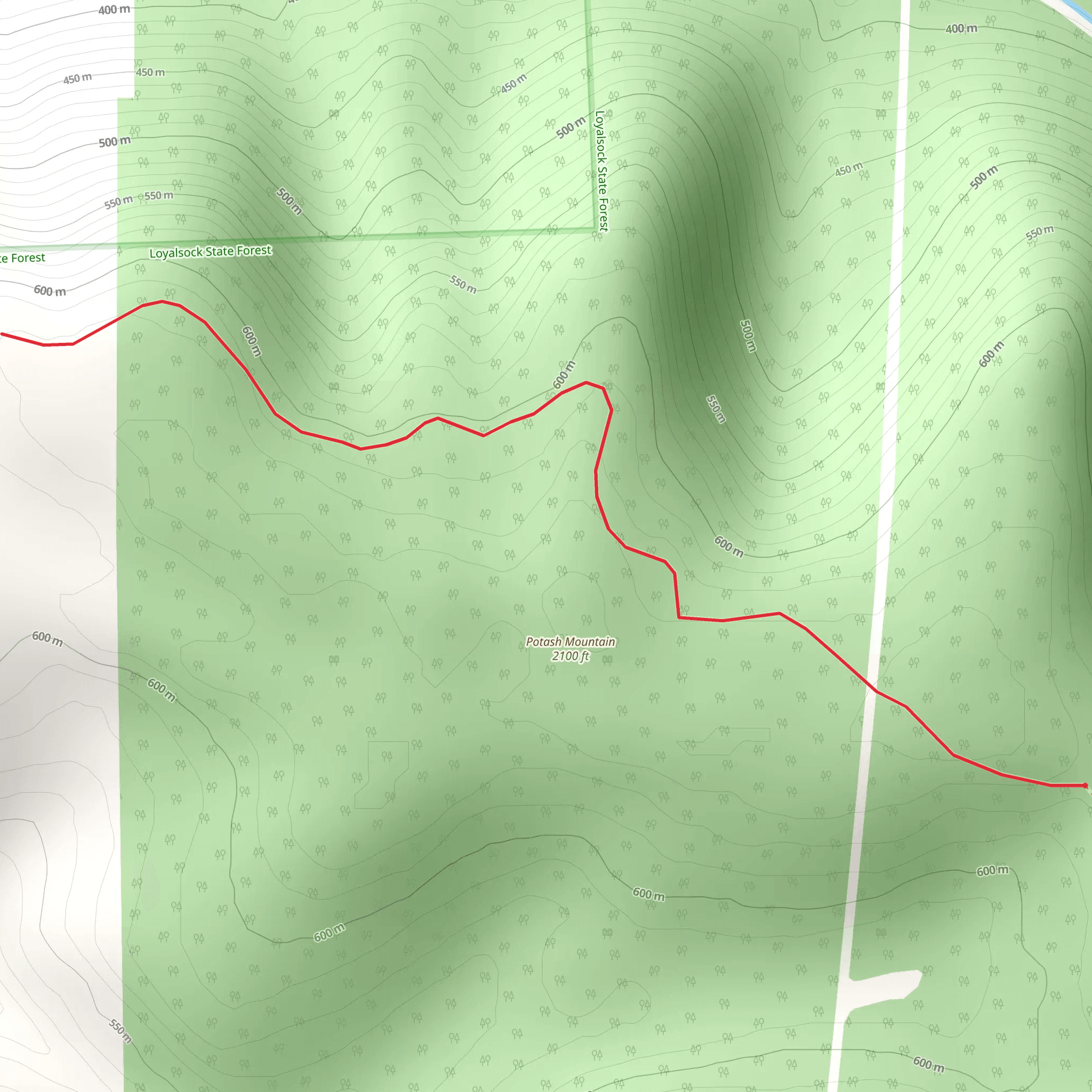
Surfaces
Ground
Unknown
Comments and Reviews
User comments, reviews and discussions about the Potash Mountain, Pennsylvania.
average rating out of 5
0 rating(s)
