
Download
3D Flyover
Add to list
More
6.6 km
~1 hrs 19 min
0 m
Loop
“A gentle, sandy heath-and-pine loop near Teteringen—big skies, quiet trails, and thoughtful pacing.”
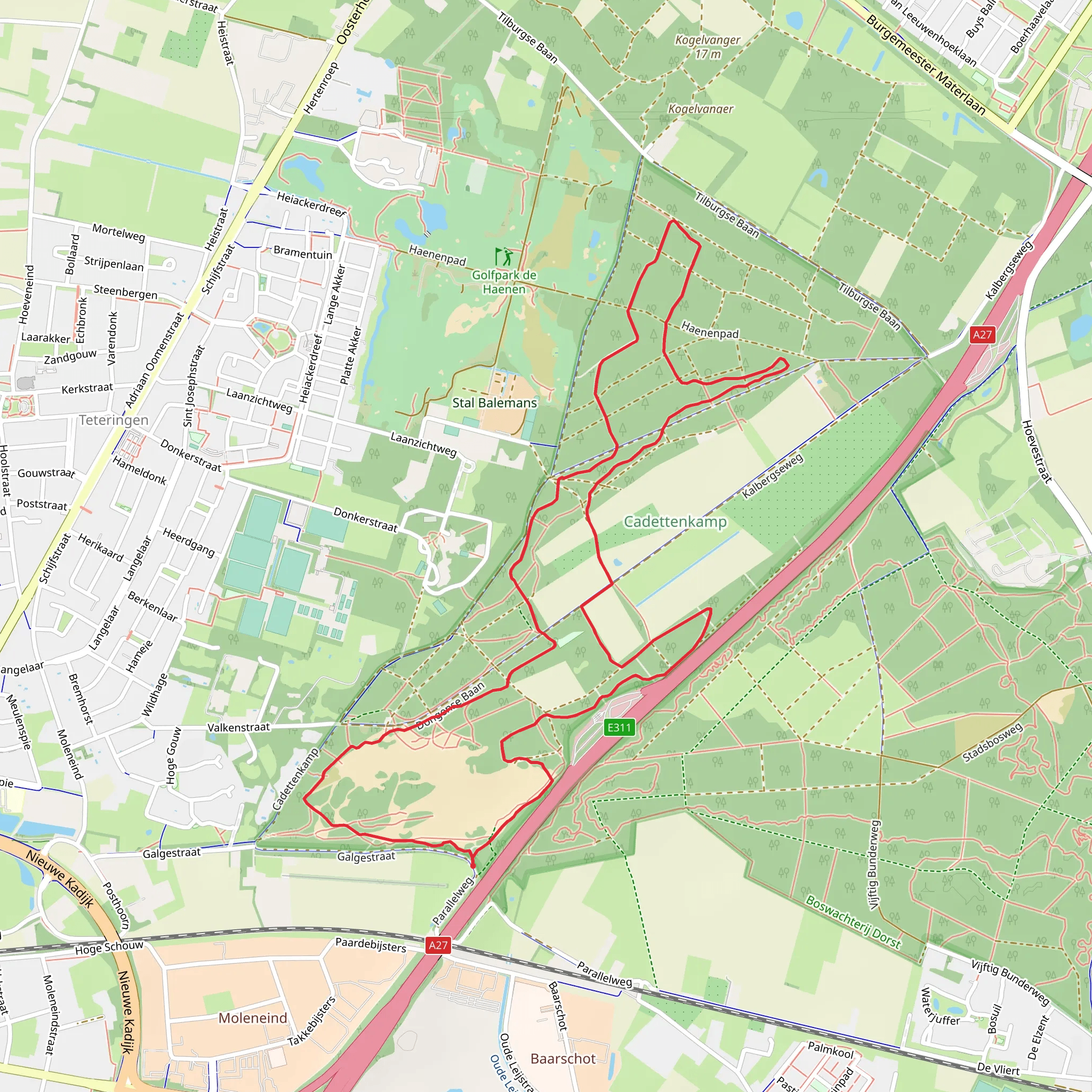
This easy loop is a low-stress wander through the sandy heath and pine-wood edge just northeast of Breda, near the village of Teteringen. At roughly 7 km (4.3 mi) with about 0 m (0 ft) of climbing, it’s ideal for a short morning outing, a recovery walk, or a nature-focused stroll where the “effort” comes more from soft sand underfoot than from hills.
Getting to the start (car + public transport)
By car: Aim for the Teteringse Heide / Cadettenkamp area on the northeast side of Breda, near Teteringen. The most reliable approach is to drive toward Teteringsedijk (Breda) and then continue toward the greenbelt/heath access points on the Teteringen side. Parking is typically along access roads and small pull-ins near the forest edge—arrive early on weekends, as these small lots fill quickly.
By public transport: The easiest hub is Breda Centraal (Breda railway station). From there, buses run toward the Teteringen side of town; a practical target stop is Teteringen, Heiackerdreef (a short walk from the heath/forest edge). (moovitapp.com)
If you’re navigating to the general approach corridor, Teteringsedijk is also well-served by bus lines and is within walking distance from Breda’s station area. (moovitapp.com)
If you’re building the route on HiiKER, set your start point near the Teteringen-side trail entrances so your loop begins on firm paths before you hit the sandier heath sections.
What the walk feels like underfoot
Expect a mix of: - Firm, compact forest paths under pine and mixed woodland—easy, steady walking. - Heath-edge tracks that can be sandy and energy-sapping in dry spells (your pace may drop even though the terrain is flat). - Occasional wide, open clearings where wind exposure is higher and the path can braid into multiple faint lines—this is where checking HiiKER helps you stay on the intended loop.
Because the elevation change is negligible, the main “difficulty” variable is surface: soft sand after a dry week can make this feel more like a workout than the stats suggest.
Landmarks and atmosphere along the loop
The “Cadettenlamp” name points to a local landmark associated with the Cadettenkamp area—historically tied to military cadet training grounds in the broader region’s sandy heaths and forests (these landscapes were often used for drills because they were open, well-drained, and less suited to intensive agriculture). As you move through the loop, you’ll notice how the terrain naturally alternates between: - Open heath (low shrubs, heather in season, big skies) - Pine plantations and older woodland blocks (straight trunks, filtered light, a quieter feel) - Forest-edge ecotones where birds and small mammals are most active
Even without big “monuments,” the character here is very much a working cultural landscape turned recreation space—heathland in this part of Northwestern Europe is typically maintained by management (cutting/grazing) to prevent it reverting fully to forest.
Nature and wildlife to look for
This kind of Brabant heath-and-wood mosaic is good for: - Deer at dawn/dusk along the woodland margins - Foxes and small mustelids (usually glimpsed briefly) - Heathland birds that favor open, scrubby ground; listen for calls from the edges where heath meets trees - In warmer months, insects (dragonflies near wetter pockets, butterflies over sunny clearings)
Ticks can be present anywhere with grass/heather—especially along narrow, brushy singletrack—so long socks and a quick post-hike check are smart.
Practical planning: timing, gear, and conditions
- Time on feet: Most hikers will take 1.5–2.5 hours for 7 km (4.3 mi) depending on sand, photo stops, and how much time you spend scanning the heath.
- Footwear: Light hiking shoes are fine, but choose something that handles sand well and keeps grit out (trail runners with snug collars or gaiters if you hate sand in your shoes).
- Weather exposure: The heath sections are more open—bring a wind layer in cooler months and sun protection in summer.
- Navigation: The trail network can be dense with intersecting tracks; keep HiiKER handy at junctions so you don’t accidentally shorten or extend the loop.
- **Dogs
Surfaces
Unknown
Sand
Unpaved
Comments and Reviews
User comments, reviews and discussions about the Cadettenlamp and Teteringse Heide Loop, Netherlands.
average rating out of 5
0 rating(s)

