Download
3D Flyover
Add to list
More
5.8 km
~1 hrs 9 min
0 m
Loop
“Wander Petten’s wind-sculpted dunes and big skies, where shifting sand meets sea-shaped history.”
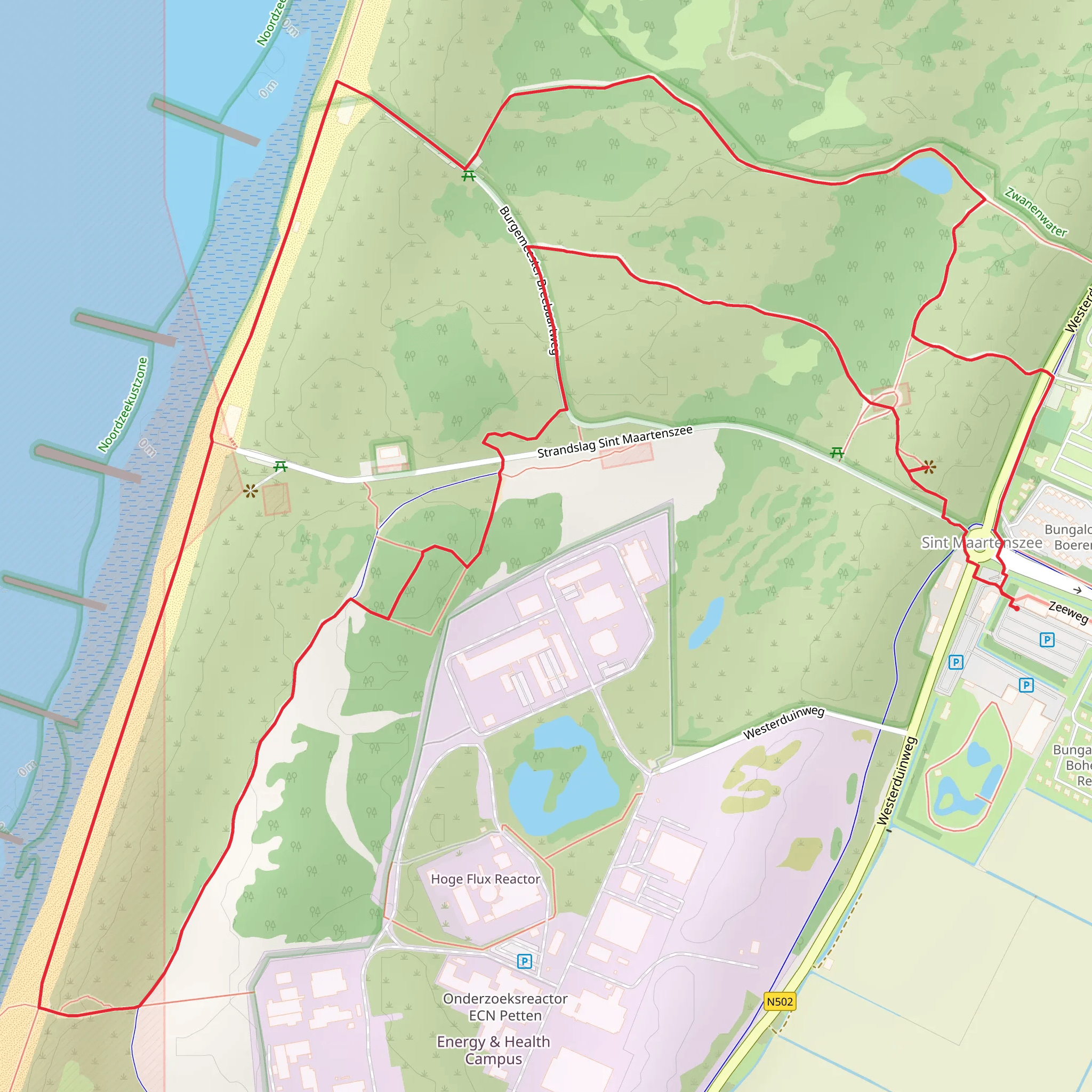
You’ll be walking a compact, almost pancake-flat coastal loop through the Pettemerduinen (Pettemer Dunes) near the village of Petten in North Holland—an easy, wind-shaped landscape of low dunes, sandy paths, and big skies. At around 6 km (3.7 mi) with roughly 0 m (0 ft) of climbing, it’s ideal for a relaxed outing, but it’s still a true North Sea hike: exposure to wind, shifting sand underfoot, and fast-changing weather are the main “challenges,” not elevation.
Getting to the start (car + public transport)
Because “near” wasn’t fully specified, the most practical, well-known access point for a Pettemerduinen loop is by the beach/dune entrances around Petten—especially near the coastal access by the former sea defense works now known as the Hondsbossche Duinen.
- By car: Aim for parking near the coastal access at Strandslag Hondsbossche, 1755 LL Petten (a commonly used access point for the Hondsbossche Duinen / Petten coastline). (visitwadden.nl)
- By public transport: Take rail/bus connections toward Petten (typically via larger hubs such as Alkmaar/Schagen in the region), then use the local bus stop(s) in/near Petten and walk to the dune entrance. Once you share your exact intended start lon/lat (or a HiiKER link), I can pin the nearest stop and the shortest walk-in precisely.
Use HiiKER to load the loop and keep an eye on where the dune paths braid and rejoin—this area often has multiple parallel sandy tracks that look equally “main.” In clear weather it’s intuitive; in fog or strong wind, it’s easy to drift onto a side trail.
What the loop feels like underfoot
Expect a mix of: - Firm sandy tracks and looser dune sand (your pace may vary a lot even on “flat” terrain). - Short stretches where wind has blown sand across the path, creating soft patches. - Occasional boardwalks or stabilized sections near the most-used access points (varies by exact line you take).
Even with minimal elevation gain, dunes create constant micro-undulations—small rises and dips that keep the walk interesting without ever feeling strenuous.
Landmarks, scenery, and the “why here” history
This landscape is inseparable from the Netherlands’ long fight with the sea. Near Petten, the coastline historically suffered severe erosion and storm damage, and the area became famous for major sea-defense works.
A key nearby landmark/theme is the Hondsbossche and Pettemer Zeewering—a long sea wall/dike system that protected the land behind it. Over time it was repeatedly strengthened, and in the 2010s the coast was dramatically reshaped with large-scale sand nourishment, creating broader beach and new dune areas now commonly referred to as the Hondsbossche Duinen. (hhnk.nl)
If your loop swings close to the coastal edge, you’ll notice how “engineered nature” and natural dune processes blend: wide sandy expanses, young dunes, and a coastline that looks natural but is the result of deliberate coastal management.
If you detour inland toward the Spreeuwendijk area, there is also a historically interesting boundary marker that marked the division between the Hondsbossche and Pettemer sea defenses (placed around the early 1800s, and noted as a provincial monument). (en.hhnk.nl)
That’s the kind of small, easily-missed object that adds depth to an otherwise nature-forward walk—worth watching for if your route line passes nearby.
Nature and wildlife to look for
The Pettemerduinen are classic coastal dune habitat. What you’re most likely to notice:
- Dune vegetation: tough grasses and low shrubs adapted to salt spray and wind. In more sheltered pockets, vegetation thickens and the sand is more stable.
- Birdlife: coastal and dune birds are often the most visible wildlife here—especially on breezy days when the dunes feel otherwise quiet. Bring binoculars if you enjoy birding.
- Insects and small mammals: in warmer months, expect more insect activity in sheltered, vegetated hollows; rabbits are common in many Dutch dune systems (sightings vary).
Because this is an exposed coastal environment, the “wildlife experience” is often about scanning and listening—birds riding the wind, tracks in sand, and movement along dune edges.
Practical planning: weather, safety, and comfort
- Wind exposure: The biggest factor. A calm day feels easy; a strong headwind can make 6 km (3.7 mi) feel much longer. Bring a windproof layer year-round.
- Footwear: Light hiking shoes or trail runners are ideal. If it’s been wet, some low spots can be damp; if it’s dry and windy, expect sand in shoes—gaiters help but aren’t required.
- **Navigation
Surfaces
Sand
Unknown
Asphalt
Paved
Gravel
Comments and Reviews
User comments, reviews and discussions about the Pettemerduinen Loop, Netherlands.
average rating out of 5
0 rating(s)