
Download
3D Flyover
Add to list
More
9.6 km
~1 hrs 57 min
21 m
Loop
“From Formerumerbos shade to Midsland’s sea-breezed dunes, a flat loop of shifting moods.”
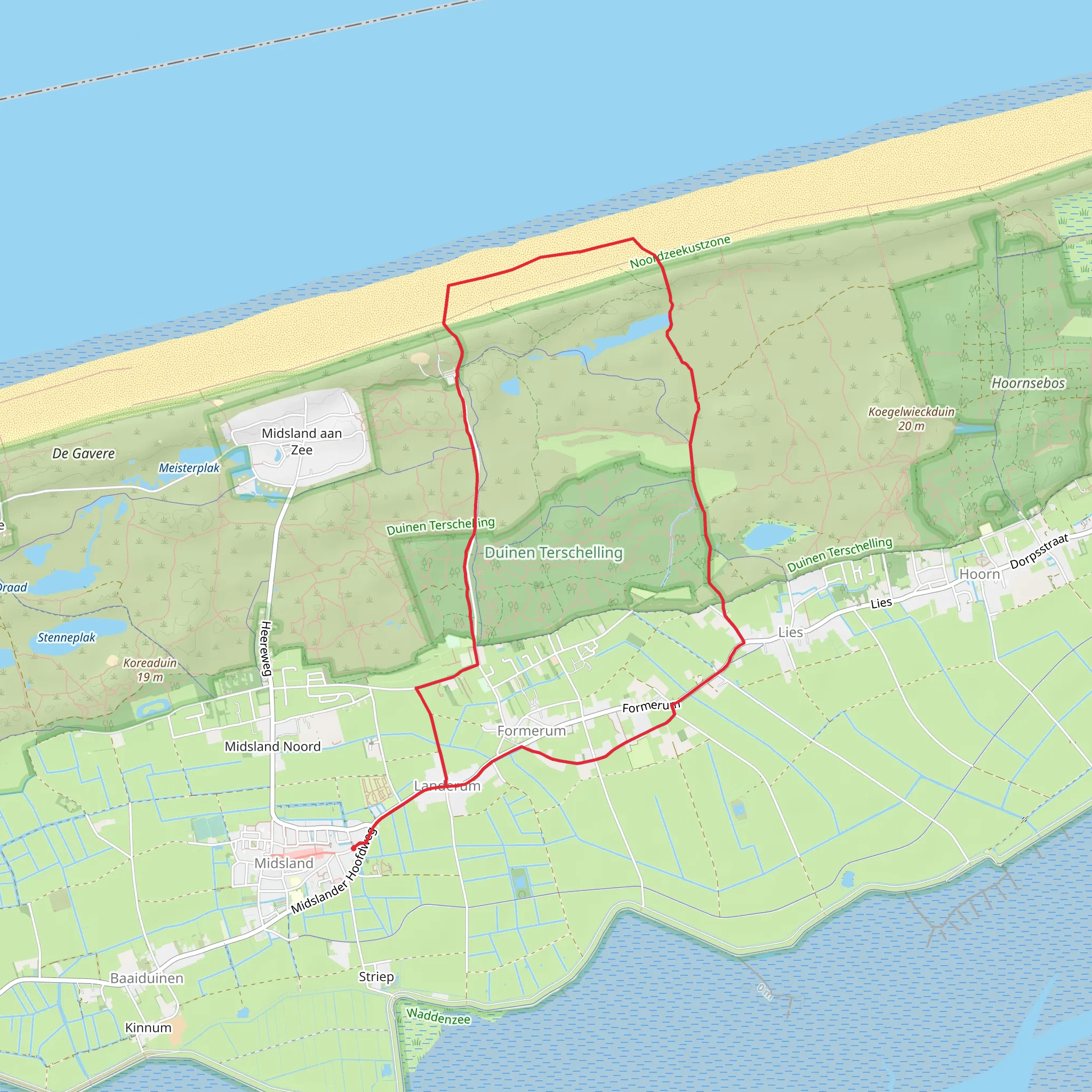
You’ll be walking on the Dutch Wadden island of Terschelling (Friesland), linking the shady pine-and-mixed woodland of Formerumerbos with the open dune belt and North Sea shoreline near Midsland aan Zee. At roughly 10 km / 6.2 mi with about 0 m / 0 ft of climbing, this is a true “flat-island” loop—easy on the legs, but still exposed to wind, sand, and fast-changing coastal weather.
Where the hike starts (nearest landmark / address)
A practical start point for this loop is by the forest edge near Lies / Formerum, close to Duinweg 4, Lies (Terschelling)—a commonly referenced access point for Formerumerbos. (terschelling.org)
If you prefer to begin closer to the sea, you can also start near the beach access at Midsland aan Zee (follow local signs for “Strandopgang”/beach entrance), then loop inland through dunes and forest before returning.
Getting there (car + public transport) - Public transport: Terschelling is reached by ferry to West-Terschelling; from there, island buses connect the villages (including Midsland and stops near Formerum/Lies). Plan your exact stop-to-trailhead walk using HiiKER, since bus stop names and seasonal routing can vary. - Car: You typically park on the mainland and take the ferry as a foot passenger, then use bus/bike/walk on the island. If you’re bringing a car over, confirm vehicle space well ahead of time (capacity is limited on many Wadden ferries). Once on Terschelling, aim for parking near village centers (Midsland/Formerum/Lies) and walk to the forest edge.
What the route feels like underfoot
Expect a mix of: - Firm forest paths (often sandy but compacted) through Formerumerbos - Dune tracks that can be soft, especially in dry spells - Beach walking (if your loop uses the shoreline) where the “best line” is usually on the damp, packed sand near the waterline—unless tide or wind-driven surf pushes you higher
Even with negligible elevation gain, dunes create constant micro-undulations and wind resistance. A calm day can feel effortless; a headwind off the North Sea can make the same loop feel twice as long.
Formerumerbos: cool shade, WWII remnants, and island wildlife
The Formerumerbos section is the sheltered heart of the walk—dense, older woodland by island standards, and a welcome break from coastal exposure. The forest is known for: - Well-marked walking routes - Wildlife such as deer, squirrels, and many bird species - Hidden historical features, including World War II bunkers tucked among the trees (terschelling.org)
Because this is an island forest shaped by dune management, you’ll notice how quickly the landscape transitions: one moment you’re among trunks and needles, the next you’re stepping out toward open sand and sky.
What to look out for here - Ticks can be present in grassy edges and scrubby transitions (do a quick check after the forest). - Narrow sandy singletrack can be shared with cyclists in places—stay alert on bends. - After rain, some low spots can hold water; waterproof shoes aren’t mandatory, but they’re nice insurance.
Dunes and North Sea edge: big skies, shifting sand, and birdlife
Leaving the forest, the route opens into the dune system and (depending on your exact line) the North Sea beach near Midsland aan Zee. This is classic Terschelling: wind-sculpted dunes, tough coastal vegetation, and long sightlines.
Terschelling’s dunes have a strong human-and-nature story. In the early 1900s, large parts of the dunes were bare and mobile, with sand drifting toward fields and villages. In 1910, Staatsbosbeheer took responsibility for dune management, stabilizing sand and planting forests (including pine stands later being converted toward more mixed woodland), and restoring more natural water levels in parts of the dune landscape. (staatsbosbeheer.nl)
What to look out for here - Wind exposure: bring a windproof layer even on mild days. - Soft sand: if a dune segment feels like it’s stealing your energy, shorten your
Surfaces
Unknown
Asphalt
Sand
Dirt
Ground
Concrete
Comments and Reviews
User comments, reviews and discussions about the Femearumerbos and Midsland aan Zee Loop, Netherlands.
average rating out of 5
0 rating(s)


