Download
3D Flyover
Add to list
More
44.2 km
2 days
6 m
Multi Day
“A long, wind-swept lowland loop where dunes and forest tracks reward steady, patient miles.”
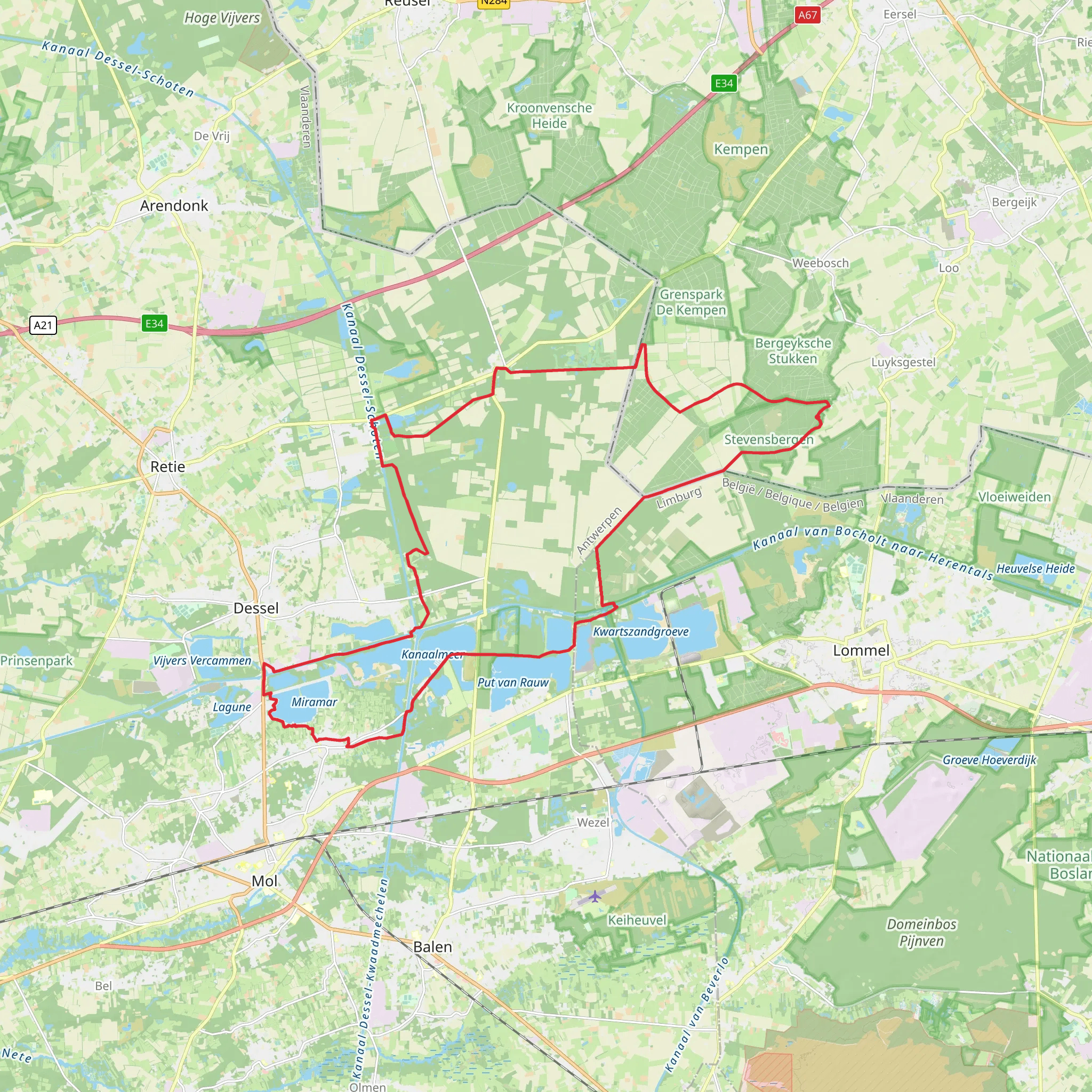
A long, low-lying loop like this is all about steady forward progress rather than climbing: expect roughly 44 km / 27.3 miles with about 0 m / 0 ft of total ascent. That “flat” profile usually means coastal plain, dunes, reclaimed land, or broad forest tracks—great for an easy-grade day on paper, but it can still feel big because the distance is substantial and wind exposure can be the real effort.
Before I can convert the start location to the nearest address/landmark and give truly accurate logistics and landmarks, I need one missing detail: where is the trailhead (“Hike head: near …”) and what country/region is this in? If you paste a coordinate (lat, lon) or the nearest town, I’ll translate it to the closest known address/landmark and tailor the transport directions precisely.
What the day feels like (pace, surfaces, and effort)
Even with minimal elevation gain, plan for a full day on your feet:
- Time estimate: most hikers take 8–11 hours for 44 km / 27.3 mi depending on breaks, surface, and wind.
- Underfoot: on flat coastal/lowland loops, you’ll typically rotate through:
- Hard-packed forest roads or gravel tracks (fast, but repetitive impact)
- Sandy sections (slower, can fatigue calves/hips)
- Boardwalks or dike-top paths (easy walking, often exposed)
- Short paved connectors near settlements (watch for bikes/traffic)
- Why “Easy” can still bite: the difficulty is usually “easy” because there’s little climbing and navigation is straightforward, but distance + exposure + foot care are the main challenges. Blisters and hot spots are the most common reason people bail on flat 40+ km days.
Navigation and wayfinding (keep it simple, stay efficient)
Use HiiKER to: - Download the route for offline use before you arrive (flat areas can still have patchy reception). - Watch for parallel tracks—in forests and dune systems, multiple sandy lanes can run side-by-side and look identical. - Confirm junctions near settlements where signage may prioritize local destinations rather than the loop name.
On a loop of this length, it’s smart to identify two or three “decision points” in HiiKER (major junctions, bridges, or trail crossings) so you can sanity-check progress without constantly staring at your phone.
Weather, exposure, and the “flatland factor”
With near-zero elevation gain, the biggest environmental variable is usually wind and open-sky exposure:
- Wind: if this route crosses open dunes, heath, or dikes, a headwind can add a surprising amount of fatigue. Bring a light wind shell even on mild days.
- Sun: flat routes often have long stretches without shade. Sunglasses and sunscreen matter more than you’d think for an “easy” hike.
- Rain: sandy and clay soils behave differently—sand drains quickly; clay can turn into slick, shoe-caking mud that slows you down and increases friction hot spots.
Nature and wildlife you’re likely to encounter
Without the exact region pinned down, the names “Steenovens,” “Klampen,” and “Miramar” strongly suggest a landscape with human history layered into lowland nature—often a mix of managed woodland, coastal habitats, and small cultural sites.
Common lowland/coastal wildlife patterns to watch for: - Birdlife: expect the best action at dawn and late afternoon—waders and waterfowl near wetlands; raptors over open heath; songbirds in scrub edges. - Large mammals: in many European lowlands, deer are common in forest margins; in dune systems you may see rabbits/hares and foxes. - Insects: in warm months, bring repellent—mosquitoes cluster near still water; ticks are common in grassy edges and heath. Do a tick check at the end of the day.
If you tell me the country/region, I’ll narrow this down to the specific species and seasonal considerations (including any protected areas or leash rules).
Landmarks and historical context (what the names hint at)
Place-names can be clues: - “Steenovens” often relates to stone/brick kilns or ovens in some languages—historically tied to local building materials, small industry, or coastal construction. - “Miramar” is frequently used for sea-view points, villas, or coastal lookouts (even if the route is only intermittently near the water). - “Klampen” can refer to wooden clamps/stockpiles, posts, or local topographic terms, sometimes linked to forestry or old boundary markers.
Once you provide the start location (town or coordinates), I can identify which specific sites these names refer to—e.g., an old kiln site, a viewpoint, a historic estate, a coastal battery, or a nature reserve feature—and explain what to look for on the ground.
Planning essentials for a 44 km / 27.3 mi flat loop
Footwear & comfort - Choose shoes you can walk in for 10+ hours. Flat distance is repetitive impact—cushioning and sock choice matter. - Bring blister care (tape or hydrocolloid) and address hot spots early.
Food & water - For most hikers: 2.5–4.0 L total water capacity depending on temperature and refill options. - Aim for 200–300 calories per hour after the first
AI Planner
Days planned around your pace, with somewhere to stay each night.
Surfaces
Unknown
Asphalt
Concrete
Dirt
Sand
Paved
Ground
Gravel
Unpaved
Wood
Comments and Reviews
User comments, reviews and discussions about the Steenovens, Klampen and Miramar Loop, Netherlands.
average rating out of 5
0 rating(s)