Download
3D Flyover
Add to list
More
10.8 km
~2 hrs 10 min
0 m
Loop
“Willow-lined paths, shimmering lakes, and birdsong welcome walkers to this peaceful Dutch waterland adventure.”
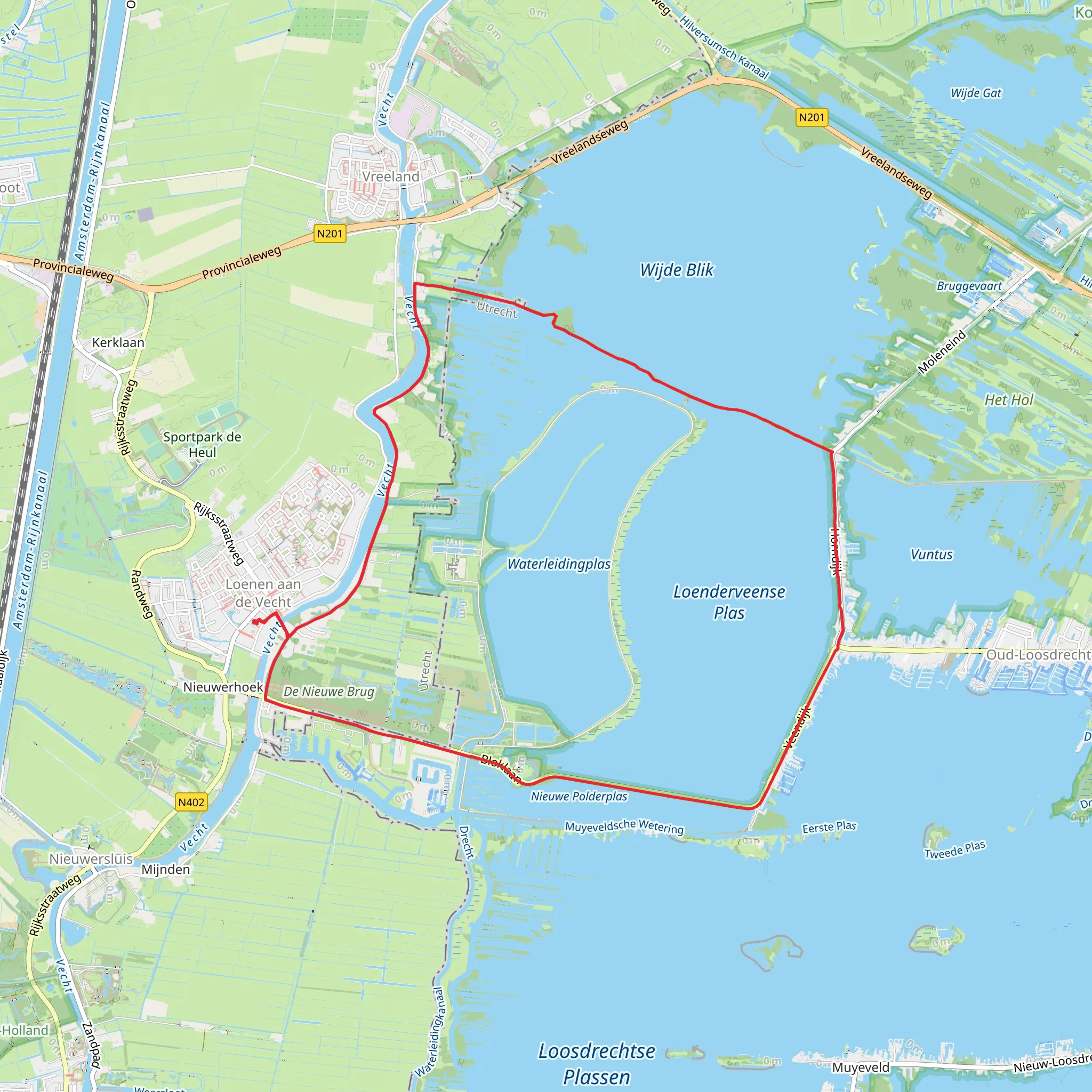
Starting from the edge of Loenen aan de Vecht, this 11 km (about 6.8 miles) circular walk offers a flat, easy route with virtually no elevation gain, making it accessible for most walkers. The trailhead is conveniently located near the intersection of Bloklaan and Veendijk, close to the Waterleidingplas, a well-known water reservoir area just west of the village. For those arriving by public transport, buses from Utrecht and Amsterdam stop in Loenen aan de Vecht, and from there it’s a short walk to the starting point. Drivers can find parking near the Waterleidingplas or in the village itself.
Route Overview and Navigation
The route follows a scenic loop, beginning along the Horndijk, a quiet country road lined with willows and expansive views over the Dutch polder landscape. Early on, you’ll skirt the Waterleidingplas, a protected water catchment area with crystal-clear ponds and reed beds. This area is a haven for birdlife, so keep an eye out for herons, grebes, and sometimes even kingfishers darting across the water. The trail continues along Veendijk, a dike road that separates the Waterleidingplas from the larger Loenderveense Plas, a vast lake used for Amsterdam’s drinking water supply. The Loenderveense Plas is a Natura 2000 site, recognized for its ecological value and home to rare marsh plants and nesting birds.
Nature and Wildlife
As you walk, the landscape alternates between open water, reed marshes, and stretches of woodland. In spring and summer, the air is filled with the calls of warblers and the sight of dragonflies hovering above the water. The reed beds are particularly important for breeding birds, and you may spot cormorants drying their wings on the wooden posts in the lake. The area is also known for its otter population, though these shy creatures are rarely seen.
Historical and Cultural Highlights
The region’s history is closely tied to water management. The dikes and canals you’ll see were constructed centuries ago to reclaim land from the lakes and to protect the surrounding villages from flooding. The Waterleidingplas itself was created in the early 20th century as part of Amsterdam’s water supply system, and you’ll notice remnants of old pumping stations and sluices along the route. Loenen aan de Vecht, at the start and end of your walk, is a charming village with historic houses, a 17th-century church, and several riverside cafés—perfect for a post-hike refreshment.
Trail Conditions and Preparation
The entire route is flat, with a total elevation gain of less than 5 metres (16 feet), and follows a mix of paved dike roads, gravel paths, and grassy tracks. Waterproof footwear is recommended, especially after rain, as some sections near the lakes can be muddy. The trail is well-marked, but for added confidence, use HiiKER for navigation, as it provides up-to-date maps and route details.
Getting There
By public transport, take a train to Breukelen or Weesp, then transfer to a local bus to Loenen aan de Vecht. From the village center, it’s a 10-minute walk to the trailhead near Bloklaan and Veendijk. If driving, set your navigation to Waterleidingplas Loenen aan de Vecht; parking is available nearby, but spaces can fill up on weekends.
This easy, scenic loop is ideal for birdwatchers, families, and anyone looking to experience the tranquil Dutch water landscapes just a short distance from Amsterdam and Utrecht.
Surfaces
Unknown
Asphalt
Gravel
Paved
Comments and Reviews
User comments, reviews and discussions about the Waterleidingplas and Loenderveense Plas via Horndijk, Veendijk and Bloklaan, Netherlands.
average rating out of 5
0 rating(s)