
Download
3D Flyover
Add to list
More
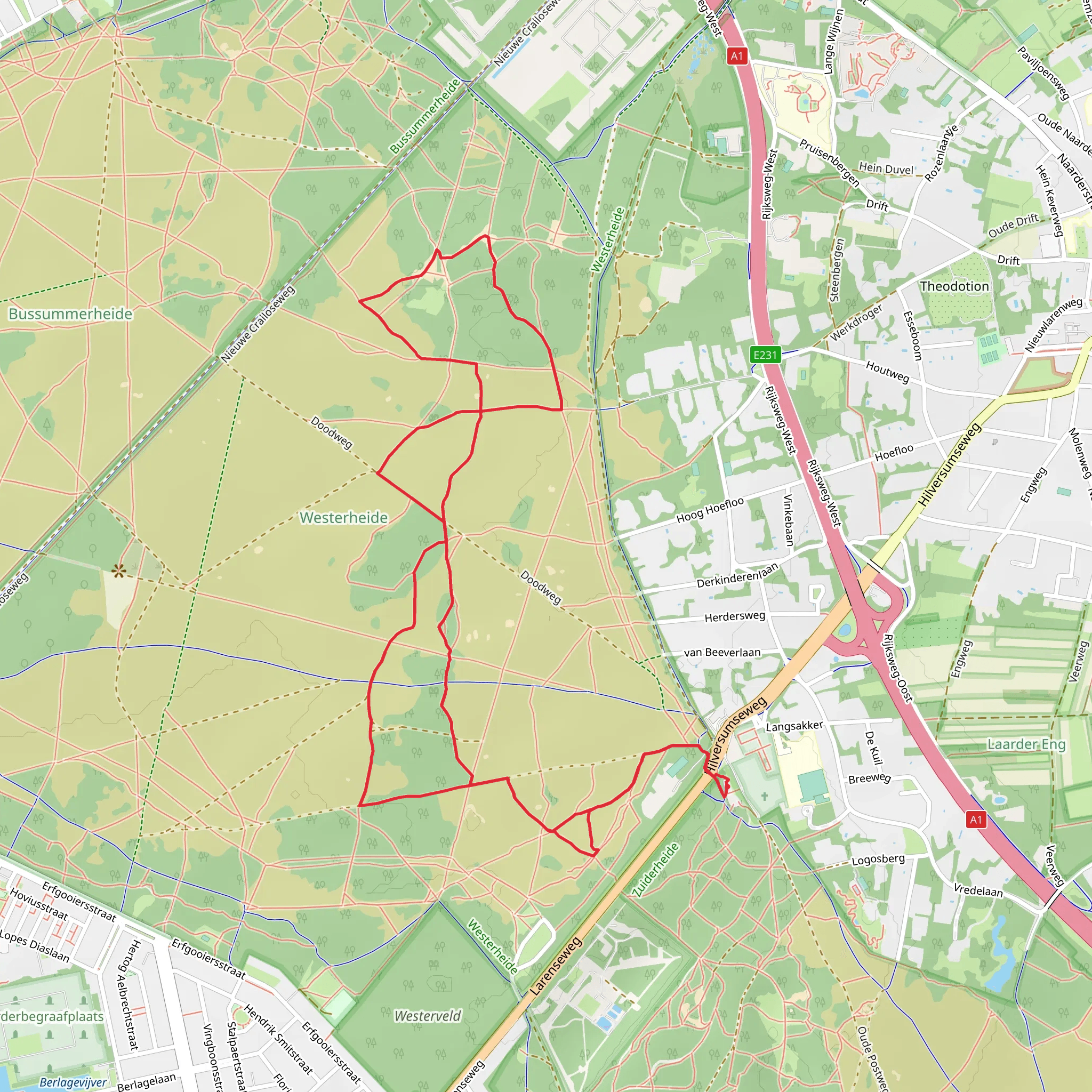
6.8 km
~1 hrs 21 min
6 m
Loop
“Drift through wide heath under big, shifting skies, with sandy tracks and woodland hush.”
A gentle, mostly level loop of about 7 km (4.3 mi) with roughly 0 m (0 ft) of climbing, this walk is ideal for an easy half-day outing where the focus is on open heathland scenery, big skies, and quiet woodland edges rather than steep gradients. Expect wide, well-made paths in places, narrower sandy tracks in others, and a route that can feel surprisingly exposed to wind and sun despite the easy profile.
Getting to the start (car + public transport)
Because the start point is only listed as “near” and no coordinates/town were provided, the most reliable way to pinpoint the exact trailhead is to open the route in HiiKER and use its start-point navigation. Once you share a lon/lat (or a HiiKER link), I can translate it to the nearest recognizable address/landmark and tailor the directions precisely.
By car - Plan for small roadside pull-ins or modest nature-area parking rather than a large lot. Heathland trailheads often have limited spaces, especially on weekends. - If you’re visiting during a dry spell, be mindful that sandy access tracks can be dusty; after rain, the same sand can turn soft and slow.
By public transport - Typically, the easiest approach is train to the nearest town station, then a local bus or a short taxi/bike ride to the heath/forest edge. In many heathland regions, the last 1–3 km (0.6–1.9 mi) can be on quiet roads or cycle paths. - Use HiiKER to confirm the exact start location, then match it to the closest stop.
What the trail is like underfoot
With essentially no elevation gain, the “difficulty” comes down to surface and exposure: - Heathland sections: often sandy and can be a little energy-sapping even when flat. In dry weather, sand is loose; in wet weather, it can compact nicely but puddles may form in low spots. - Woodland edges: you may encounter pine needles, roots, and occasional muddy patches, especially where the path dips through shaded hollows. - Wayfinding: loops can have multiple intersecting tracks. Keep an eye on junctions and confirm turns with HiiKER, especially if visibility is reduced by fog or if the heath looks “trackless” with many informal footpaths.
Landmarks, scenery, and the feel of the route
This loop is typically defined by a classic heathland rhythm: open stretches with long views, then shelter belts of trees that break the wind. - Look for heather and low shrubs across the open ground; depending on season, the heath can shift from muted greens and browns to vivid color. - You’ll likely pass small clearings and edge habitats where woodland meets open heath—these transition zones are often the most wildlife-rich. - If there are any interpretive boards, boundary stones, or old track alignments, they’re worth a pause; heathlands are often shaped by centuries of grazing, turf cutting, and managed burning/mowing to prevent the area from turning fully to forest.
Nature and wildlife to watch for
Even on an easy, flat walk, heathland can be lively if you move quietly and scan ahead: - Birdlife: open-country and scrub-edge birds are common; early morning and late afternoon are usually best for activity. - Insects: in warmer months, expect plenty of pollinators around flowering heath and gorse-like shrubs; bring sun protection and consider insect repellent if still air and warmth bring out biting insects. - Deer and small mammals: woodland margins can produce brief sightings—most often at quieter times of day. - Ticks: heath/grass edges can carry ticks in many regions. Long socks/trousers and a post-hike check are sensible.
Practical planning: timing, gear, and conditions
- Time on trail: most hikers will take 1.5–2.5 hours for 7 km (4.3 mi) depending on stops, sandiness, and how often you pause for photos or wildlife.
- Footwear: light hiking shoes are usually enough, but choose something with a bit of tread for sandy corners and occasional mud.
- Weather exposure: with open heath, you can feel wind and sun more strongly than in forest. Bring a light layer even on mild days, and carry water—flat terrain can still be dehydrating.
- After rain: expect puddles in low points and softer sand; after prolonged dry weather, the trail can be dusty and more tiring underfoot.
- Respect seasonal management: heathlands are often actively managed for habitat protection and fire risk reduction. Follow any posted guidance, stay on established paths where requested, and keep dogs under control—especially during ground-nesting bird seasons.
Historical significance (what you’re walking through)
Heathlands across northern and western Europe are frequently cultural landscapes—not untouched wilderness, but places maintained by human use over long periods. Many were historically shaped by: - Grazing and common land use, which kept tree growth suppressed and encouraged heath vegetation. - Turf/peat cutting and collection of heather for bedding or fuel in some areas. - Modern conservation management, where controlled grazing, mowing, or selective clearing preserves the open character and biodiversity.
If you share the exact start coordinates (lon/lat) or a HiiKER route link, I can: - identify the nearest known address/landmark for the trailhead, - call out the specific named heath/forest reserve you’ll be in, - and add any site-specific history (e.g
Surfaces
Sand
Unknown
Unpaved
Dirt
Concrete
Comments and Reviews
User comments, reviews and discussions about the Westerheide Loop, Netherlands.
average rating out of 5
0 rating(s)


