
Download
3D Flyover
Add to list
More
5.5 km
~1 hrs 6 min
0 m
Loop
“Stroll through Twisk’s windmill polders under vast skies, with canal edges to mind in rough weather.”
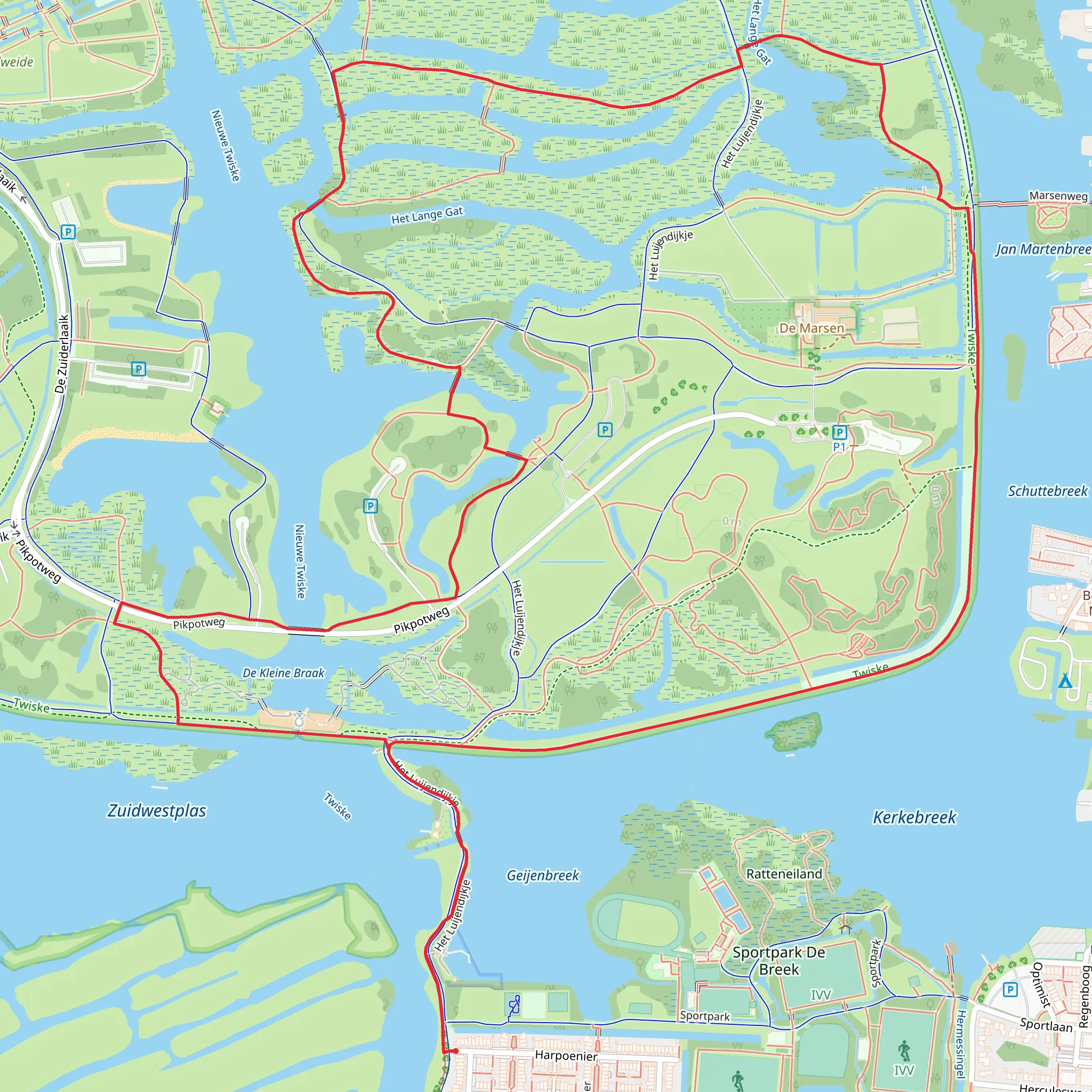
A flat, easy loop of about 6 km (3.7 mi) with essentially 0 m (0 ft) of climbing, this walk is all about classic Dutch polder scenery: straight drainage ditches, wide skies, reedbeds, and a working windmill landscape. Expect mostly level footing and frequent water alongside the path—beautiful, but something to stay aware of if you’re walking with kids or in windy, wet weather.
Getting to the start (car + public transport)
Because the start point wasn’t fully specified (“near …”), the most practical way to plan is to aim for the Twisk area (North Holland, Netherlands)—the loop name strongly suggests you’ll be starting near Twiskemolen, a local windmill landmark in/near the village of Twisk.
- By car: Navigate to Twisk (near Medemblik, North Holland) and look for parking near the village center and canal-side roads. A reliable “anchor” to search for is Twiskemolen (windmill); once you’re near the mill, you’re typically in the right landscape for this loop.
- By public transport: The region is served by buses connecting nearby towns (commonly via Medemblik / Wognum / Hoorn depending on the route). Plan your final approach to Twisk village and then walk to the mill area to pick up the loop.
If you share the exact longitude/latitude (or a HiiKER link), I can convert it to the nearest specific street address or named landmark and tailor the directions precisely.
What to expect underfoot and on the ground - Surface: Predominantly paved farm lanes, compacted gravel, and grassy/dirt path segments along ditches. After rain, the softer sections can be slick or muddy. - Exposure: Very open terrain—wind can be the main “difficulty” even on an easy route. Bring a windproof layer even in mild temperatures. - Water edges: Much of the route runs beside canals/ditches with steep, grassy banks. Keep a steady line, especially if it’s frosty or the grass is wet.
Landmarks, landscape, and the “feel” of the loop You’ll be walking through a polder-and-dike system—land shaped by centuries of Dutch water management. The defining features are: - Windmill presence (Twiskemolen): Traditional windmills in this region are closely tied to drainage and water control. Even when a mill is no longer actively pumping, it remains a strong reminder of how these landscapes were made livable and farmable. - Canals, ditches, and sluices: Look for small culverts, weirs, and pumping infrastructure—quiet but essential engineering that keeps fields from flooding. - Farmsteads and long field lines: The straight geometry of fields and waterways makes navigation feel simple, but it can also be surprisingly disorienting in fog or heavy rain because everything looks similar.
Nature and wildlife to look for
This is a strong route for everyday lowland wildlife—more about birds and wetland edges than big mammals.
- Birdlife: Expect common polder species such as ducks, geese, coots, moorhens, and depending on season, waders in wetter fields. Birds of prey (like kestrels) often hover over open farmland hunting.
- Reedbeds and ditch margins: Reeds and rushes shelter smaller birds and amphibians. In warmer months, you may see dragonflies along still water.
- Seasonal changes:
- Spring/early summer: More bird activity and nesting behavior—stay on the path and give field edges space.
- Autumn/winter: Bigger skies, stronger winds, and wetter ground; water levels can look higher and banks can be slippery.
- Spring/early summer: More bird activity and nesting behavior—stay on the path and give field edges space.
Practical planning: timing, gear, and navigation - Time needed: Most hikers will take 1.25–2 hours for 6 km (3.7 mi) depending on stops, wind, and how muddy the softer sections are. - Footwear: Light hiking shoes are usually enough; after rain, consider water-resistant footwear for grassy edges. - Clothing: Windproof outer layer is the key item here. In cooler months, gloves can be surprisingly useful because the open polder wind bites. - Navigation: Use HiiKER to keep track of the correct turns—polder lanes can look nearly identical, and it’s easy to follow the “wrong” straight road for 500 m before realizing it. - Respect for working land: You’ll likely pass close to farms and field access points. Stick to marked paths, close any gates, and give space to machinery and livestock if present.
Historical significance of the area The Twisk/Medemblik part of North Holland sits within a broader story of land reclamation and water control—a defining theme of Dutch history. The presence of a named mill on the route points to the long-standing reliance on wind-powered drainage and the network of dikes and canals that made agriculture possible on low-lying ground. Even on a short loop, you’re effectively walking through a living example of engineered landscape: fields, waterways, and settlements arranged around keeping water at the “right” level.
If you provide the missing “Hike head: near …” location (or coordinates), I can pin the start to the nearest exact address/landmark and describe the loop turn-by-turn with more precise distance splits (e.g., “after 1.2 km / 0.75 mi, turn left at the canal junction”).
Surfaces
Unknown
Asphalt
Wood
Grass
Comments and Reviews
User comments, reviews and discussions about the Kerkebreek and Twiskemolen Loop, Netherlands.
average rating out of 5
0 rating(s)


