Download
3D Flyover
Add to list
More
16.7 km
~3 hrs 19 min
0 m
Loop
“Wander wind-swept dikes, ancient villages, and wildflower-rich marshes where sea and history entwine.”
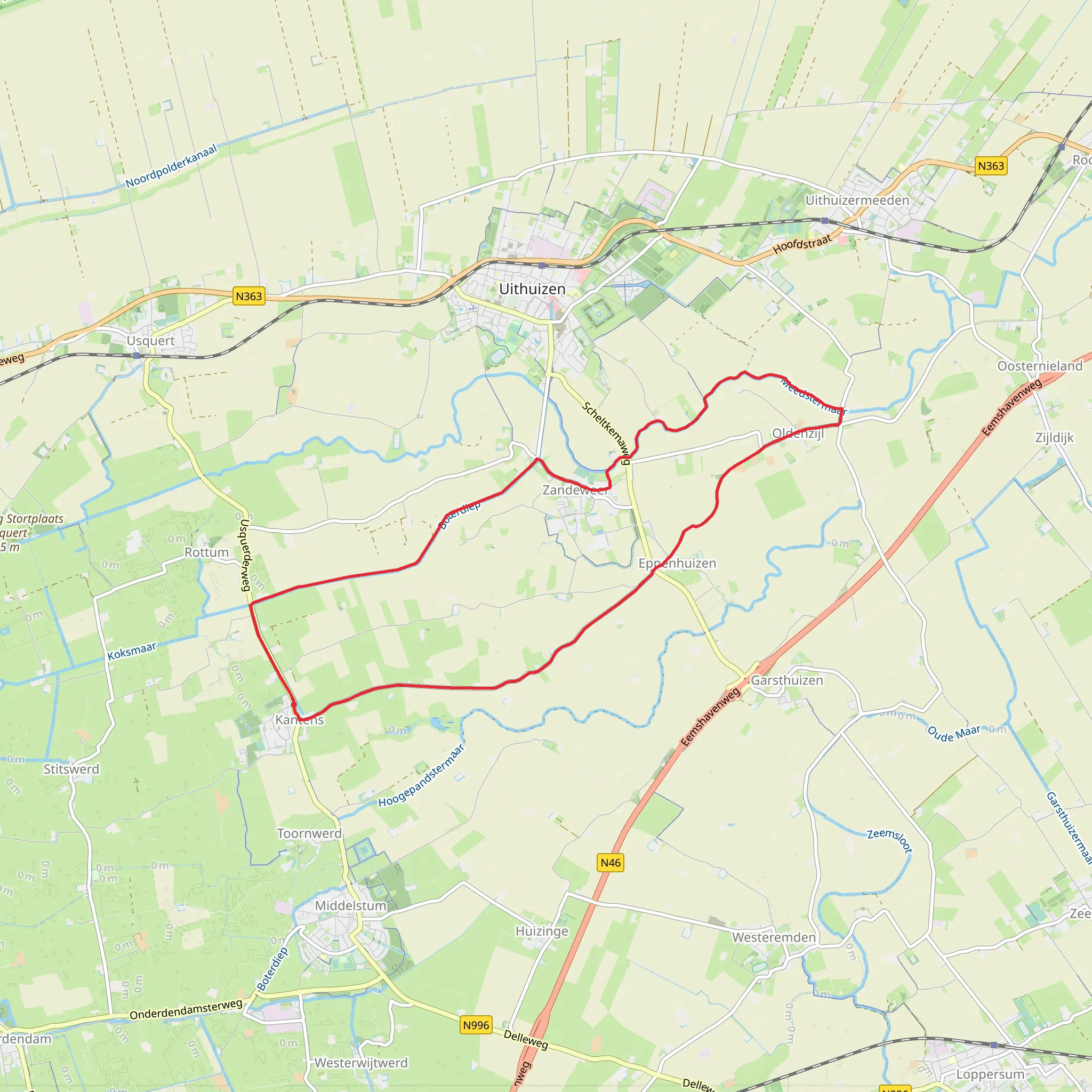
Starting from the coastal village of Pieterburen, this 17 km (about 10.5 miles) loop combines the scenic Nederlands Kustpad with the tranquil Meedstermaarpad, offering a flat, easy walk with virtually no elevation gain—perfect for hikers of all abilities. Pieterburen is well-known as the home of the Seal Rehabilitation and Research Centre, a unique landmark and a great place to visit before or after your hike.
Getting There
Pieterburen is accessible by public transport from Groningen. Take a train to Winsum, then transfer to a local bus (line 68) that stops in Pieterburen, just a short walk from the trailhead. If arriving by car, parking is available near the Seal Centre and throughout the village.
Coastal Landscapes and Dike Walks
The route quickly leads you out of Pieterburen, following the iconic sea dike that protects the low-lying land from the Wadden Sea. For the first 3 km (about 1.9 miles), you’ll walk along grassy embankments with expansive views over tidal flats and salt marshes, a UNESCO World Heritage Site. This area is a haven for birdlife—look for oystercatchers, curlews, and flocks of geese, especially during migration seasons.
Historic Villages and Terpen
After leaving the coast, the trail turns inland, passing through the ancient terp (artificial mound) villages of Westernieland and Den Andel. These settlements date back over a thousand years, built on raised ground to protect against flooding before the dikes were constructed. In Den Andel, the 13th-century church and its detached bell tower are notable landmarks, and the village café is a good spot for a rest.
Meedstermaar and Rural Tranquility
The Meedstermaarpad section takes you along quiet farm tracks and beside the Meedstermaar, a historic drainage canal. This part of the loop, from about 8 km to 14 km (5 to 8.7 miles), is characterized by open fields, grazing sheep, and traditional Groningen farmhouses. The flat landscape offers wide skies and, on clear days, distant views to the Wadden Sea.
Nature and Wildlife
Throughout the hike, keep an eye out for marsh harriers, hares, and—if you’re lucky—seals basking on the mudflats at low tide. The salt marshes are rich in wildflowers during spring and summer, with sea lavender and thrift adding color to the landscape.
Navigation and Trail Markings
Waymarking is generally good, with red-and-white blazes for the Nederlands Kustpad and local signs for the Meedstermaarpad. For precise navigation and up-to-date trail conditions, use HiiKER, which provides detailed maps and GPS tracks for the entire loop.
Facilities and Tips
There are limited facilities along the route, so bring enough water and snacks for the day. Public toilets and cafés are available in Pieterburen and Den Andel. The trail is exposed to wind and weather, so dress accordingly, especially outside of summer months. The flat, well-maintained paths make this loop suitable for families and those new to long-distance walking.
Historical Context
This region of Groningen has a long history of land reclamation and water management, visible in the dikes, canals, and terp villages. The landscape tells the story of centuries of human adaptation to the sea, making this hike not only a journey through nature but also through Dutch history and ingenuity.
AI Planner
Days planned around your pace, with somewhere to stay each night.
Surfaces
Concrete
Asphalt
Unknown
Wood
Cobblestone
Comments and Reviews
User comments, reviews and discussions about the Nederlands Kustpad and Meedstermaarpad Loop, Netherlands.
average rating out of 5
0 rating(s)