
Download
3D Flyover
Add to list
More
12.9 km
~2 hrs 34 min
0 m
Loop
“A gentle dune wander through sunlit sands and pine-sheltered hollows—easy-going, though soft footing can challenge.”
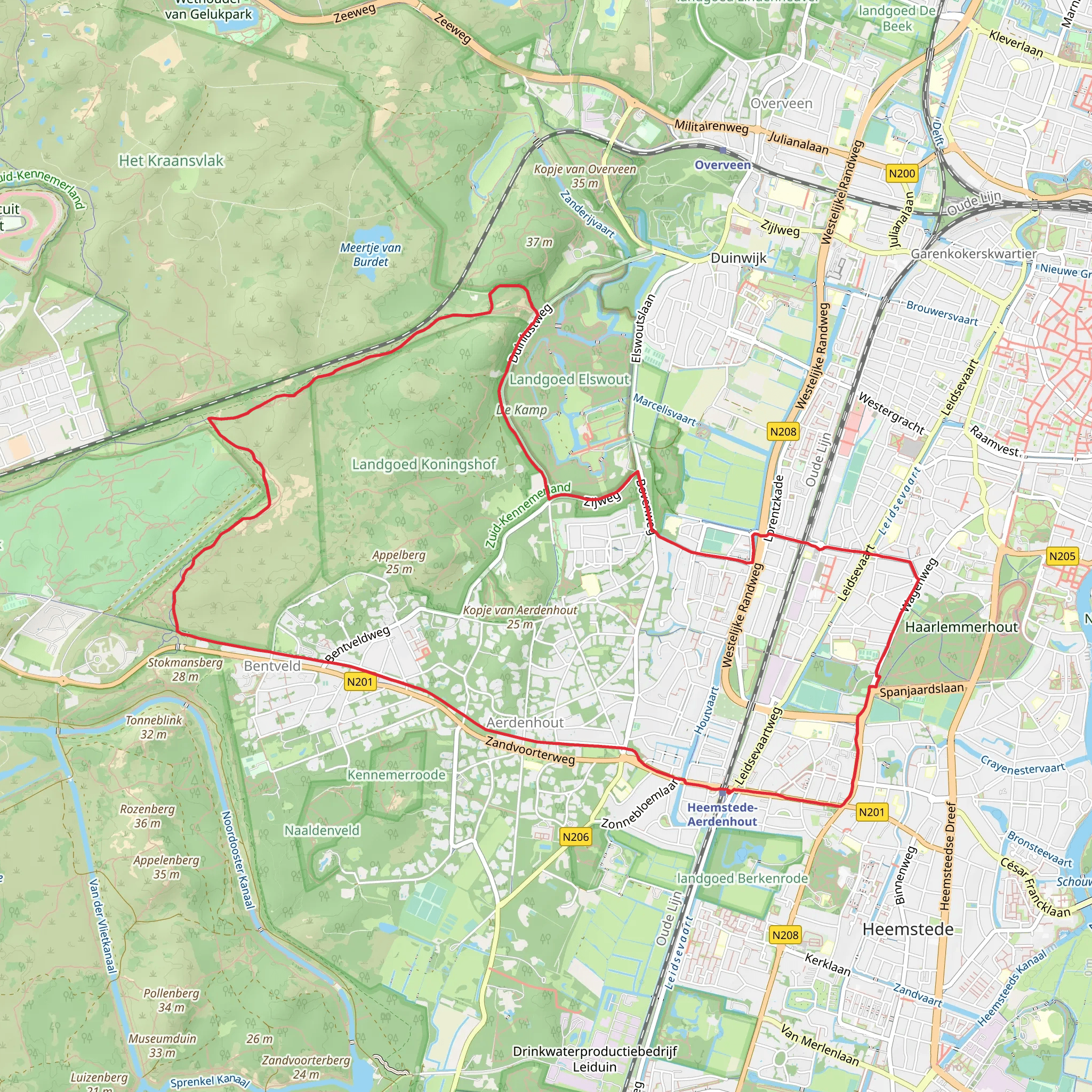
This is a low-stress, mostly level coastal-dune walk of about 13 km (8.1 mi) with essentially 0 m (0 ft) of sustained climbing—expect gentle, short dune undulations rather than any real ascent. The route links open dune landscapes and piney shelterbelts, with long stretches of sandy path and a few firmer, compacted sections where bikes may also be present.
Getting to the start (public transport + car)
Because the start point is only given as “near” (no town, coordinates, or trailhead name), the most reliable way to plan transport is to anchor the start to a specific landmark/address. If you share a lon/lat, a HiiKER link, or the nearest village/parking area, I can convert it to the nearest known address/landmark and tailor the directions precisely.
For now, use these practical options typical for the Kraantje Lek / Kievitenvlak dune area:
- By public transport: Plan to arrive at a nearby coastal village rail/bus hub, then connect by local bus toward the dune access points and walk the final 0.5–2 km (0.3–1.2 mi) to the trail entrance. In the Netherlands, buses serving dune recreation areas can be less frequent outside commuter hours—build in buffer time and check the last return service.
- By car: Aim for a signed dune access parking area close to the Visserspad/Blinkertpad entry. Arrive early on weekends and fair-weather days; dune car parks can fill quickly, and overflow parking may add 1–3 km (0.6–1.9 mi) of extra walking.
If you navigate on-trail, keep HiiKER open and downloaded offline; sandy junctions can look similar, and wind can soften footprints quickly.
What the terrain feels like (and what to wear)
Although the elevation gain is negligible, the surface is what makes or breaks comfort here:
- Sand and soft dune track: Some stretches can feel “energy-sapping,” especially if dry and churned. Even on an “easy” profile, sand can make the effort feel moderate.
- Firm paths through pine/scrub: These are the recovery sections—more compact, easier pacing.
- Wind exposure: Open dune bowls and ridgelines can be breezy year-round; windchill can be noticeable even when temperatures are mild.
Footwear: trail runners are fine in dry conditions, but choose something with decent sand grip and a gaiter-friendly fit if you dislike sand in shoes. Bring a light shell—coastal wind is common.
Route flow and approximate breakdown
Distances are approximate and meant to help you pace and plan stops.
0.0–3.0 km (0.0–1.9 mi): Settling in on Visserspad
You’ll likely start on a sandy access track that quickly introduces the dune character: low, rolling rises, scattered scrub, and occasional pine stands. Early junctions can be confusing because multiple sandy tracks braid together—use HiiKER to confirm you’re staying on the intended line rather than drifting onto a parallel path.
Look for: - Dune grass and low shrubs stabilizing the sand - Occasional open viewpoints where the landscape feels wide and bright, especially in clear weather
3.0–7.0 km (1.9–4.3 mi): Kraantje Lek area—open dunes and quiet hollows
This middle portion tends to feel the most “dune-like”: alternating open sand, grassed ridges, and sheltered dips. Even without real elevation gain, you’ll notice constant micro-undulations. If the route crosses more open sand patches, expect slower pace.
Wildlife you may encounter (season-dependent): - Rabbits and their burrows (watch footing near soft edges) - Songbirds in scrub and pine edges - In some Dutch dune systems, grazing animals (often cattle/ponies) are used for habitat management—if present, give them space and pass calmly.
Practical hazards: - Soft sand + hidden holes: Keep an eye out for uneven footing, especially if you’re chatting or moving quickly. - Sun exposure: Dunes can be surprisingly reflective; sunglasses and sunscreen help even on hazy days.
Landmarks, nature, and why this landscape matters
The Kraantje Lek / Kievitenvlak dune landscapes are part of a broader Dutch coastal system shaped by wind-driven sand movement and long-term dune stabilization efforts. Much of what looks “natural” today is also the result of active management—planting, controlled access, and sometimes grazing—to protect dunes as a coastal defense and as a rare habitat mosaic (open sand, grassland, scrub, and woodland in close proximity). Historically, Dutch dunes have been crucial not only as a barrier against the sea but also for freshwater infiltration and storage in many coastal regions, which is one reason access can be guided onto designated paths.
7.0–10.0 km (4.3–6.2 mi): Kievitenvlak—broader, more open-feeling sections
As you transition toward Kievitenvlak, expect a mix of wider tracks and narrower sandy single paths. This is a good place for a short break if you find a sheltered hollow out of the wind. If you’re walking in spring/early summer, this is also when ground-nesting birds can be sensitive—stay on the path and keep noise low.
Navigation note: In open dunes, it’s easy to “follow the nicest-looking track” and end up off-route. Check HiiKER at each major fork
Surfaces
Unknown
Asphalt
Dirt
Comments and Reviews
User comments, reviews and discussions about the Kraantje Lek and Kievitenvlak via Visserspad and Blinkertpad, Netherlands.
average rating out of 5
0 rating(s)

