
Download
3D Flyover
Add to list
More
12.5 km
~2 hrs 30 min
0 m
Loop
“Meandering past shimmering lakes, whispering reed beds, and timeless windmills, this loop is a feast for the senses.”
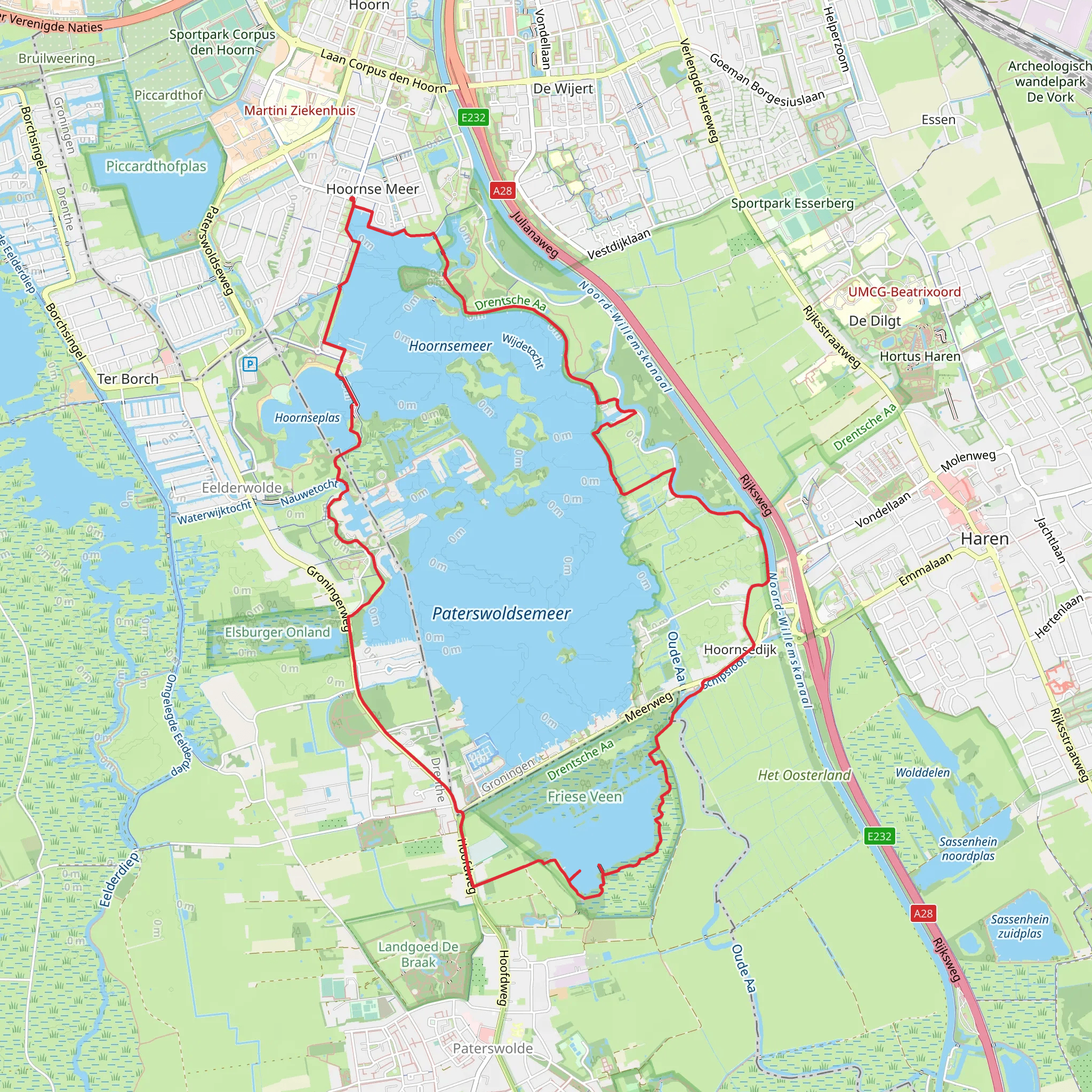
Starting from the southern edge of Groningen, this 13 km (about 8 miles) loop hike begins near the popular Hoornsemeer recreational area, easily accessible by local bus from Groningen Centraal Station or by car, with parking available at the Meerweg or Paterswoldsemeer parking lots. The route is almost entirely flat, with negligible elevation gain, making it suitable for all fitness levels and ideal for a leisurely day out.
Hoornsemeer and Lakeside Paths
The trail sets off along the Hoornse Pad, skirting the shores of Hoornsemeer, a large lake known for its birdlife and water sports. Early on, you’ll pass grassy banks and reed beds, with views across the water to the city skyline. Swans, grebes, and herons are common sights, and in spring and summer, the area is alive with the calls of warblers and other songbirds. The lakeside path is well-maintained and wide, suitable for both walkers and cyclists, and benches are dotted along the way for rest stops.
Transition to Friese Veen Nature Reserve
After about 4 km (2.5 miles), the route transitions onto the Molenpad, a quieter, more rural section that leads you toward the Friese Veen nature reserve. This area is a mosaic of wetlands, ponds, and woodland, managed by Natuurmonumenten. The Friese Veen is a haven for wildlife, especially waterfowl and dragonflies, and the tranquil atmosphere is a stark contrast to the busier lakeside. Look out for the old windmill, De Helper, a striking landmark that once played a key role in water management for the surrounding polders.
Groningerweg and Return
Continuing onto Groningerweg, the trail loops northward, passing through open meadows and farmland typical of the Groningen countryside. This section offers expansive views and, on clear days, you can see as far as the city’s Martinitoren. The path here is mostly gravel and grass, with occasional muddy patches after rain. Along the way, you’ll encounter traditional Dutch farmhouses and may spot grazing cattle or sheep.
Historical and Cultural Notes
The region’s landscape has been shaped by centuries of water management, with dikes, canals, and windmills bearing witness to the Dutch struggle against the sea. The Hoornsemeer itself was created in the 20th century as a recreational lake, while the Friese Veen area preserves remnants of the original peat bogs that once covered much of northern Netherlands. The windmill De Helper, built in 1863, is a listed monument and sometimes open to visitors.
Navigation and Preparation
The entire loop is well-marked, but for detailed navigation and up-to-date trail conditions, use HiiKER. The flat terrain and good paths mean sturdy walking shoes are sufficient, though waterproof footwear is recommended in wet weather. Bring binoculars for birdwatching, and pack a picnic to enjoy at one of the many scenic spots along the route. Public toilets and cafes can be found near the Hoornsemeer start point, but facilities are limited elsewhere on the trail.
Surfaces
Asphalt
Unknown
Concrete
Dirt
Sand
Ground
Wood
Paved
Comments and Reviews
User comments, reviews and discussions about the Hoornsemeer and Friese Veen via Hoornse Pad, Molenpad and Groningerweg Loop, Netherlands.
average rating out of 5
0 rating(s)

