Download
3D Flyover
Add to list
More
50.8 km
3 days
0 m
Multi Day
“A long, flat rural loop where wind, wide skies, and canal-side lanes test patience and preparation.”
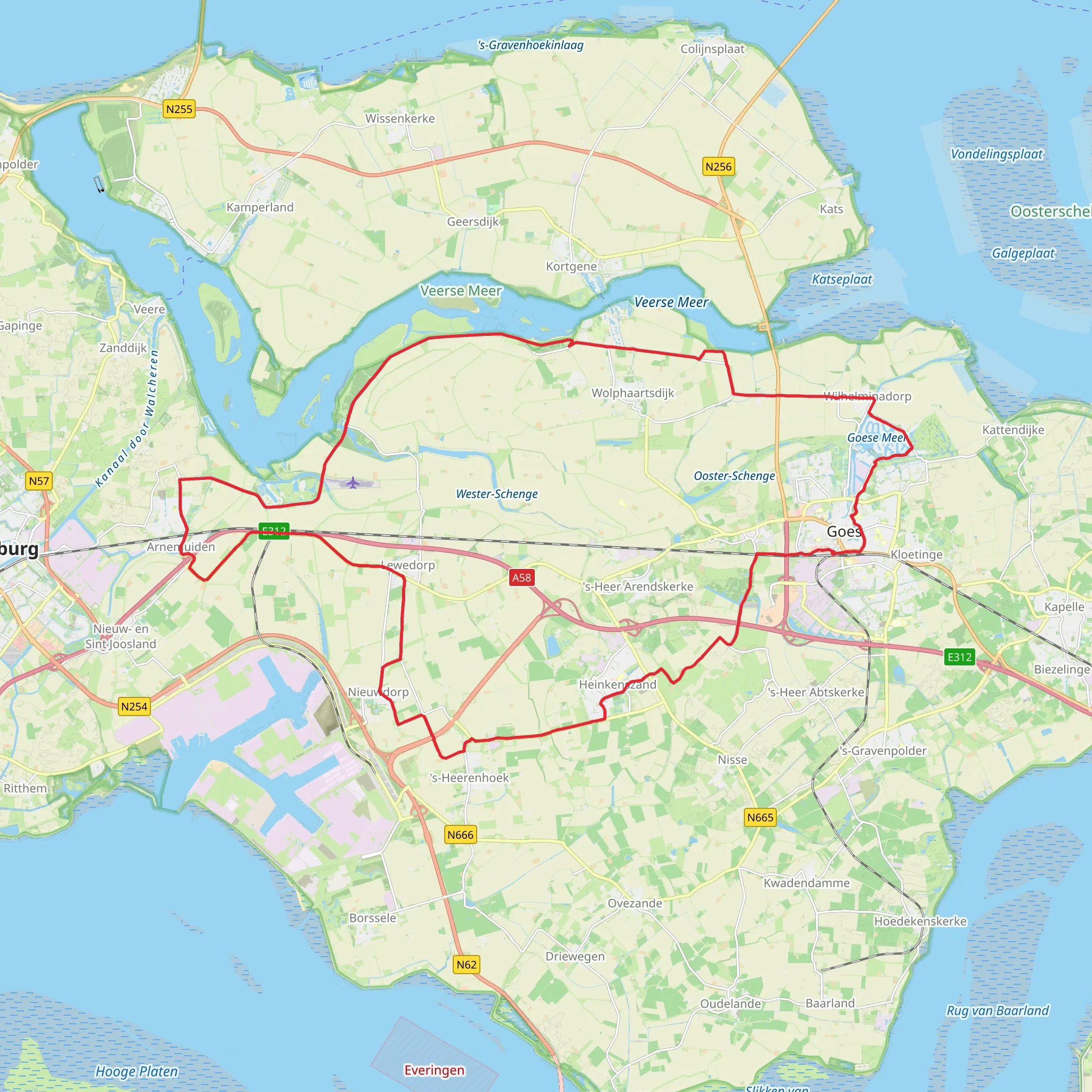
This is a long, very flat loop of rural lanes and farm tracks—about 51 km / 31.7 mi with roughly 0 m / 0 ft of climbing—so the challenge is less about hills and more about time on feet, wind exposure, and staying fueled/hydrated. Expect a steady, easy-grade day through open countryside with long sightlines, drainage ditches/canals, hedgerows, and scattered hamlets connected by roads such as Sinoutskerkseweg, Postweg, Langeweg, and Muidenweg.
Because your start point is listed only as “near” (no coordinates provided), I can’t reliably convert a lon/lat to a nearby address or landmark yet. If you share the start coordinates (or the nearest village/town), I’ll pin it to the closest known address/landmark and tailor the access notes precisely.
Getting to the start (car + public transport)
- By car: These loops typically begin near a small settlement or road junction where there’s informal roadside parking. Plan to arrive early—rural verges can be narrow, and parking that blocks farm access is often enforced. Look for a safe pull-in near a junction rather than stopping on bends or atop dike roads.
- By public transport: In flat agricultural regions, the most realistic approach is usually train to the nearest larger town, then a regional bus toward the smaller villages, finishing with a short walk to the start. If buses are infrequent, build in buffer time and identify a fallback (taxi from the station, or starting/ending closer to a bus corridor).
What the route feels like underfoot
Most of this loop is likely on paved country roads, compacted farm tracks, and occasional gravel. With essentially no elevation gain, your pace will be consistent, but surfaces can be repetitive. Foot comfort matters more than traction: - Footwear: Road-to-light-trail shoes are ideal; heavy boots can feel punishing over 51 km. - Blisters & hot spots: Flat, long-distance days create friction. Bring tape or blister care and address issues early. - Wind: Open fields and straight lanes can mean sustained headwinds. A light windproof layer can make a big difference even on mild days. - Drainage edges: Many lanes run beside ditches/canals; shoulders can be soft or sloped. Stay alert when stepping aside for vehicles.
Navigation and wayfinding (keep it simple, keep it steady)
This is the kind of loop where it’s easy to drift onto the wrong parallel lane because everything looks similar—straight roads, repeating field patterns, and multiple intersections with minimal signage. - Load the route in HiiKER and keep an eye on junction density: the “wrong turn” risk is highest where several farm roads meet. - Use HiiKER’s offline maps if coverage is patchy. - Set a habit of confirming direction at every named road change (Sinoutskerkseweg → Postweg → Langeweg → Muidenweg), especially if the route uses short connectors between them.
Landmarks, landscape, and what to look for
Even without big climbs, the landscape can be rich in detail if you know what to watch for: - Agricultural mosaic: Expect rotating crops, pasture, and field margins. Hedgerows and tree lines often mark property boundaries and provide the best shelter from wind. - Water management features: In very flat regions, the “terrain” is often defined by ditches, canals, culverts, and small pumping structures. Bridges and sluices can be your most reliable “hard” landmarks when everything else is straight and similar. - Hamlets and farmsteads: You’ll likely pass clusters of houses at road junctions. These are good places to reset your bearings, top up water (if there’s a shop/café), and take a short break out of the wind.
Nature and wildlife (seasonal expectations)
Wildlife viewing is often best at the edges—ditch lines, reed beds, and quiet field margins. - Birdlife: Open farmland and wet ditches commonly attract waterfowl, waders, and raptors. Early morning and late afternoon are typically most active. - Small mammals: Rabbits/hares and other small mammals are often seen crossing lanes at dawn/dusk. - Insects: In warmer months, expect gnats and mosquitoes near still water and sheltered hedgerows; pack repellent if you’re sensitive. - Livestock: If the loop skirts pasture, give animals space and keep gates as you find them.
Historical context you’ll feel on the ground
Routes built around “weg” (road) networks in low-lying countryside often reflect centuries of land division, farming access, and water control. The straightness of many lanes and the prominence of drainage corridors can point to long-term efforts to make flat, wet ground productive—an ongoing story of settlement, agriculture, and engineered landscapes. If you pass older farmsteads, small chapels, or historic bridges, they’re often tied to these same themes: moving goods, managing water, and connecting scattered communities.
Practical planning for a 51 km / 31.7 mi easy-grade day
Even “easy” becomes serious at this distance.
Time & pacing - Many hikers plan 8–12 hours moving time depending on pace and breaks. Wind and surface hardness can slow you more than you expect.
Food & water - Treat it like an endurance day: aim for 200–300 calories per hour once you’re settled in. - Carry enough water for long gaps between services; rural loops can have **few reliable refill
AI Planner
Days planned around your pace, with somewhere to stay each night.
Surfaces
Asphalt
Unknown
Concrete
Paved
Comments and Reviews
User comments, reviews and discussions about the Sinoutskerkseweg, Postweg, Langeweg and Muidenweg Loop, Netherlands.
average rating out of 5
0 rating(s)