
Download
3D Flyover
Add to list
More
14.5 km
~2 hrs 54 min
6 m
Loop
“A mostly flat loop from open heath and drifting sand into hushed pines—pace depends on footing.”
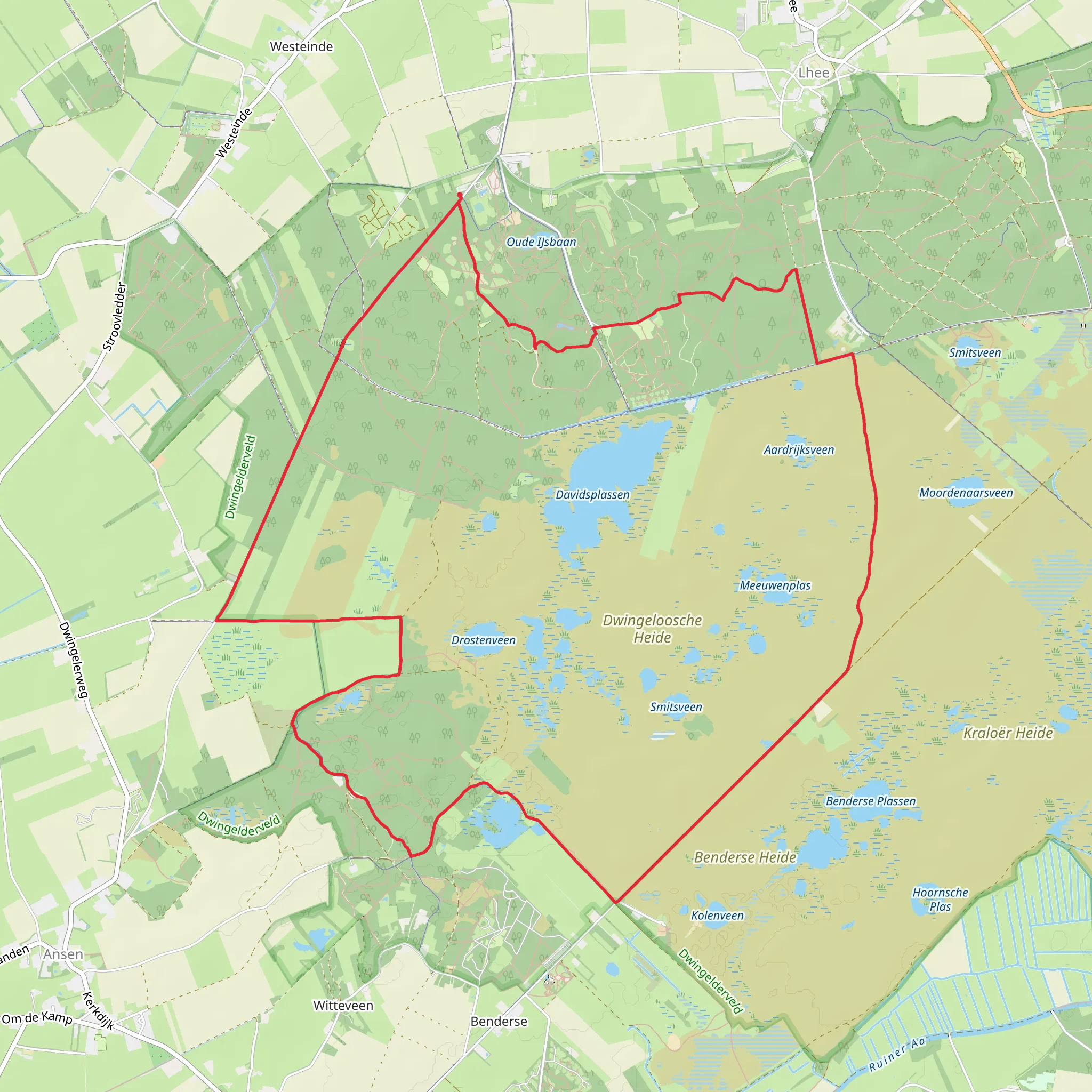
This easy, mostly level loop of about 14 km (8.7 miles) threads together three distinct landscapes on the edge of Nationaal Park Dwingelderveld: open drift-sand and heath, darker conifer woodland, and quieter pine stands where you’ll feel the shift from wide horizons to sheltered forest. With roughly 0 m (0 ft) of elevation gain, the effort comes more from distance and surface (sand can be slow-going) than from climbing.
Where the hike starts (nearest landmark / address)
The most practical “pin” for this loop is near the main visitor access for the Dwingelderveld area by Benderse 22, 7963 RA Ruinen, Netherlands (the Buitencentrum Dwingelderveld / visitor centre area). That’s a common trailhead zone with parking and clear wayfinding into the heath and sand.
If your route file uses a lon/lat start point, share it and I’ll translate it to the closest named place/parking area more precisely.
Getting to the start
By car - Aim for Buitencentrum Dwingelderveld (Ruinen) and follow local signs for the visitor centre/parking. This is typically the simplest approach because the loop is rural and trail access is spread out.
By public transport - The nearest rail hubs are usually Hoogeveen or Meppel (both have frequent Dutch rail connections). From there, you’re generally looking at a bus toward Ruinen plus a short taxi/bike ride or a longer walk to reach the visitor-centre trail network. Public transport works, but expect extra planning time and check the day-of schedules.
What the terrain is like (and what that means for pacing)
- Heath and drift-sand sections (Dwingelderzand): expect soft sand patches and low, scrubby vegetation. Even though it’s flat, sand can slow your pace and makes ankles work harder. After dry spells, sand can be loose; after rain, it firms up but can hide puddles in low spots.
- Forest tracks (Spaarbankbosch): typically wide, compacted paths under conifers—easier walking and good for steady rhythm.
- Pine stands (Anserdennen): quieter, more enclosed woodland feel with needle-covered ground and occasional sandy stretches.
Plan for 3–4 hours of walking time at an easy pace with stops, longer if you linger for wildlife viewing or if sand is extensive.
Along the loop: landmarks, landscapes, and the “feel” of each section
0–3 km (0–1.9 mi): heath edge and open views
You’ll likely begin on firm paths that quickly open into heathland. In late summer, heather can color the landscape purple, while spring brings fresh greens and more bird activity. The openness makes wind more noticeable—bring a light layer even on mild days.
3–7 km (1.9–4.3 mi): Dwingelderzand—drift-sand and big sky
This is the most distinctive part: a drift-sand area shaped by centuries of grazing, sod-cutting, and wind movement. These “sand drift” landscapes are now actively managed because, left alone, they tend to turn back into grassland and then woodland. Look for subtle transitions: bare sand → sparse grasses → heather → young birch/pine encroachment.
7–11 km (4.3–6.8 mi): Spaarbankbosch—cooler, shaded forest walking
The route settles into woodland where the surface is usually more consistent. Conifer plantations and mixed woodland reflect a long history of Dutch land management—forests here are often a blend of production forestry and conservation goals, with selective thinning and habitat work to support biodiversity.
11–14 km (6.8–8.7 mi): Anserdennen—quiet pines and return toward the trailhead
The final stretch tends to feel calmer and more sheltered. Needle litter can make roots and small sandy dips less obvious, so watch footing if you’re tired near the end.
Wildlife and what to look out for
This region is known for heath-and-forest species typical of Drenthe: - Red deer and roe deer: most likely at dawn/dusk or in quieter forest edges. Keep voices low if you’re hoping to spot them. - Foxes and hares: often seen crossing open areas. - Birdlife: heathland can host raptors overhead (buzzards are common), and woodland edges are good for songbirds. In open sand/heath, ground-nesting birds may be present seasonally—stay on paths where requested. - Insects and ticks: in warmer months, ticks are a real consideration in heath and woodland margins. Use repellent, consider long socks, and do a full tick check afterward.
Navigation and wayfinding (using HiiKER)
This is generally straightforward terrain, but the trail network can be dense with intersecting tracks—especially where forest roads meet smaller sandy paths. Use HiiKER to: - confirm you’re taking the correct branch at multi-track junctions, - keep an eye on distance remaining (helpful when sand slows you down), - re-check your position if you detour around wet patches or temporary closures.
Practical prep: what to pack and wear
- Footwear: light hiking shoes are fine, but choose something that handles sand well and won’t fill up too easily. Gaiters are optional but helpful in dry conditions.
- Water: bring at least 1–1.5 L per person; there may be limited refill options once you’re out on the
Surfaces
Unknown
Sand
Concrete
Dirt
Paved
Unpaved
Gravel
Wood
Ground
Asphalt
Comments and Reviews
User comments, reviews and discussions about the Dwingelderzand, Spaarbankbosch and Anserdennen Loop, Netherlands.
average rating out of 5
0 rating(s)

