
Download
Preview
Add to list
More
34.0 km
~1 day 4 hrs
1583 m
Out and Back
“Embark on the Bear River-Smith Fork Trail for a challenging, scenic hike rich in history and biodiversity.”
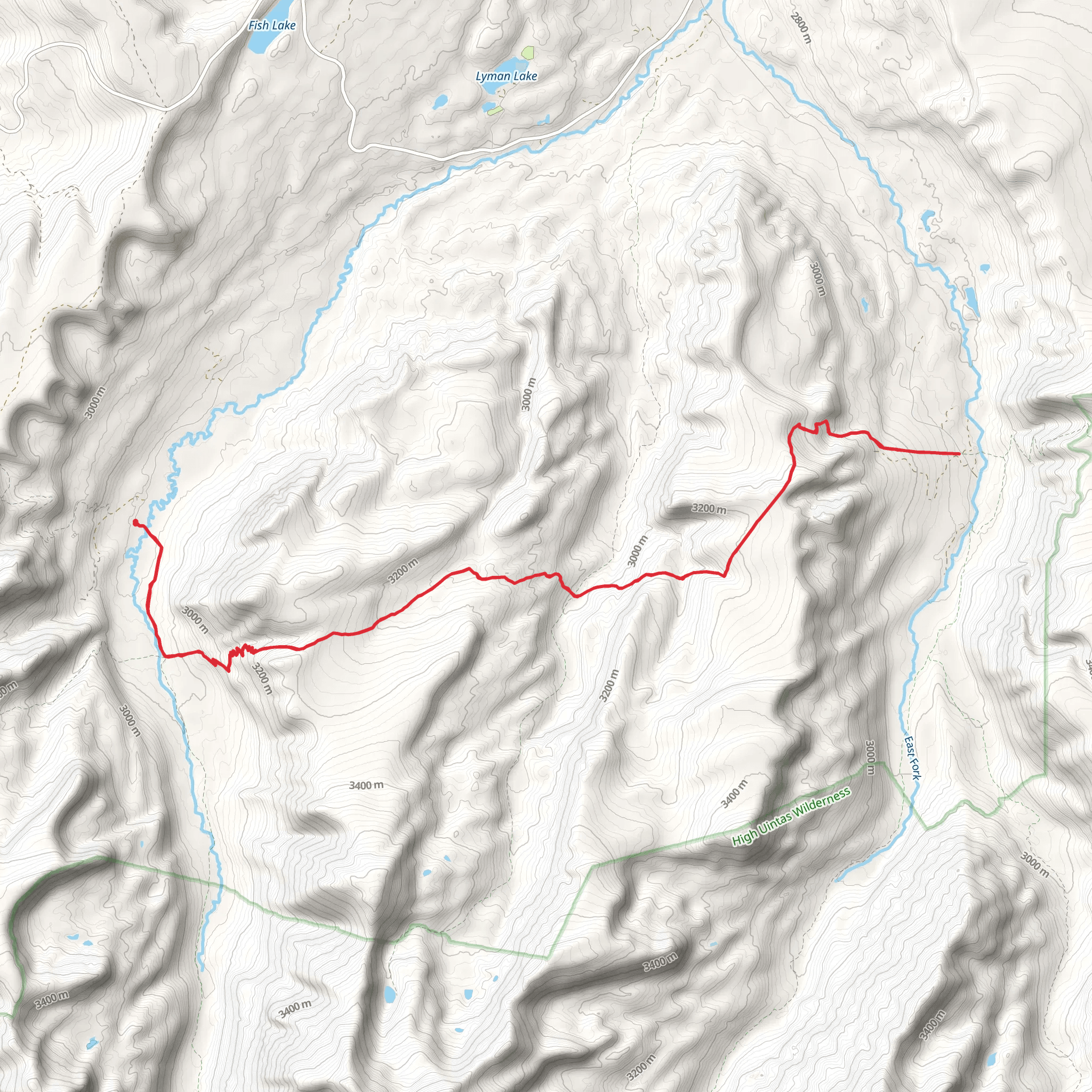
Starting near Summit County, Utah, the Bear River-Smith Fork Trail offers a challenging yet rewarding hiking experience. This out-and-back trail stretches approximately 34 kilometers (21 miles) with an elevation gain of around 1500 meters (4921 feet). The trailhead is accessible by car, with the nearest significant landmark being the town of Evanston, Wyoming, which is about a 45-minute drive away. Public transport options are limited, so driving is recommended.
Trail Overview
The trail begins in a lush forested area, gradually ascending through dense stands of pine and aspen. Early on, you'll cross several small streams, so waterproof boots are advisable. The first 5 kilometers (3 miles) are relatively gentle, with an elevation gain of about 200 meters (656 feet), making it a good warm-up for the more strenuous sections ahead.
Mid-Trail Landmarks
As you progress, the trail becomes steeper and more rugged. Around the 10-kilometer (6-mile) mark, you'll reach a scenic overlook that offers panoramic views of the Uinta Mountains. This is a great spot for a break and some photography. Continuing on, you'll encounter a series of switchbacks that lead you up to Smith Fork Pass, the highest point on the trail at approximately 3000 meters (9842 feet) above sea level. The elevation gain from the trailhead to this point is about 1000 meters (3281 feet).
Flora and Fauna
The Bear River-Smith Fork Trail is rich in biodiversity. In the lower elevations, you'll find a variety of wildflowers, including lupines and Indian paintbrush. As you ascend, the flora transitions to alpine meadows filled with hardy grasses and shrubs. Wildlife is abundant; keep an eye out for mule deer, elk, and even the occasional black bear. Birdwatchers will appreciate the variety of species, from mountain bluebirds to golden eagles.
Historical Significance
The region has a rich history, with evidence of Native American habitation dating back thousands of years. The Uinta Mountains were also explored by fur trappers in the early 19th century. Remnants of old trapper cabins can still be found off the main trail, adding a historical dimension to your hike.
Navigation and Safety
Given the trail's length and elevation gain, it's crucial to be well-prepared. Download the trail map from HiiKER for offline use, as cell service is spotty at best. The trail is well-marked, but snow can obscure markers in the early spring and late fall. Always carry a compass and know how to use it.
Final Stretch
The return journey follows the same path, offering a different perspective on the landscape. The descent can be tough on the knees, so trekking poles are recommended. Plan for a full day to complete the hike, and always check weather conditions before setting out, as storms can roll in quickly in the mountains.
This trail offers a mix of natural beauty, challenging terrain, and historical intrigue, making it a must-do for any serious hiker.
What to expect?
Activity types
Comments and Reviews
User comments, reviews and discussions about the Bear River-Smith Fork Trail, Utah.
4.0
average rating out of 5
3 rating(s)
