Download
Preview
Add to list
More
1014.4 km
~56 days
14828 m
Multi-Day
“Embark on the Israel National Trail, a 1014-kilometer trek through historical landscapes, diverse ecosystems, and cultural richness.”
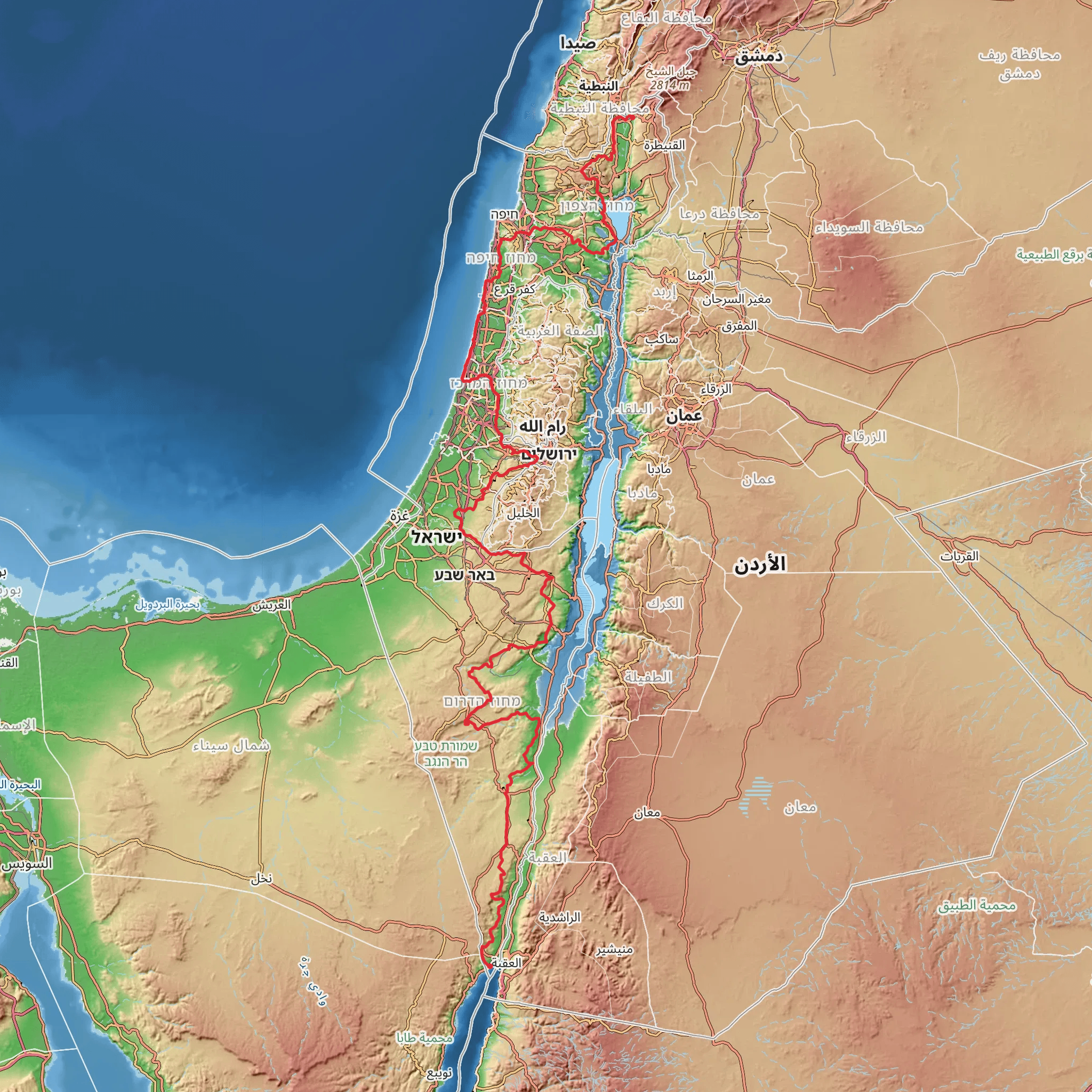
Spanning approximately 1014 kilometers (630 miles) and with an elevation gain of around 14,800 meters (48,556 feet), the Israel National Trail offers a diverse and culturally rich hiking experience. The trail begins near the Galil Elyon Regional Council in the north of Israel, close to the Lebanese border, and stretches to the southern tip of the country, ending in Eilat on the Red Sea.Getting to the TrailheadTo reach the starting point of the Israel National Trail, hikers can use public transportation or drive. If coming from Tel Aviv, take a bus or train to Kiryat Shmona, and from there, local buses can drop you near the trailhead. For those driving, the trailhead is accessible via Route 90, which is the longest road in Israel, running from north to south.Northern Section: Galilee and the Mediterranean CoastThe trail kicks off in the lush, green landscapes of the Upper Galilee, winding through rolling hills and offering views of small agricultural communities. As you progress southward, the trail descends towards the Mediterranean Sea, skirting along the coastline. This section is characterized by sandy beaches, ancient ruins, and the historic city of Haifa, where the trail climbs Mount Carmel.Central Section: The Heart of IsraelContinuing through the central part of the country, the trail traverses the Carmel Range and enters the Menashe Plateau, where hikers can explore the biodiversity of the region's forests. The trail then leads to the bustling urban areas of Tel Aviv, offering a stark contrast to the natural landscapes previously encountered.Jerusalem and the Judean DesertAs the trail approaches Jerusalem, hikers will experience a mix of modern cityscapes and ancient history. The trail circumnavigates the city, allowing for visits to significant historical and religious sites. Beyond Jerusalem, the trail descends into the Judean Desert, presenting a challenging and arid environment with dramatic cliffs and deep canyons.Southern Section: The Negev and Arava DesertThe Negev Desert makes up a significant portion of the trail's southern section. This vast and sparsely populated area is home to geological formations like the Ramon Crater, an enormous erosion cirque. The trail continues through the Arava Valley, where the landscape transitions to the colorful and mountainous terrain leading to Eilat.Flora, Fauna, and LandmarksThroughout the hike, you'll encounter a variety of ecosystems, each with unique flora and fauna. From the oak and pine forests of the north to the acacia trees of the southern deserts, the biodiversity is remarkable. Wildlife sightings may include gazelles, ibexes, and a plethora of bird species, particularly during migration seasons.Landmarks along the trail include the Sea of Galilee, the ancient fortresses of Masada, and the Banias Nature Reserve, with its waterfalls and archaeological sites. The trail also passes through several kibbutzim and moshavim, offering insights into Israel's communal living and agricultural practices.Historical SignificanceThe Israel National Trail is not just a path through nature but also a journey through time. It crosses landmarks dating back to biblical times, such as the ruins of ancient cities and temples. The trail offers a unique perspective on the historical and geopolitical complexities of the region.Navigation and PlanningGiven the trail's length and diversity, thorough planning is essential. Hikers should consider the climate variations, with the northern section being cooler and the southern desert regions experiencing extreme heat. Water sources can be scarce, especially in the desert, so planning for water resupply is critical.For navigation, HiiKER is an invaluable tool, providing detailed maps and trail information to help hikers stay on track and informed about the terrain ahead. It's advisable to download the maps for offline use, as cell service can be unreliable in remote areas.Preparation and SafetyHikers should be prepared for a range of conditions, from muddy trails in the north during the rainy season to the intense sun and heat of the southern deserts. Lightweight, breathable clothing, a hat, and sunscreen are essential, as well as a durable pair of hiking boots.It's also important to be culturally sensitive and aware of the local customs, particularly when passing through religious sites or communities. Respecting these practices will enhance the experience and ensure a harmonious journey through this historically rich and diverse country.
Comments and Reviews
User comments, reviews and discussions about the Israel National Trail, Israel.
5.0
average rating out of 5
2 rating(s)
