Download
Preview
Add to list
More
17.5 km
~4 hrs 18 min
476 m
Loop
“Climbing ancient hills and dramatic cliffs, this loop unveils Jurassic wonders, wildflowers, and soaring views.”
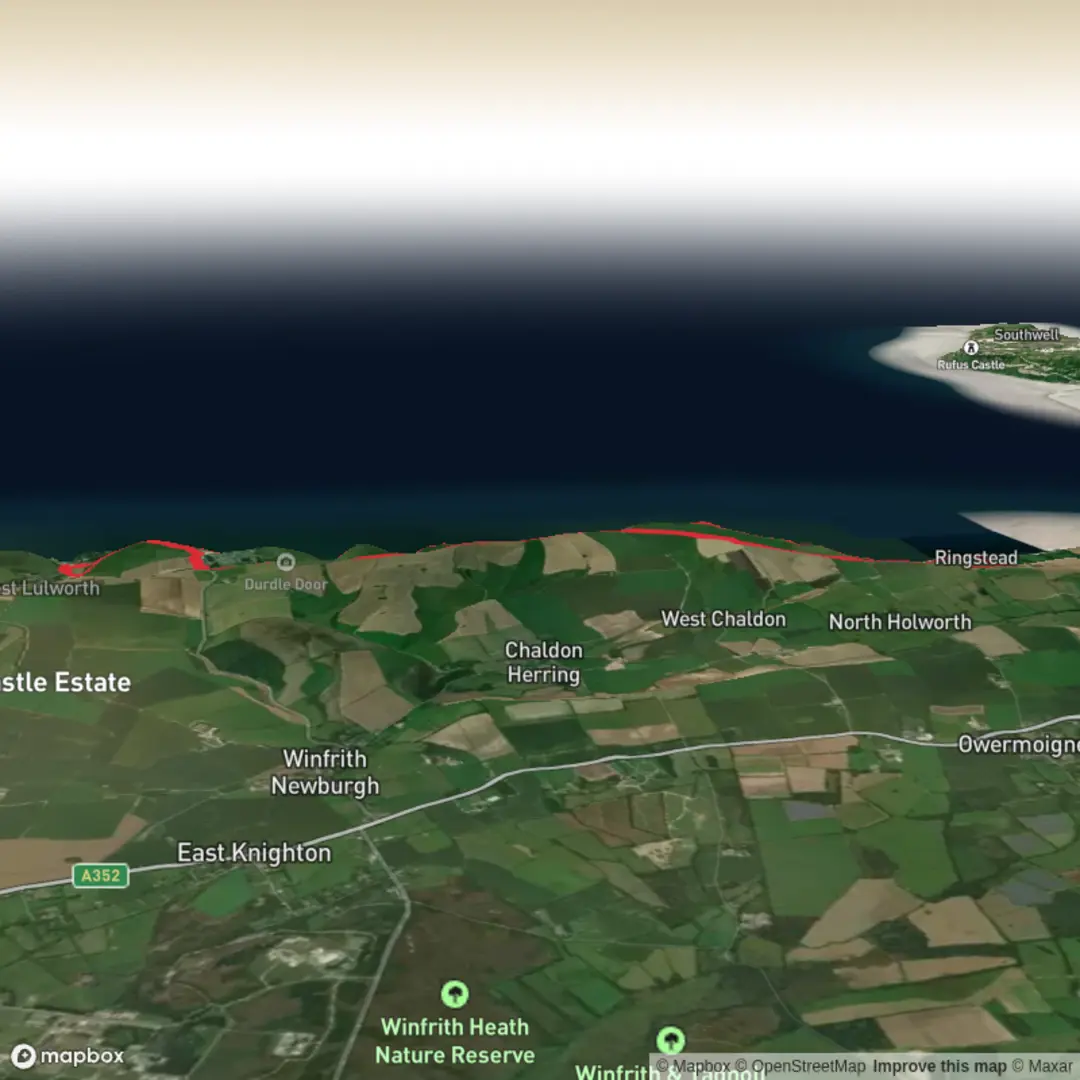
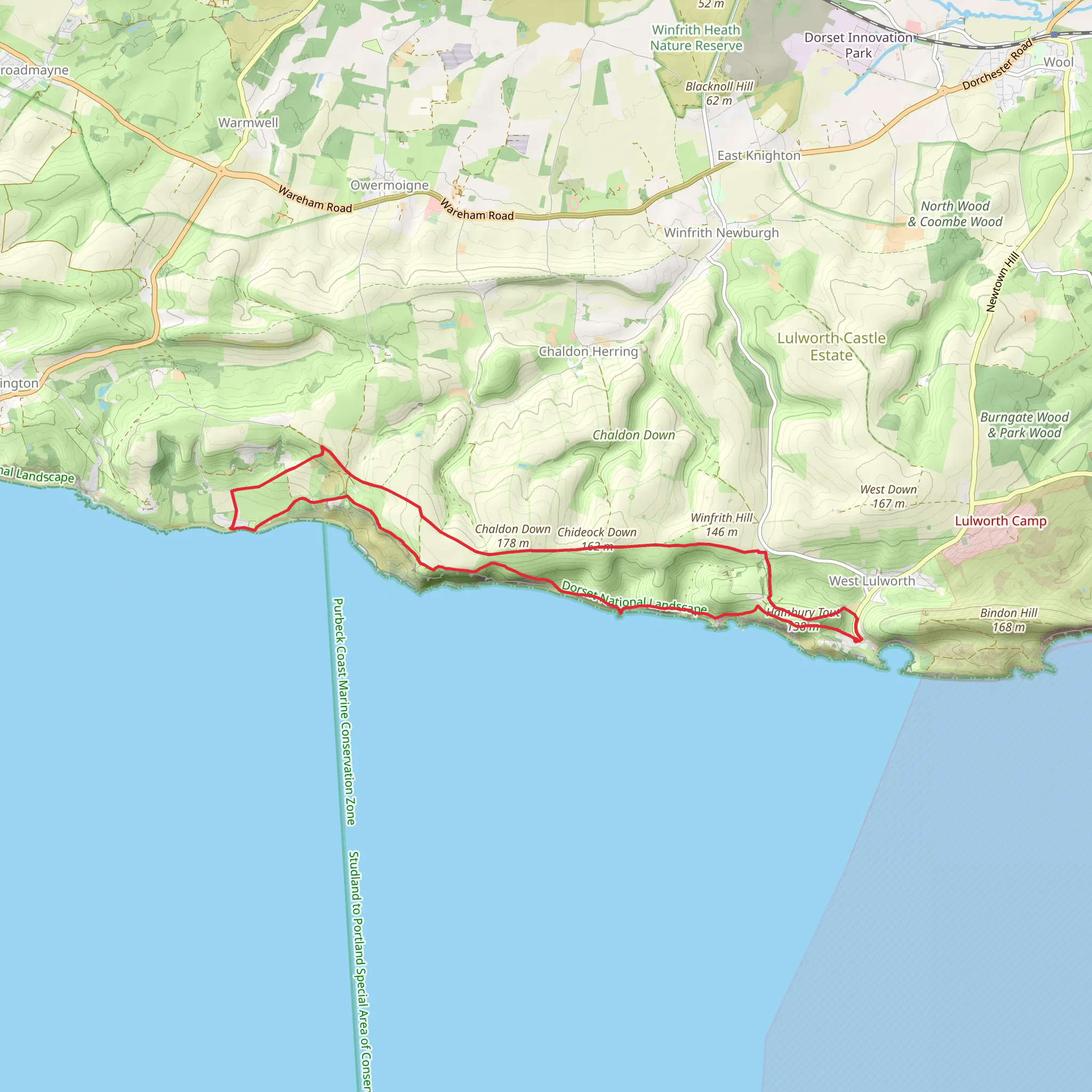
Starting from the car park near Lulworth Cove, this loop hike covers approximately 18 km (11.2 miles) with an elevation gain of about 500 metres (1,640 feet), making it a rewarding but moderately challenging day out on the Jurassic Coast. The route is accessible by car via the B3070, with parking available at Lulworth Cove Car Park (postcode: BH20 5RQ). For those using public transport, regular buses run from Wool railway station to Lulworth Cove, especially during peak season.
Initial Ascent and Hambury Tout
The trail begins with a steady climb up Hambury Tout, a prominent chalk hill offering panoramic views over Lulworth Cove and the surrounding coastline. The ascent is grassy but can be slippery after rain, so sturdy footwear is recommended. Hambury Tout is also notable for its Bronze Age burial mounds, visible as grassy humps along the ridge—reminders of the area’s ancient human activity.
West Bottom and Bat’s Hole
Descending from Hambury Tout, the path drops into West Bottom, a sheltered valley rich in wildflowers during spring and summer. The area is frequented by grazing livestock, and walkers should be prepared for muddy sections, especially after wet weather. Bat’s Hole, a small cave set into the cliffs, is a lesser-known feature along the route. The cave is accessible via a short detour and is home to several bat species, so quiet observation is encouraged.
Durdle Door and the South West Coast Path
The route rejoins the South West Coast Path (SWCP), a well-marked national trail. Navigation is straightforward, but using HiiKER can help track progress and highlight points of interest. The path undulates along the cliff tops, with several steep ascents and descents, and offers spectacular views of the limestone arch of Durdle Door—one of Dorset’s most iconic landmarks. The arch was formed by sea erosion over thousands of years and is a popular spot for photography and picnics.
Nature and Wildlife
The chalk grasslands and coastal cliffs support a diverse range of wildlife. Look out for peregrine falcons hunting along the cliffs, and in summer, the slopes are dotted with wild orchids and butterflies, including the rare Lulworth skipper. The sea below is often visited by seals and, occasionally, dolphins.
Historical Significance
This stretch of the Jurassic Coast is a UNESCO World Heritage Site, celebrated for its geological history spanning 185 million years. Fossils are sometimes found along the beaches, and the dramatic landforms tell the story of ancient seas and shifting continents. The area around Lulworth has been inhabited since prehistoric times, with evidence of Iron Age forts and Roman settlements nearby.
Return to Lulworth Cove
The loop returns via the SWCP, passing through open fields and offering a final descent with sweeping views back to Lulworth Cove. Facilities including toilets, cafés, and a visitor centre are available at the cove, making it a convenient spot to start and finish the hike.
This route is best tackled in good weather, as the exposed cliffs can be hazardous in high winds or heavy rain. Always check local conditions before setting out, and bring plenty of water, snacks, and sun protection.
Surfaces
Unknown
Gravel
Unpaved
Ground
Cobblestone
Asphalt
Grass
Comments and Reviews
User comments, reviews and discussions about the Hambury Tout, West Bottom, Bat's Hole and Durdle Door Loop via SWCP, England.
average rating out of 5
0 rating(s)
